SCHENECTADY’s WATERFRONT ZONING: a rubber stamp in a Company Town?

 desktop misc6 It’s hard to avoid being discouraged after the January 26th public hearing on the Schenectady City Council’s proposed amendments to our waterfront zoning ordinance (the C-3 District).  Rather than actually addressing any of the amendments’ provisions, the so-called supporters of the proposals merely told how exciting the casino project was and how necessary it is to have C-3 waterfront zoning (which we already have: click for the now-current 2008 original C-3 Waterfront Zoning Ordinance, at pp. 25-28, and Schedule C Lot Development Standards).  As someone who witnessed the four-hour Planning Commission Special Meeting on January 14th, it was especially disconcerting to hear speaker after speaker use the 8-0 vote of the Planning Commission approving the set of amendments as an important reason for adopting the proposal. [In this posting, the Planning Commission is at times referred to as “Commission” or “PC”.]

The major zoning changes that were under consideration are listed here, and discussed in several postings filed in our Zoning/Planning Category and in the Recent Posts menu at the top of the Sidebar.

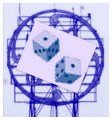
GEsignBlDice

new boss in town?

We believe the four-hour Special Meeting of the Planning Commission on Jan. 14 was yet another demonstration that Schenectady has become once again a Company Town, where City Hall acts as a rubber stamp wielded to fulfill the wishes of Schenectady’s new Bosses, Galesi Group, the owner and developer of Mohawk Harbor, and Rush Street Gaming, the owner-operator of the casino itself [collectively known around this website as the Galesi-Casino Gang, or simply “the Gang”], with their godfather at Metroplex, Ray Gillen, pulling strings and greasing skids to help make it happen.

 As a result, the customary (non-casino-related) interests of Schenectady’s current and future residents, businesses and organizations, are ignored, with shortsighted decisions being made and Schenectady’s future and heritage being shortchanged.

In the zoning context, therefore, we see a set of proposed amendments that only make sense if traditional zoning and planning goals and processes are forgotten and the only goal is to make the Gang’s wishes and hopes for Mohawk Harbor into law. But, you ask, can’t we be reassured by the 8-0 vote of our City’s Planning Commission recommending the proposed amendments with only a couple of minor tweaks?  In a word, as explained below, No.

Alco&GElogos Many supporters of a Schenectady Casino (especially those who live in Schenectady and won’t be its business partners) simply want Schenectady to be a City with a Casino, and not a Casino City, known elsewhere mostly for its regional gaming facility.  More worrisome than becoming a Casino Town is becoming a Company Town again. Ironically, the new Company Town has its ruling Gang symbolically ensconced at the very spot where the American Locomotive Company and General Electric built useful things that helped win wars and modernize our homes and lives. It is also ironic that so many of the people who helped write Schenectady’s Comprehensive Plan 2020 are now undoing its boast that Schenectady was working successfully in an ongoing process to make “the transition from a company town” into something much more vibrant and diverse.

ALCODiceThe suspicion that Schenectady has transformed into a Company Town run by the Gang from Mohawk Harbor was strengthened a lot at the Special Meeting of the Planning Commission. The City’s Development and Legal Staff and the City Council had requested a review of the proposed amendments by the Planning Commission. It was, however, not the Staff who presented the proposed amendments to the Commission. Instead, Galesi Group Chief Operating Officer Dave Buicko began the Meeting with a slide show, after being asked by the Commission Chair to “put the changes in context”; COO Buicko reassured the Commissioners and public that this is really just “cleanup and clarification” of the current provisions of C-3. (That was the first of many “exaggerations” that were not remarked upon by the Commissioners or staff.)

A lawyer was next to address the Commissioners, but not one from the City’s Law Department. PC Chair Sharron Copolla casually transitioned from Buicko by inviting Andrew Brick, an attorney for casino operator Rush Street Gaming, to take a chair at the table. Mr. Brick then went line for line through the 8 pages of the proposal and explained how they relate to their new development. Brick, lawyer for the Gang with the most to lose or win, was the only person presenting the provisions to the Commissioners. He offered only the “pros” of the new amendments, not the questions or “cons.” And, the only reasons given for the changes were the advantages for Mohawk Harbor and its casino.
  approved-CityCouncil Corporation Counsel Carl Falotico was watching the Meeting from his office on a live feed, but felt the need to come down and interrupt the Meeting to proclaim that this really isn’t the developer’s set of amendments, and is from the law and planning staff, adding “we did a lot of work on it.” That’s a little different than it being the City’s plan, and it was amusing that one supporter of the proposals told the public hearing our Corporation Counsel proved it was his plan by saying so at the PC meeting.

In the next, public comment segment of the meeting, seven Schenectady residents voiced specific, well-articulated opposition to several of the proposals and especially called for adjournment before voting on the proposal, to allow for much-needed fact-finding and research. Although admitting often to ignorance or confusion, the Planning Commission went ahead, voting that night as if the public comments had never been uttered and their only real job was to get the proposals approved in time for the Council’s Jan. 26 public hearing.

After the public comments were made, the PC Chair invited Mr. Buicko to respond to the public comments, and then allowed Michael Levin, a principal in the firm that will be overseeing construction, to present his version of the reasons Mohawk Harbor needs these changes, now.  The City’s staff were never offered the opportunity to explain any of the provisions, and never tried to do so.

rubberstamptoolongBY Only after the Galesi and Rush Street Gaming representatives were finished, did the Commissioners begin their discussion of the Amendments, stopping often to ask Mr. Buicko or someone from his group to explain a provision.  Although that discussion was very long, it amounted to a slow-motion rubber stamping, as can be seen below in their treatment of the various issues that arose.

Adequately Prepared for Novel Issues?

This set of amendments raises zoning and factual issues that this City and planning board have never before seen, as well as specific problems never explained by staff. For instance:

  • How much and what kinds of signage do urban casinos that are not on a strip with similar establishments typically use and need? What does Rush Street do at its other casinos, and to what effect? Why does it only use 12,500 sq. ft. of signage in Des Plaines, not the 15,000 sq. ft. it told Metroplex would be the maximum in Schenectady, nor the 19,000 sq. ft. in the proposed amendments?
  • How are scenic river views and public access to a riverbank best preserved or achieved when zoning for a large new development along a rare stretch of river? How do the proposed amendments jibe with the goals of the C-3 waterfront district and the Schenectady Comprehensive Plan 2020 (adopted 2008), which call for the preservation of waterfront views and public access?

  • CasinoHotel9floors Is a bulky hotel building as tall as 110′ high too intrusive 40′ away from a riverbank? Why does the rendering of the Casino hotel along the riverbank that was first submitted to the public and the Location Board last Spring and continues to be circulated, show only a 5-floor hotel, perhaps 65′ high?
  • What would a fully illuminated urban casino look like at night and how will its illumination affect neighbors and the way our City is perceived?
  • Aren’t embayments and other bodies of water usually left out in calculating allowable aggregate footprint on a parcel?  Why should the Casino compound be allowed an extra 2.5 acres of footprint because of the size of the Marina’s embayment? Also, why would a project that wants to go so high also want more footprint? What would that do to the view of the riverfront within or outside Mohawk Harbor, from ground level or from nearby buildings?
  • How would the requested 90′ high pylon affect the City’s skyline, nearby and distant traffic, and neighborhoods? Aren’t such tall pylons used primarily near freeways to alert fast-moving drivers to get off at the next exit for a service not visible from the freeway, or used outside of cities to attract distant traffic?
  • CrosstownPlazaSign

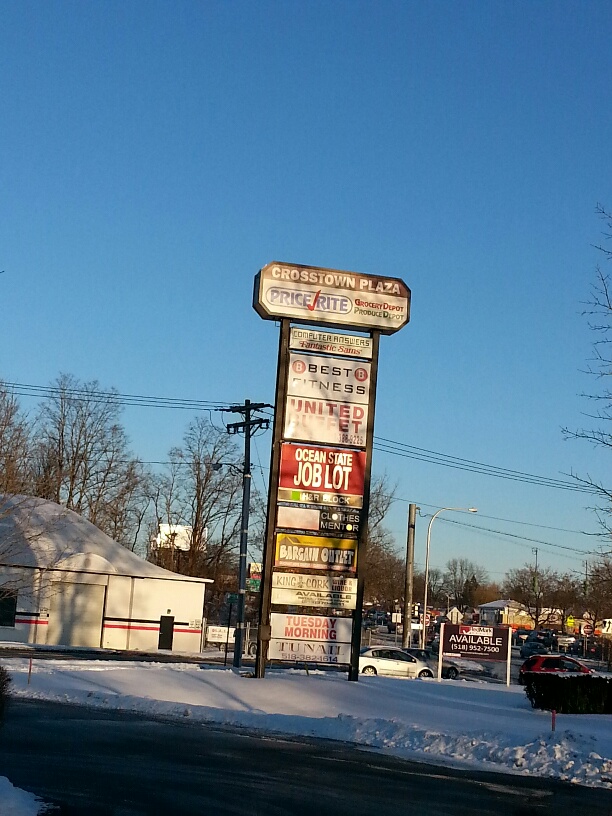
    Crosstown Plaza – 50′ pylon

    With 7′ the current limit for a C-3 free-standing sign, why wouldn’t a 50′ pylon suffice for you, like the one grandfathered at Crosstown Plaza? If their Des Plaines casino’s pylon is 68′ tall, why is 90′ needed here? How could the 49′ tall STS plant be the justification for such a tall pylon? Will the pylon come down when Galesi gets STS to move and razes its building?

  • What happens when the City’s existing signage provisions applicable to every zoning district, Article IX, are made inapplicable to one large parcel with has a novel use, with no provisions substituted for the existing rules?
  • Would a proposed 8-second interval for electronic message boards be appropriate at a location with many signs and much illumination, where many drivers will be new to the City, and to roundabouts, and many senior drivers are expected? (Click to read the Standards and discussion in the NYS DOT’s “Criteria for Regulating CEVM signs“.)
  • And, many more questions that will come to the surface while answering the questions above?
desktop misc7 Despite a grueling, often embarrassing four- hour-long Special Meeting, there are a number of convincing clues that the Planning Commissioners were meant to merely rubber-stamp this set of amendments that will greatly impact the appearance, ambiance, reputation, economy, and social future of our City far past the foreseeable future. For example, the Planning Commissioners:

  • Were not supplied by the Staff with even one page of materials containing explanations for the proposed changes, pros and cons, alternatives, the results of research comparing practices elsewhere, etc., as the basis for informed preparation, questions and decision-making
  • Had no new submissions by Mohawk Harbor, nor from the Casino, with much more-detailed renderings of plans that coincide with the provisions they had negotiated for with the Legal and Development staff
  • Did not demand a full briefing from staff before the Special Meeting, nor during it, nor ask for new plans and renderings from the Casino Gang at any time
  • Were entreated in person by Leesa Perazzo to approve the proposed recommendation, although Ms. Perazzo is a member of the very City Council that had asked for the Planning Commission’s recommendation
  • Made their recommendation that the amendments be passed by City Council that night, despite reasonable requests from the public (including a retired city planner and a retired lawyer familiar with local zoning law) for an adjournment that might allow them to become adequately prepared for an intelligent evaluation of the proposed amendments

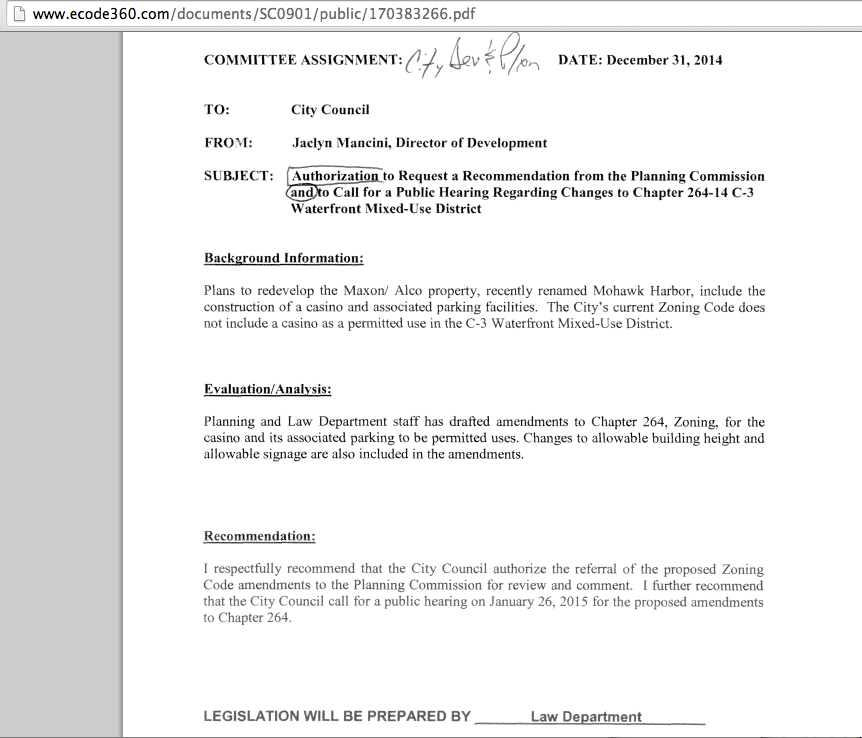
Immediately below is the only staff material I’ve located that mentions evaluation or analysis of the proposed amendments. It is from the 31Dec2014 Memo from Jaclyn Mancini, Director of Development, to the City Council asking that the amendments be sent to the Planning Commission for their recommendation and that a Public Hearing be authorized:

Evaluation/Analysis

Planning and Law Department staff has drafted amendments to Chapter 264, Zoning, for the casino and its associated parking to be permitted uses.  Changes to allowable building height and allowable signage are also included in the amendments.

That’s it for background materials to aid the Commissioners. In addition to their being willing to fly blind, there were many failures of the Commissioners to show adequate curiosity, research, or backbone.  Here are a few instances:

First [punting difficult issues], as discussed fully in the earlier posting “City Hall is giving bad legal advice to get Council votes“, Planning Commission Chair Sharron Copolla voiced at least three times the excuse that the Commissioners can go ahead and approve of the seemingly extreme provisions in the Amendments, because they could reduce the numbers during Site Plan review of the Casino plans.  That appears to be bad advice on the Chair’s part, and the last time she made the assertion Commissioner Wallinger immediately told Ms. Copolla, “No we don’t.” That did not stop the Commissioners from all voting for the big numbers (nor the smaller 40 foot setback).

Sidenote: If the Commission does have the authority to make major changes during the Site Plan process, as the Mayor and Council President have asserted, the Mohawk Harbor Gang would not have the certainty it claims to need right now. It is better to take a close look at the numbers in the Amendments and approve changes Schenectady can proudly live with.

ACLObuildings Second [taller buildings], not only did no Commissioner object when Galesi Group President David Buicko opened the Special Meeting by stating these major, unprecedented changes are “only clean-up and clarification” of what is in the current C-3 law, they remained silent to the repeated assertion that it is appropriate to have 110′ buildings now at Mohawk Harbor, because the old ALCO site had buildings 130′ high that blocked out the view of the River. Commissioners who have lived here more than a few years surely had seen the ALCO site, and knew that the factory plants consisted of very long buildings (some 1000 yards), that were about 50′ high, and that a few of them had a taller portion (apparently to accommodate a crane or similar device to lift heavy items from the assembly line) that took up a tiny fraction of the length of the building and the skyline.  See the photo at the head of the paragraph (by Howard Olhous at Historic Marker Database) for a typical ALCO site image; and, see the following photo with an aerial view from the River side (by Nick Skinner, also hmdb.org), which has a white asterisk on one of the tall sections:

ALCo Site - Aerial View

The Photo also shows how dominant the Price Chopper Building is despite it being significantly shorter than 110 feet. (Mr. Buicko says 103′, Golub Headquarters told me 86′ tall.)

Third [Article IX inapplicable to Casino], no one on the Commission ever mentioned that the amendments were making the entire Schenectady Zoning ordinance on signs, Article. IX, inapplicable to the casino and its accessory uses (but still applicable to the rest of C-3, apparently). This has never been done before, but there was no discussion of what was going to fill the regulatory vacuum or why Schenectady’s customary size, number, or type rules were not needed.

Fourth [public access guarantee], only Commissioners Cuevas and Wallinger voiced concern over the removal from the C-3 ordinance of the current requirement of a permanent easement guaranteeing public access to the waterfront and another provision requiring that:

“A minimum of 10% of linear dock footage must be made available for public, day use”.

No one asked Mr. Buicko why he needed the easement requirement removed, nor why he stated a number of times “it’s private property” in the content of public access.

Screen shot 2015-01-024 When one Commissioner did ask City planner and ex officio member Christine Primiano why there would no longer be an access guarantee at the waterfront, she said the City could not afford the maintenance; she gave no further explanation and there was no follow-up question. No one reminded her that the current law requires maintenance by the owner; that the City is expecting millions of dollars a year from this very parcel and has promised public access to the waterfront; or that it is odd that staff already knew a few years in advance that the City could not afford the maintenance on a project that so nicely fulfills goals set out in the Comprehensive Plan.

Loss of required dock and riverfront access by the public surely should shock and surprise individuals and families throughout the County. It is inconsistent with both the spirit and the text of the Schenectady Comprehensive Plan 2020 (adopted 2008). For a full discussion of the loss of guaranteed public access, see our prior posting.

Fifth [maximum signage]: During the public comment period of the PC meeting, the Commissioners were asked if any of them knew what 20,000 sq. ft. of signage looks like. As expected, several heads shook the response “no.” [Schenectady resident John Kolwaite told the Commissioners a few minutes later that he had measured the front dimensions of our City Hall, and 20,000 sq. ft. was more than twice the size of the City’s Hall’s façade (as is 19,000 sq. ft.). Click here to see the photo mock-up he tried to submit to the Commission, showing the front of two City Halls, and also stating it was equal to 20 large (18′ x40′) billboards.]

Despite their inability to comprehend how much signage the amendments would allow in the Casino compound portion of Mohawk Harbor, the Commissioners asked for few additional details. When Commissioner Matt Cuevas stated that 20,000 sounded like too much and he would feel more comfortable with 15,000 sq. ft., Corporation Counsel Carl Falotico stood, approached the table, and in a stern voice stated (closely paraphrased):

“You can’t go from 20,000 to 15,000 without a rational basis.  If you do, we will be overturned in court. I have negotiated with the Casino representatives and am convinced that 20,000 is the minimum they must have.”

This was an erroneous statement of the law (In legislating, the City has virtually total discretion choosing the amount of signage. Also, since the Casino told Metroplex and the Location Board it would use “a maximum of 15,000 sq. ft.”, it is difficult to say there would be no basis for that number.) What Falotico’s assertion accomplished, however, was a virtually end to discussion of a smaller number. No one on the Commission said, “Carl, if you have seen enough detail to know that 20,000 is the correct number, why can’t we see what you saw, or have you explain your conclusion?”

Another telling moment unveiling the need for more information and giving us a glimpse of Company Town control, came when Commissioners were discussing pylons, specifically the 68′ pylon used at Rush Street’s Des Plaines casino. As a Commissioner was telling Rush Street’s representative how we would measure the square footage of signage on the pylon, it was Rush Street’s man, not Corporation Counsel or Development staff, who said Rush Street made a mistake and had overestimated the signage ascribed to its proposed pylon, by 1000 sq. ft. Rush Street counted both sides of the pylon, whereas Schenectady only counts one side of a freestanding sign in measuring square footage. The Rush Street rep then said, “then we can live with 19,000 sq.  ft.” That is where the current 19,000 number came from.

collage Note, however, that no one on the Commission nor on legal or planning staff asked if they might have made other overestimation calculations, perhaps with other two-sided signs.  Corporation Counsel did not explain how they could have made this mistake if City staff had looked closely at Rush Street’s signage needs.  Nor did he offer to go back and look for additional mistakes.  He merely amended the proposal to 19,000 sq. ft.

And, Sixth [Electronic Signs], Chair Copolla brusquely stated they would not deal with the question of reducing the minimum interval for changing electronic message boards and signs to 8 seconds, “because we just did this a couple weeks ago.”  The only reason given by Development staff and the Planning Commission for the recent recommendation of the 8-second interval was to be “consistent with the State standard” announced by NYS Department of Transportation, in the 3-page document “Criteria for Regulating CEVM signs“.  DOT set a minimum interval of 8 seconds for changing electronic signs, but allows municipalities to be more stringent, with commentary that suggests circumstances that might call for longer intervals.

Those circumstances seem more relevant to the streets near the Casino than to any other parts of the City (i.e., places with higher illumination and more than one message board seen at the same time by the driver, with many distractions; where drivers are unfamiliar with the roads or with a roundabout; and where there are likely to be many senior/elderly drivers, who are especially distracted by changing images and bright illumination). Nonetheless, the proposed amendments make Article IX inapplicable to the Casino, including the requirements for receiving a variable electronic sign permit. The Article IX requirements include issuance of a Special Use Permit after a public hearing, in which the applicant must demonstrate that “the electronic message board shall  not substantially impact upon the  nature and character of the surrounding neighborhood, upon traffic conditions and any other matters affecting the health, safety and general welfare of the public.” [§264-14(I)(2)] Neither Mr. Buicko nor the City Staff were asked by the Commissioners why requirements that seem especially relevant to the casino district were no long applicable, or why those requirements should not be added to the C-3 amendment provision allowing 8-second intervals.

Tight Deadline Excuse?: As we have explained previously, there is no tight deadline that could justify rushing to push through the C-3 amendments without full education and deliberation for the decision-makers, and with full information to the public.

The two-year deadline for completion of the project starts when the actual gaming license is granted, and no one knows how long the “vetting” process will take and the license be granted. Meanwhile, the developer still brags about how far along the site is (they had already spent $100 million there over a year ago and much more since), and how they already have their approved Environmental Impact Statement, with brownfield mitigation near to conclusion.  Furthermore, Rush Street was chosen (and touted by the Mayor and Ms. King) because it has significant experience operating casinos, and has already designed casino facilities that are much like the one they will put in Schenectady.  It goes without saying that the Galesi Group, the Capital Region’s largest developer and manager of commercial property, has the experience to get the job done as quickly as possible.  In addition, if any hotel chain can get a hotel designed, constructed and launched within a two-year window, Sheraton can. Moreover, Mohawk Harbor faces none of the sort of local opposition that can tie the project up in court or administrative proceedings for long periods.

rubberstampTooLong In conclusion, one can’t help but wonder if individual members of the Planning Commission winced when they heard people pointing to their thorough deliberation and analysis as a reason for City Council to approve the package of amendments to C-3.  With all due respect, we strongly dissent. There appears to be no explanation for the Planning Commissioners’ dereliction of duty other than its working in a City Hall where rubber stamping is expected of them in order to please the new bosses in our resurrected Company Town.

share this post with this short linkhttp://tinyurl.com/CasinoTown

 – for another voice asking for more information before the Council votes on the amendments, see the Gazette editorial “Public needs to see the impact of zoning” (Jan. 29, 2015).

follow-up (Feb. 9, 2016): See McCarthy only wants snowmen on his Planning Commission“, regarding Mayor McCarthy’s failure to re-appoint Matthew Cuevas.

Peggy King’s chronic TDE (Tight Deadline Excuse)

  Peggy King, President of the Schenectady City Council, has done it again: Used a “tight deadline” as an excuse for rushing the vote on important legislation, without allowing time for the Council or the public to gather important facts, consider alternatives, and evaluate the likely effects.

.
approved-CityCouncil The legislation this time is the [choose the most appropriate adjectives] novel, complex, radical, extreme, capitulating, over-generous, risky, under-researched, fawning, naive proposal to amend the provisions governing the Schenectady “C-3″ Waterfront Mixed-Use Residential Zoning District”.  The deadline is the two years that the New York State Gaming Commission gives a gaming facility licensee to be operating its casino after it is chosen by the Location Board.

The Tight Deadline Excuse [TDE] is a very weak justification even when the deadline could be met on an important action with only a bit more hard work by all involved. But TDE is not even a flimsy excuse when, as here, there is no deadline yet, much less a tight one that could justify rushing to pass such important and radical changes without knowing key facts.  For example, before voting, Council members should want to know what the Casino Group plans to do with permission:

  • To build 110′ buildings (i.e., how many buildings, where, effects on the view of the river? on future development nearby);
  • to use 19,000 sq. ft. of signage on the casino portion of Mohawk Harbor (what sizes, how bright, what content, and how they use signage at their other casinos), when it stated in its application to the Location Board it would need no more than 15,000 sq. ft.
  • to erect a 90′ pylon (what line of sight profile will it have, placed where, what content)
  • to construct a bike-ped path without the current provision requiring permanent public access to the waterfront, or a similar guarantee
hourglassAlmostFull

lots of sand left

The two-year deadline for completion of the project starts when the actual gaming license is granted, and no one knows how long the “vetting” process will take and the license be granted. Meanwhile, the developer still brags about how far along the site is (they had already spent $100 million there over a year ago and much more since), and how they already have their approved Environmental Impact Statement, with brownfield mitigation near to conclusion.

Furthermore, Rush Street was chosen (and touted by the Mayor and Ms. King) because it has significant experience operating casinos, and has already designed casino facilities that are much like the one they will put in Schenectady.  It goes without saying that the Galesi Group, the Capital Region’s largest developer and manager of commercial property, has the experience to get the job done as quickly as possible.  In addition, if any hotel chain can get a hotel designed, constructed and launched within a two-year window, Sheraton can. Moreover, Mohawk Harbor faces none of the sort of local opposition that can tie the project up in court or administrative proceedings for long periods.

Ms. King told the Times Union that “I’m putting my trust in the developer that they are going to do what’s right.” (“Public supports Schenectady casino at hearing,” by Paul Nelson, Feb. 28, 2015) Trust them why? Because their renderings of the casino hotel and gaming facility buildings are much smaller in scale than the 110′ they now want? Because they want the permanent easement for public access to the riverfront removed from C-3? Because they’ve told us the old factory buildings at ALCO were so high that people never really had a view anyway; which is a silly argument when developing scarce waterfront, but also untrue, as the vast majority of the buildings were very long and about 50′ high, with an occasional tall, narrow section that did little to block the overall view. Because they have asked for much more in the amendments than they told Metroplex they would need or do? (such as pylon size, square footage of signage, setback from the river, and more).

. . share this post with this short URL: https://tinyurl.com/PeggyTakesDictation

Why would Peggy King risk looking gullible or irresponsible, or like the godmother of a gaudy, permanent circus along the River and Erie Blvd.?  Just who does she want to please so much?  We’ll let the reader speculate.

One possibility: Tight Deadline Excuse has become a chronic and infectious disease at City Hall.

Here is our concise list of amendment changes:

Continue reading

a photo-collage reminder to the City Council

GEsignBlDice

Company Town again?

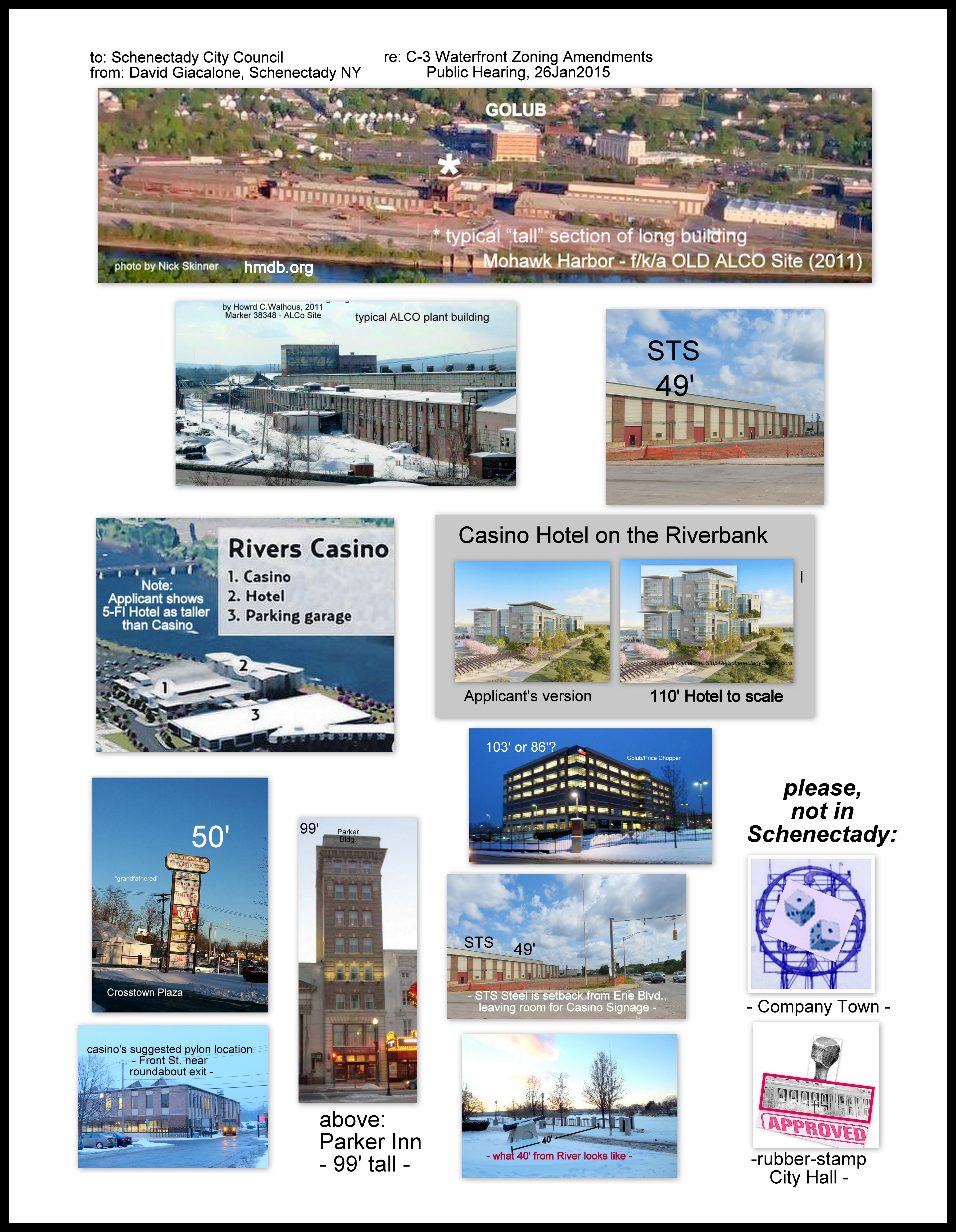
If members of the Schenectady City Council want to give some thought to the proposed amendments to the C-3 Waterfront zoning district, rather than slamming down that big City Hall rubber stamp, I hope they’ll look at the photo collage below, which should, among other things help to:

  • debunk the notion that the old ALCO plant buildings were all so tall they blocked out the view of the River, so it would be okay to allow 110′ buildings throughout the casino compound
  • demonstrate how excessive a 90-foot pylon sign would be, and that the casino does not need a monster pylon because it will be hidden behind the STS building, and no one will be able to find it
  • remind the Council that the renderings of the Applicant’s casino hotel and gaming facility were highly misleading, making them look far smaller than the buildings the Casino now wants to build
  • show just how small a 40-foot setback from the riverbank would be
  • motivate them to find out if the Golub/Price Chopper Headquarters is 103′ tall, as Mr. Buiko keeps saying, or 86′ tall, as we were told when we asked the Golub front office.  And, more important, show how, at well under 110′, the Golub Building looms over the landscape in a way fine for Maxon Rd. but not for the riverbank, whether seen in an aerial shot or from street level
    • Click on the collage for a larger version

C-3photofacts

Please phone, write, or email the City Council and Mayor to ask them to look closely at the proposed C-3 zoning amendments before handing to Mohawk Harbor and the Casino a license to turn the waterfront district into a gaudy, crowded little Las Vegas.

desktop misc7  We need some serious “homework” by City Council members, not a rubber stamping of provisions that are too generous to the Casino Gang at the expense of good zoning and planning principles. The following is a Comment left at the Gazette today (Jan. 27, 2015) in response to its article about the public hearing on January 26th, noting some of the important unanswered questions:

It was discouraging to watch supporters proclaim the urgent need for C-3 waterfront zoning so that the casino could exist in Schenectady. C-3 Waterfront zoning already exists and nothing in it prevents the casino from operating successfully. The issue is whether the proposed amendments to C-3, which have provisions far more lax and generous than are imposed on businesses in every other zoning district, are appropriate and best serve Schenectady’s residents and future. And, especially important is whether the Council should be rushed to pass these extreme changes, on novel issues with which it has no experience, before requiring more information on just what the casino plans to do on the site? Specific questions include:

collage Should Schenectady’s signage ordinance, Article IX of the zoning law, be made inapplicable to the casino and its accessory uses? Should the casino be allowed to have 19,000 square feet of signage, when shopping centers in Schenectady only get 150 sq. ft. plus one sq. foot for each foot of storefront, and the casino told Metroplex it would use a maximum of 15,000 sq. ft.? Should the current 7′ limit on freestanding signs be changed to 90′ for the casino (when the Parker Inn is only 99 feet tall), and the casino’s justification is that people won’t be able to find it otherwise?


Should the Casino be allowed to put up 110′ buildings (with no special permit required), when the C-3 district was created to preserve riverside views and control growth? And, when the casino has constantly circulated renderings that show a hotel of about 65 feet along the riverbank and a gaming facility much shorter than the hotel? [it has been spreading the false excuse that the old ALCO site had 130′ structures that blocked all views of the river, rather than the typical long 50′ structures that actually existed at the site.]

Should the current guarantee of a permanent right to public access to the riverfront, and of a portion of the dock space reserved for the public, be totally deleted from the C-3 zoning ordinance, leaving public access into the future up to the owner, which has repeated constantly lately that “this is private property” when riverfront access is mentioned?

Should we give a lot of weight to the recent approval of the C-3 amendments by the Planning Commission, when the commissioners where not given even one page of materials explaining the amendments and the reasons they were selected; when the commissioners admitted they were not experienced with issues and facts related to casino zoning; and when the people who gave the Commission point by point explanations and justifications for the proposed amendments were not the City’s Development and Legal staff, but were Mr. Buicko from Galesi Group and a lawyer and consultant of Rush Street Gaming?

checkedboxs Let’s stop, research and think. For more discussion of the issues raised by the proposed amendments to the C-3 zoning ordinance, go to http://tinyurl.com/CasinoZoning, and for an extensive list of questions that should be answered before a vote is taken on the C-3 Amendments, and a description of the inadequate consideration given by the Planning Commission to the Amendments, see: “Schenectady’s waterfront zoning: a rubber-stamp in a company town?“.

City Hall is giving bad legal advice to get council votes

     – below is a letter sent by email on Jan. 24, 2015 to the City Council of  Schenectady. Update: it is more relevant than ever given the outcome of the City Council committee meeting on Tuesday, February 3, 2015.  See Schenectady City Council mulls zoning for Mohawk Harbor
(Schenectady Gazette, by Haley Vicarro, Feb. 2, 2015)

– share this posting with the short URL: http://tinyurl.com/BadZoningLaw

Dear City Council President and Members,

The Mayor [Gary McCarthy] has apparently been reassuring City Council members that you can accept items such as the height and signage limits in the proposed C-3 waterfront district amendments, without looking closely into each issue, because any problems can be fixed by the Planning Commission in Site Plan and Special Use Permit review proceedings.  As a retired lawyer who has done a significant amount of legal research and writing on zoning issues over the past few years, my good faith legal opinion is that His Honor is simply wrong.

red check Once legislated in a new version of C-3 standards, the signage, height and setback numbers will be virtually untouchable by the Planning Commission (unless, perhaps, it does a new environmental impact statement under SEQRA that justifies the changes as necessary “mitigation” of environmental harm).

The developer and Casino owner have no reason to contradict the Mayor’s position, as they would be very pleased if you believe him and think you can just punt the hard decisions over to the Planning Commission.

Planning Commission Chair Sharron Copolla voiced the same excuse for going along with the proposals referred to it by the Council at the January 14 special public meeting of the Commission. She said they could accept 110′ building heights because the Commission could reduce that limit during Site Planning.  I returned to the table to correct her on that point of law during the public comment portion of the meeting, saying that in general our State’s judges won’t let a board or commission reject plans that are within the standards and requirements of an adopted zoning ordinance, and surely not without a very good justification. Ms. Copolla responded, “we know that,” but went on to make the same assertion again later in the Meeting, saying Commissioners had the power to reduce the maximum numbers during Site Plan review. Commissioner Wallinger immediately told Ms. Copolla, “No we don’t.”

Continue reading

C-3 zoning amendments would axe access guarantee

NoRiverfrontAccess

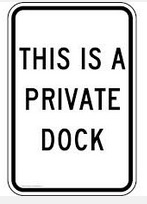
– signs you may see at Mohawk Harbor’s riverfront –

Neither Schenectady’s Mayor nor the Daily Gazette has let the public know that its existing right to permanent access to the scarce riverfront being developed at Mohawk Harbor has been deleted in the City’s proposed C-3 district zoning amendments [which were adopted on February 9, 2015]. This is one of the many significant changes that City Hall development and legal staff “negotiated” with the future casino’s developer and owner. The amendments are the subject of a Public Hearing before City Council on Monday, January 26, 2015.  Click here for the Final version of the City’s proposed Schenectady C-3 Waterfront-Casino zoning amendments.

  • RiverbankAccess-Trail2009Currently, there is a requirement in the 2008 C-3 Waterfront Zoning Ordinance, at p. 28) that an owner of C-3 waterfront property file a permanent easement “for the purpose of assuring public access to and public enjoyment of the waterfront,” with the owner responsible for upkeep (see image to the right). There is also a requirement that a minimum of 10% of linear dock space be available for the public. Both those sections have been completely eliminated from the version of proposed amendments that will be addressed at the City Council’s public hearing on January 26. The public version does not even show the sections with the traditional strikethrough type to highlight their proposed deletion.

– share this posting with this short link: http://tinyurl.com/AccessAxed

Here are the two provisions that the City-Casino Coalition wants to eliminate, with the strikethroughs City Hall apparently did not want you to see:

Screen shot 2015-01-024§264-14(F) 

(2) Public access and recreation features.

(a) Waterfront surface easement. Public access shall be dedicated in the form of a perpetual surface easement, duly executed and in a proper form for recording in the Schenectady County Clerk’s Office and satisfactory to the City Corporation Counsel, for the purpose of assuring public access to and public enjoyment of the waterfront.

§264-14(H) Docking requirements. PrivateDockSign

(1) Residential: A minimum of 10% of linear dock footage must be made available for public, day use.

(2) Commercial: Docking requirements are flexible based upon the following considerations: parking adequacy, river width, navigation channel width, and water surface use.

Loss of required dock and riverfront access by the public surely will shock and surprise individuals and families throughout the County. It is inconsistent with both the spirit and the text of the Schenectady Comprehensive Plan 2020 (adopted 2008). On page 48, in the section enumerating Goals and related Action, the Plan says:

Goal Seven: Promote Waterfront Planning, Access and Redevelopment.

Action 2: Expand Public Access to the Waterfront

Tasks: Expand public access to the Mohawk River and create opportunities for recreational boating.

Action 4: Protect Waterfront Resources and Views

Tasks: Implement view protections and provisions to ensure that new development encourages public access to the water.

 The Comprehensive Plan’s Environmental Impact Statement also addresses the creation of a waterfront zoning district, and notes the two goals for that district (at 15):

“Created waterfront district:

  • Mixed use, walkable, live/work/shop community
  • Preserve public areas.” (emphasis added)

images-7 The Gazette has not yet mentioned that the C-3 amendments remove the public access elements of the ordinance. In fact, on Jan 15, in reporting on the January 14 Planning Commission special meeting, Haley Vicarro wrote for the Gazette that “The site . . . would allow for public access to the river with biking and walking paths and a proposed harbor with 50 boat slips.”  Well, with §§264-14(f) & (H) eliminated, the “site” would allow for public access as long as the Owner allows it. 

Should we just trust these casino guys? Galesi Group COO David Buicko (and not the City’s Development or Legal staff) led the presentation at the Planning Committee on January 12, and was careful not to mention granting public access as of right when mentioning the riverfront and docks.  He made remarks more than once reminding the Commission that “it’s private property” and that Galesi and Rush Street Gaming want people to come who will use their facilities. (An appropriate desire, but not one that bodes well for permanent public access.)

Note: It would be very bad public relations for Mohawk Harbor to open with a riverbank that is only available to persons who are “customers”, or to have absolutely no amenities near the riverbank for people who might want to just sit and enjoy the view.  However, the lack of  mandated access for the public means the area might be closed for special events; or, problems along the riverbank (e.g., excessive rowdiness, litter, noise) could cause management to start restricting access based on age, time of day, adult supervision, etc., or to “cut their losses” and close Mohawk Harbor’s riverbank completely.

Note, also, that a pedestrian-bicycle path that followed the River and circled the condo and office marina buildings, as planned by Galesi, would make a very nice amenity and attraction for people who live, work, or stay at the hotels, of Mohawk Harbor. Thus, putting in the path would not be a totally undesirable expense for the developer/owner of Mohawk Harbor, nor useless if public access is not allowed.

It is true that under the amendments the owner must put in a ped-bike path and there was a lot of talk before the Planning Commission about the meaning of the word “esplanade” in the text of C-3. But, there would no longer be a requirement that the owner permanently allow the public to use the riverfront, and also no requirement that the owner install an esplanade or add any amenities beyond the barebones bicycle-pedestrian walkway.   If they do put in public access facilities, they would be allowed an even bigger footprint for the buildings at Mohawk Harbor. approved-rubber-stamp This is perhaps why Commissioner Matt Cuevas lamented at the Planning Commission Meeting last week that (paraphrasing): “This is not at all the kind of public access we were thinking about when we drafted the C-3 provisions 6 years ago.”  Nevertheless, despite the fact that five of the nine current Commissioners were on the Commission when the Comprehensive Plan was written and the C-3 Waterfront district was created, they voted to recommend adoption of the proposed amendments (with only a couple of very minor tweaks).

The Planning Commission voted in a rush, without having any materials from their staff or the Mayor or Corporate Counsel explaining the meaning of the proposed changes, or discussing the pros and cons — and, visibly (often admittedly) without basic knowledge or understanding of zoning for something as complicated and exotic as a casino, especially one on a scarce riverfront. Nevertheless, by recommending that the proposed amendments be adopted, the Planning Commission handed the Mayor and City Council president, as well as the Galesi Group and Rush Street Gaming, a fig leaf for concealing the open secret that this set of zoning proposals gives the casino partners virtually everything they wanted, and in fact more than they have said they needed in past public statements. [update: At the Jan. 26. City Council meeting, several of the supporters of the amendments stressed the significance of an 8-0 vote of approval by the Planning Commission.]

red check This zoning calamity cannot even be slowed down, much less prevented, without the vocal and public opposition of people from throughout Schenectady County, even those who favor the casino and marina at Mohawk Harbor.  Please come to the Public Hearing on January 26 and tell the City Counsel that you want the principle and the promise of public access fulfilled.

 For the convenience of those who have not seen our prior posting that contains a summary of the proposed changes, here is an encore:

Highlights of Changes:

  • public access to riverfront: the requirement of a permanent easement granting a right to public access to the riverfront has been deleted; developer must build a bike-ped path (which it might have wanted anyway for those living in its condos and apartments), but there is no longer guaranteed public access
  • the right to 10% of dock space reserved for public use in the daytime is deleted
  • maximum building height would be 110′ with no special use permit needed; the exception is a 56′ height limit within 100′ of a residential district (current law is 56′ permitted in C-3, with special use permit needed for higher)
  • setbacks are a minimum of 50′ from the river’s mean high water mark (had been 40′ from the high water mark)
  • Article IX – Signs, which contains rules, limitations, sizes, etc. for signage of all types, no longer applies to the casino and attached uses, but continues to apply to all other zoning districts and outside the casino compound in C-3 (Art. IX does apply to the district under the current C-3 ordinance)
  • 19,000 sq. ft. of signage is permitted, with review Site Plan review, which looks at colors, style, location (currently, Art IX limits aggregate square footage to 150 sq. ft., with 25% more if owner has a single lot with more than one principle building).
  • directional signs do not count as part of the signage limitations and may have the logo of the establishment (Art. IX does not allow logos on directional signs)
  • Multi-sided pylon signs are permitted, with a height not to exceed 90 feet. (Article IX now allows one freestanding sign with a maximum height of 7′ in C-3)
  • electronic message board may change every 8 seconds; Planning Commission may reduce the minimum interval (currently, a CEVMS may only change every 60 seconds, and a special use permit is needed, with a  public hearing and demonstration that there is no significant impact on surrounding neighborhoods, traffic conditions, health and safety; 8 seconds is the minimum standard now at NYS DOT; a City may increase the interval, but contrary to the provision in the Amendment, it may not reduce it).
  • the embayment (man-made bay) may now be included in calculating how big the aggregate footprint of the casino compound may be, with 50% of the size of the embayment added to the total allowable footprint of the buildings (the subject not in current version of C-3; if the embayment is 5 acres in size, 2.5 more acres of footprint allowed; many, perhaps most, jurisdictions would not allow a body of water on a site to count toward the footprint allowance)

the final C-3 Waterfront-Casino zoning proposal

Click for the Final version of the City’s proposed Schenectady C-3 Waterfront-Casino zoning amendments, which will be the subject of Monday’s Public Hearing (Jan. 26). It shows proposed insertions in the current C-3 ordinance (but fails to show with strike-throughs a few of the important deletions). There are no accompanying materials explaining the changes in the proposed amendments.

 For the final Ordinance, click here: Local Law 2015-01, §264-14, Amendments to C-3 Zoning District, adopted February 9, 2015, signed by Mayor, Feb. 10, 2015.

Click to access zoningamend-c-3ffinal.pdf

dontforgettack to voice your opinion at the Public Hearing before the City Council, Monday, January 26, 2015, at 7 PM, Rm 209 of City Hall (use the Jay St. entrance). Get there before 7 PM to sign up to speak.

Share this posting with the short URL:  tinyurl.com/C-3Changes

Below, without editorial comment, I have listed all the major changes being proposed, with the current zoning law in Schenectady stated in parentheses.  There are many good reasons to oppose the Amendments; see “the house is already winning” for opening discussion of height, setback and signage issues. Additional postings are listed at the top of the site’s righthand Margin, in the Recent Posts menu.  For an extensive list of questions that should be answered before a vote is taken on the C-3 Amendments, and a description of the inadequate consideration given by the Planning Commission to the Amendments, see: “Schenectady’s waterfront zoning: a rubber-stamp in a company town?“.

Highlights of Changes:

  •  public access to riverfront: the requirement of a permanent easement granting a right to public access to the riverfront has been deleted; developer must build a bike-ped path (which it might have wanted anyway for those living in its condos and apartments), but there is no longer guaranteed public access
  • the right to 10% of dock space reserved for public use in the daytime is deleted
  • maximum building height would be 110′ with no special use permit needed; the exception is a 56′ height limit within 100′ of a residential district (current law is 56′ permitted in C-3, with special use permit needed for higher)
  • setbacks are a minimum of 40′ from the river’s mean high water mark (had been 50′ from the high water mark)
  • Article IX – Signs, which contains rules, limitations, sizes, etc. for signage of all types, no longer applies to the casino and attached uses, but continues to apply to all other zoning districts and outside the casino compound in C-3 (Art. IX currently applies to the district under the C-3 ordinance)
  • 19,000 sq. ft. of signage is permitted, with review Site Plan review, which looks at colors, style, location (currently, Art IX limits aggregate square footage to 150 sq. ft., with 25% more if owner has a single lot with more than one principle building).
  • directional signs do not count as part of the signage limitations and may have the logo of the establishment (Art. IX does not allow logos on directional signs)
  • ArtIXsignregs Multi-sided pylon signs are permitted, with a height not to exceed 90 feet [at some point changed in the final version to 80 feet]. (Article IX now allows one freestanding sign with a maximum height of 7′ in C-3)
  • electronic message board may change every 8 seconds; Planning Commission may reduce the minimum interval (currently, a CEVMS may only change every 60 seconds, and a special use permit is needed, with a  public hearing and demonstration that there is no significant impact on surrounding neighborhoods, traffic conditions, health and safety; 8 seconds is the minimum standard now at NYS DOT; a City may increase the interval, but contrary to the provision in the Amendment, it may not reduce it). [Note, an amendment the night of the Council vote, proposed by Marion Porterfield and passed, removed all mention of electronic message displays from the C-3 amendment.]
  • the embayment (man-made bay) may now be included in calculating how big the aggregate footprint of the casino compound may be, with 50% of the size of the embayment added to the total allowable footprint of the buildings (the subject not in current version of C-3; if the embayment is 5 acres in size, 2.5 more acres of footprint allowed; many, perhaps most, jurisdictions would not allow a body of water on a site to count toward the footprint allowance)

the House is already winning: giving away the shore

CasinoHotel9floors  – a hotel 110′ tall; Trump’s along the Mohawk? 

–  click this link for Comments to the Planning Commission on the Waterfront C-3 Amendments by David Giacalone (editor of this website), on Wednesday, January 14, 2015.

red check update: Over half a dozen Schenectady residents pleaded that the Planning Commission not recommend such provisions as 110′ buildings, 40′ setbacks, giant pylons, and 20,000 sq. ft. of signage, and take more time to research materials, and have staff and the developer submit more specific plans, before making its recommendations.  Such comments made no difference at all in the final results.

    Is there anything Schenectady’s Mayor and City Council won’t do for their Casino Cronies? The gifts to the future Casino Owners in the proposed amendments to the City’s waterfront zoning regulations could scarcely fit on a river barge, much less under a Christmas Tree.  In changing the C-3 Waterfront Mixed-Use ordinance, City Hall proposes to give the Rivers Casino group significantly more leeway in designing their facilities than the Applicant ever asked for, or said was needed, in its public statements.  As a result, the Mohawk Harbor Riverfront and Erie Boulevard “front yard” could be more crowded, gaudy and tacky than the proponents of this “modest” project have ever given us to believe.  In reviewing the proposed changes, you might want to ask yourself just when the Mayor, Council President, and Metroplex Chairman knew of these changes.

Thanks to the Daily Gazette, we have online access to the proposed amendments to the City’s C-3 Waterfront Mixed-Use District; click for the Proposed “C-3/Casino” Amendments. Neither the City Council agenda for Monday January 12, 2015, nor the Planning Commission’s agenda for its meeting on Wednesday, Jan. 14, included the proposed casino zoning amendments, despite the topic being on the agenda of each body.  Click the following link for the Current C-3 Zoning Ordinance, which was last amended in 2009.

More Crowded and Tacky?

Bigger Hotel – Closer to the Shore: One proposed amendment to the Casino District Zoning rules would allow its hotel to be 110′ tall.  Yes, the Applicant did mention an 110′ height limit in its environmental impact statement, but it never warned us that the omni-present rendering of its casino hotel (the one with all the cherry blossoms) was not representative of its actual goal.  The rendering shows a casino hotel of about 5 floors, which might be 65′ high.   A hotel 110′ high would probably have about 9 floors above the ground.  For your comparison, here is the Applicant’s widely-used hotel rendering on the Left, with my best estimate on the Right of how high a 110′ version might be:

Comparison

– visual bait and switch? –

.

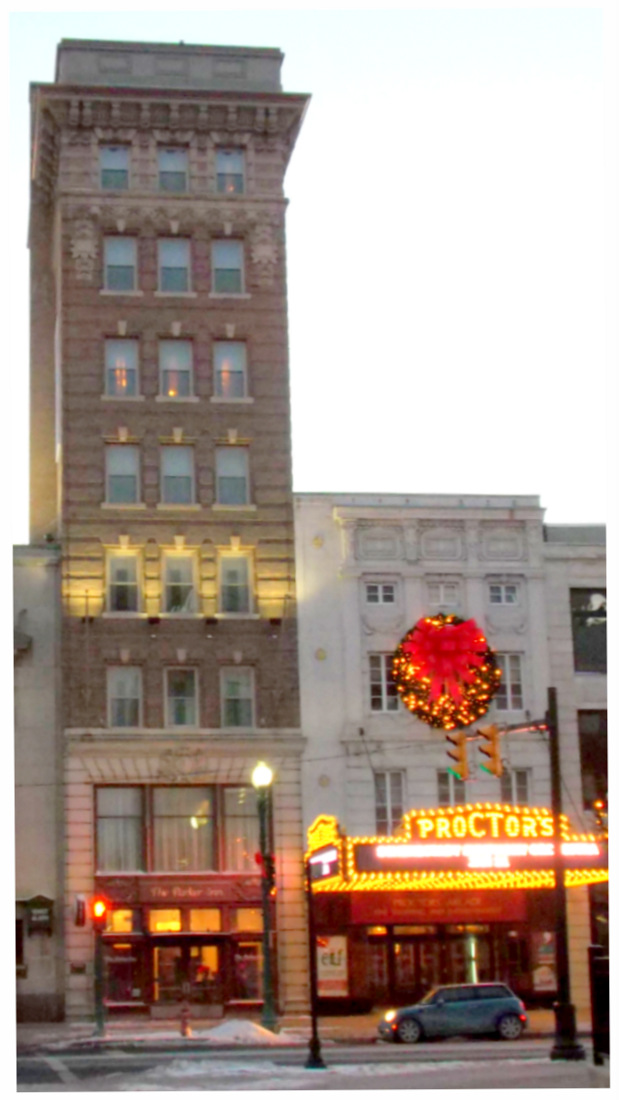
Parker-Proctor  How tall is 110 feet?  Proctor’s nextdoor neighbor, the Parker Inn was historically Schenectady’s tallest building. (see photo to the right of this paragraph) The Parker Inn is 98.56 ft. with 8 floors.  The former St. Clare’s Hospital, now called Ellis Hospital McClellan Campus, is a mere 69 ft. tall, with  5 floors above ground. Even the Wedgeway Building at State and Erie is only 72 feet, with 6 floors.   (Those three “tall” Schenectady buildings average about 12’5″ per floor.)  Imagine a building many times larger in bulk and 11 feet higher than the Parker Inn, with far less grace, enhancing our scarce Schenectady River frontage.

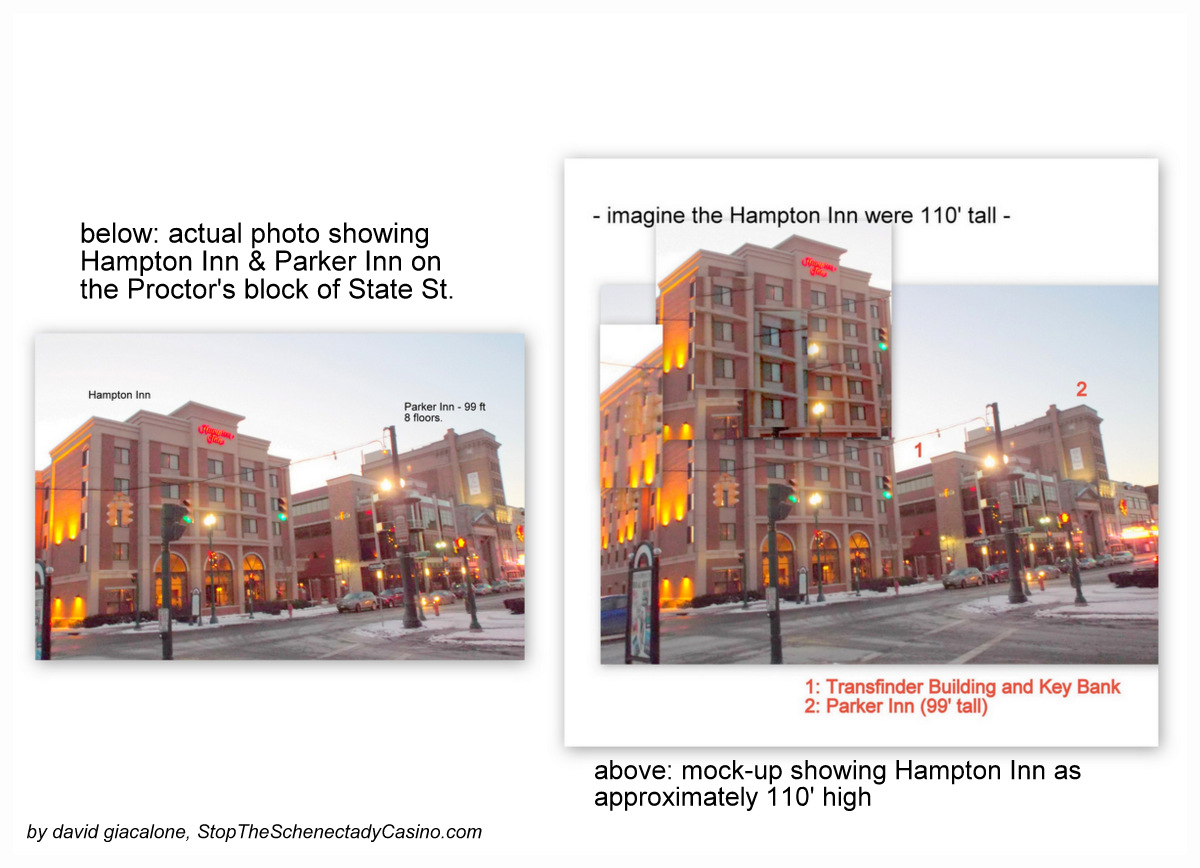
The Hampton Inn, at State and Clinton Streets, is right down the block from the Parker Inn. The Hampton Inn is 4 floors and appears to be a bit more than half the height of the Parker Inn; it has 93 rooms, which is half the 185-room figure the Casino has given in its impact statements. If you stacked another Hampton Inn on top of the current one, you would probably come fairly close to 110′. The following collage compares the Hampton-Parker end of the State Street block, with both the actual Hampton Inn and a bulked-up-casino-style version:

Hampton-ParkerCompareCollage

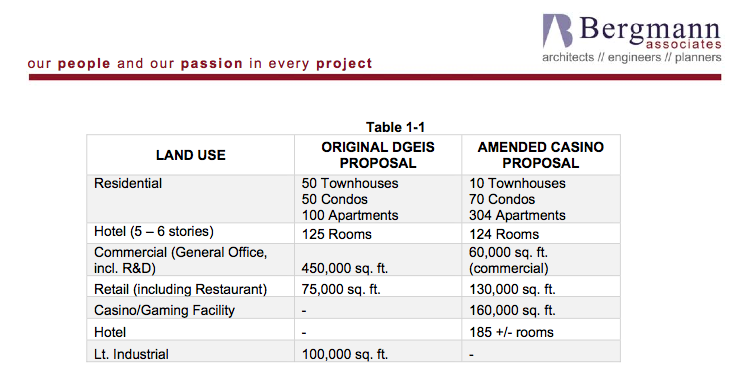
Important economic question: If Rivers Casino wants a hotel this big, how much will its promotions to fill the Casino Hotel cannibalize other quality hotels in Schenectady?  The sly Applicant never stated how many floors its hotel was likely to be, while indicating consistently that the separate, Galesi marina hotel would be 5-6 floors, and that the casino hotel would have 50% more rooms: 185  “+/-“, compared to 124 rooms.

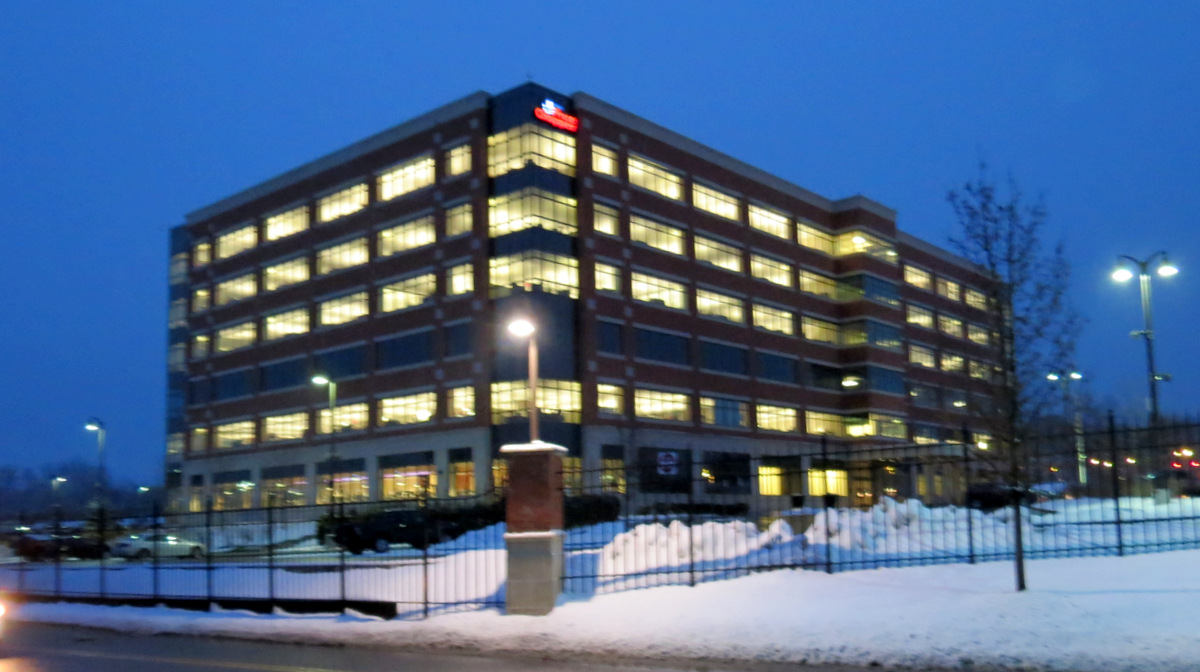
One more height comparison: The Schenectady Casino Applicants’ environmental impact Statement compares its proposed 110′ hotel with the 103-foot Golub/Price Chopper Building, stating that it is less than a quarter-mile from the casino location.  Of course, the Price Chopper headquarters is situated alongside the rather unlovely Maxon Rd. and Nott Street, not our scarce waterfront. [Note: it is not clear that the building is in fact 103′ tall; it appears to be shorter than that. update: Dave Buicko, Galesi Group CEO, continued to state at the Jan. 14, 2015 Planning Commission Meeting, that the Golub building, which is owned by Galesi, is 103′ tall. On Jan. 15, 2015, I received a response from a Price Chopper staffer to a question on the height of the building that I asked on Jan. 13; she phoned to say that the Golub Corp. Headquarters is 86′ high.]

Here is a photo of the building at dusk on January 12, 2015, to help you decide whether a building that tall should be located along the riverfront (as opposed to further back on the large parcel) at Mohawk Harbor:

Golub1

the “103-foot tall” Golub Corporate Headaquarters – actually 86′ tall

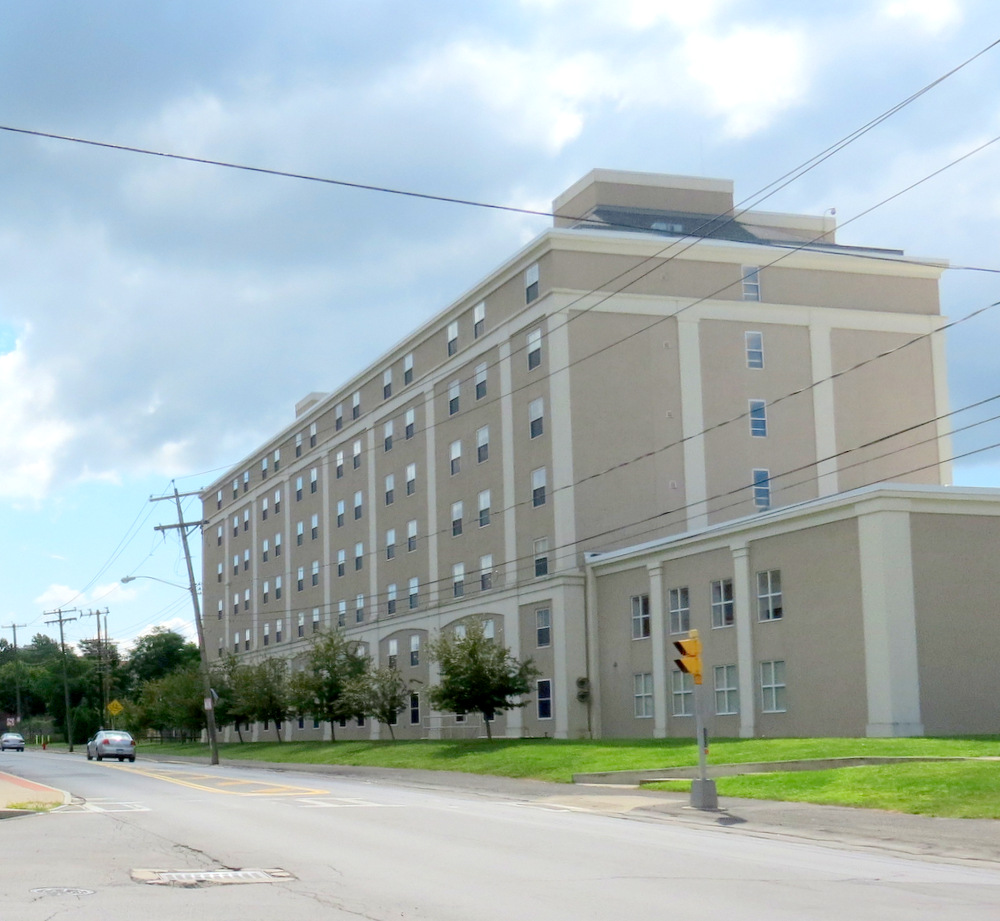
  • By the way, directly across the street from the Price Chopper headquarters is the largest Union College residency hall, which was once a hotel.  It is merely 7 floors, but not exactly river-bank svelte:
CollegeParkResHall

Union College Residence Hall, 450 Nott St.

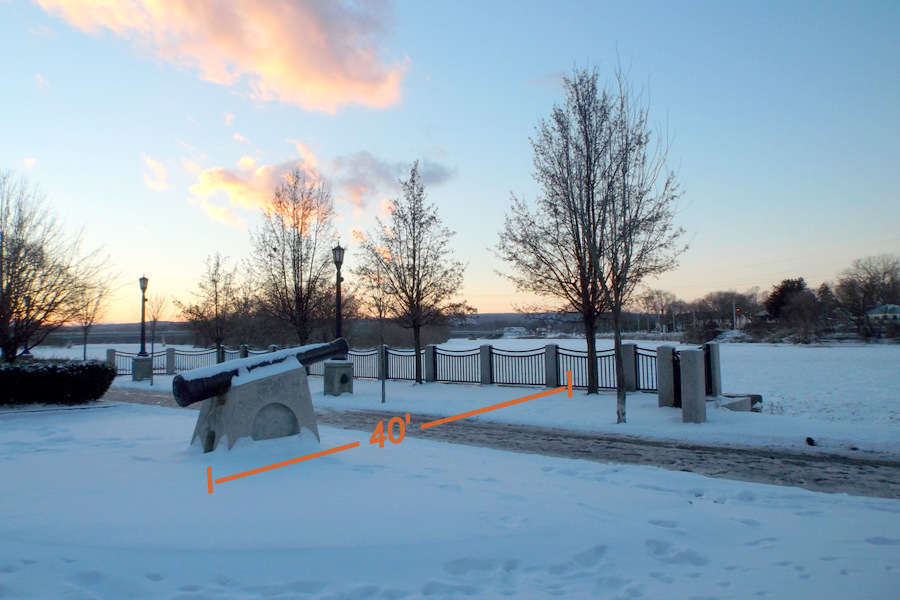
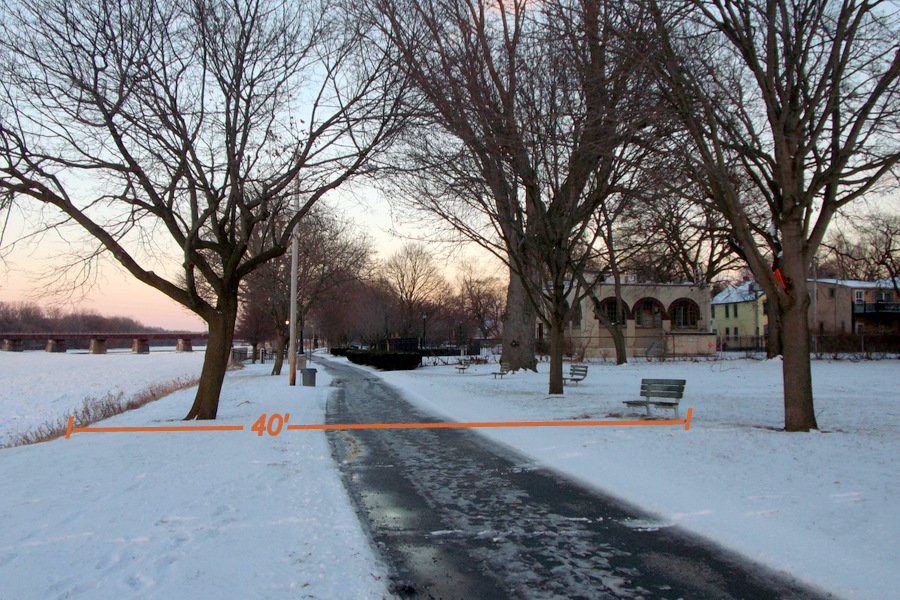
A Setback Setback.  Another City Hall concession would make the Casino Hotel loom even more ominously along the shore:  The Casino Applicant said all waterfront setbacks would be at least 50 feet; nonetheless, the amendments reduce the setback along the River to an even slimmer 40 feet.  Forty feet is awfully close to the river bank. [approximately the length of two Ford Expedition SUVs bumper to bumper]  Here are two 40-foot examples from Riverside Park:

casino40feet1  . . . casino40feet2

– click on a picture for a much larger version –

Note: The bike-hike trail could be 18 feet from the hotel.

Even Gaudier than Expected?

A Signage Tsunami.  No one can call the Galesi Group or Rush Street Gambling shy about asking for special rules.  The Amendments to C-3 state specifically that signage rules applicable to all other zoning districts [Article IX-Signs, §264-61(k)] do not apply at the C-3 casino compound.  So, the Casino Guys modestly said they would use no more than aggregate of 15,000 square feet of advertising.  [click for their statement on signage] That is 100 times more (not a mere 100% more) than permitted under Article IX.  Nonetheless, the Mayor et al. never said, “Now you guys are pushing it a bit.”  They said, “How about one-third more, 20,000 sq. ft.”

Freestanding at 80 feet.  The maximum height of a free-standign sign in any other zoning district is 10 feet.  The amendments do not state a maximum, only that Art. IX does not apply [update: the final version released for the Public Hearing before City Council calls for a 90′ limit on pylon signs.].  The Casino has told us it wants a free-standing pylon sign at the intersection of Front Street and the access point to the casino from the anticipated roundabout (near Front and Nott Sts.), to allow persons to easily locate the facility from Erie Boulevard.  But, don’t worry, “The height of the sign will not exceed 80 feet.” (Recall that the Wedgeway Building down at Erie Blvd. and State St. is only 72 feet high; also, GE’s giant, famous lighted logo has a diameter of only 36 feet; so stack one on top of another and you’re still 8 feet lower than the Casino Pylon’s apex.)

Pylon signage in the 80-foot-range is traditionally used by a business near a highway in order to give drivers traveling at 70 mph information about the service offered in time to allow them to safely get off at the next exit.  The sign industry calls such structures “freeway pylons.” For reasons too numerous to list, there is no analogous need in the situation of the Schenectady Casino.  By merely suggesting the possibility of an 80-foot pylon, Rush Street and Galesi Group demonstrate a brutish lack of sensitivity to aesthetics, safety, neighborhood traditions, and the image and reputation of the City of Schenectady — not to  mention the truth.

Wedgeway72

– the 72-foot-high Wedgeway Building, Erie at State –

A few months ago, the Applicant based its claim of having no negative impact on cultural resources and sensitivities (and fuddy-duddies worried about their viewscape) on the fact that you could not see their facility from the Stockade. They even said the RR underpass trestle on Front St. would block our view.  Back then, we did not agree, and a casino facility with a much taller hotel and a monster pylon, is most probably even easier to see.

Also, those who have long sought attractive entryways into the Stockade might not be pleased with that pylon, even if it had a Stockade sign with directional arrow.

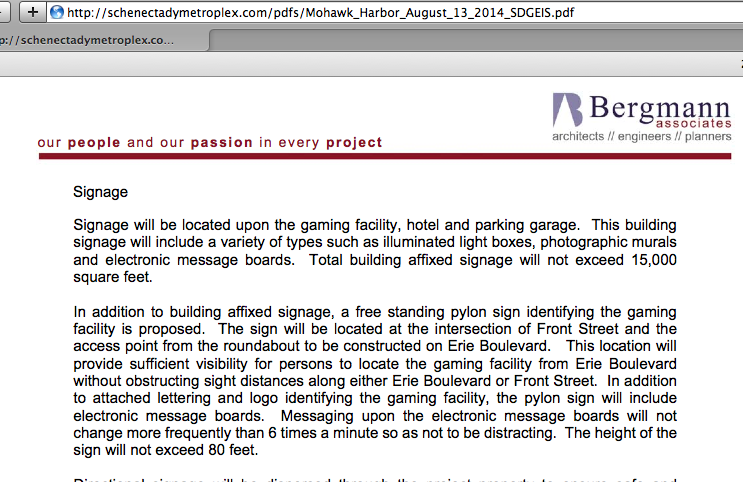
Corner-Store-Pylon-Cometsigns  [sample pylon] Changing Electronic Messages. It is the giant pylon that will have, in addition to lettering and a logo for Rivers Casino, “electronic message boards.”  The safety-minded Casino assured us in its impact statement that “Messaging upon the electronic message boards will not change more frequently than 6 times a minute so as not to be distracting.”  Once again, rather than point out in amazement that current law only allows messages to change once per minute, and not even Proctor’s new marquee exceeds that pace, City Hall apparently said, “Heck, why wait 10 seconds to change a message, we’ll let you do it every 8 seconds,” which is 7.5 times a minute.

CrosstownPlazaSign

update: “grandfathered -in” pylon at Crosstown Plaza [shown above] is 50′ high; the Planning Commission voted to recommend a maximum of 90 feet on Jan. 14, 2015, but limited the portion of the pylon that could be signage to 70%  –

Good highway safety practice does not allow giant pylons with changing messages at places where drivers need to be paying close attention and have other distractions.  Our search online has produced no images of Rush Street having such giant pylons at its other, successful casinos — not even in Pittsburgh, where it might be a bit more difficult to find a low-rise casino than in Schenectady.  It will be interesting to see if City Hall changes its practice of Never Explaining, to justify such a drastic change in policy for electronic signs (other than, “it makes the Casino Cash-Cow content”). [followup: See the NYS DOT’s “Criteria for Regulating CEVM signs“, which set a  minimum interval of 8 seconds for changing electronic signs, but allows municipalities to be more stringent and suggests circumstances that might call for longer intervals.]

More Crowded?

In addition to having narrower setbacks along the River, which will surely increase the sense of being less spacious, the proposed amendments have a stealth provision that will increase the allowable footprint, and thus the width and length of buildings in the casino compound.  The Casino appeared to be content with the allowable footprint for buildings; however, the amendments in effect increase the footprint size permitted by counting the embayment area in calculating the size of the project lot.  Building footprints may not exceed 50% of the project site, but “the project site is defined to include any embayment.”

Hairy Arm Proposals?

Finally, it is difficult not to be suspicious of the statements and tactics of the Casino Collaborators after seeing them in action since the Spring.  The generous give-aways to the Casino owners and developer are perhaps part of a version of a  “hairy arm” ruse:  That is, City Hall is making outlandish proposals, so that it or the Planning Commission can look magnanimous and reasonable when they pull back a bit on an outrageous proposal or two. That may make it harder for dissenters to vote no, allowing the members to pass pared-down but still extreme concessions to their Casino Cronies.

We have not had a chance to study the proposals in depth, to see how other municipalities and planners have dealt with problems presented, and to uncover — much less examine — the reasoning behind each major proposal in the C-3 zoning ordinance.  Now that they have their casino victory, it is time for our local leaders to start asking tough questions and doing their homework before passing major zoning changes.

a New Year reminder of the job ahead

 Happy New Year to everyone who hopes the future Rivers Casino at Mohawk Harbor will somehow live up to its promises, while minimizing damage to the social, moral, legal, and financial fabric of our community.  Thanks again to all who worked in 2014 to avoid such damage by keeping a casino from being located in Schenectady. We haven’t stopped the casino, but we can’t give up the mission or the hope of stopping or reducing casino-made problems.

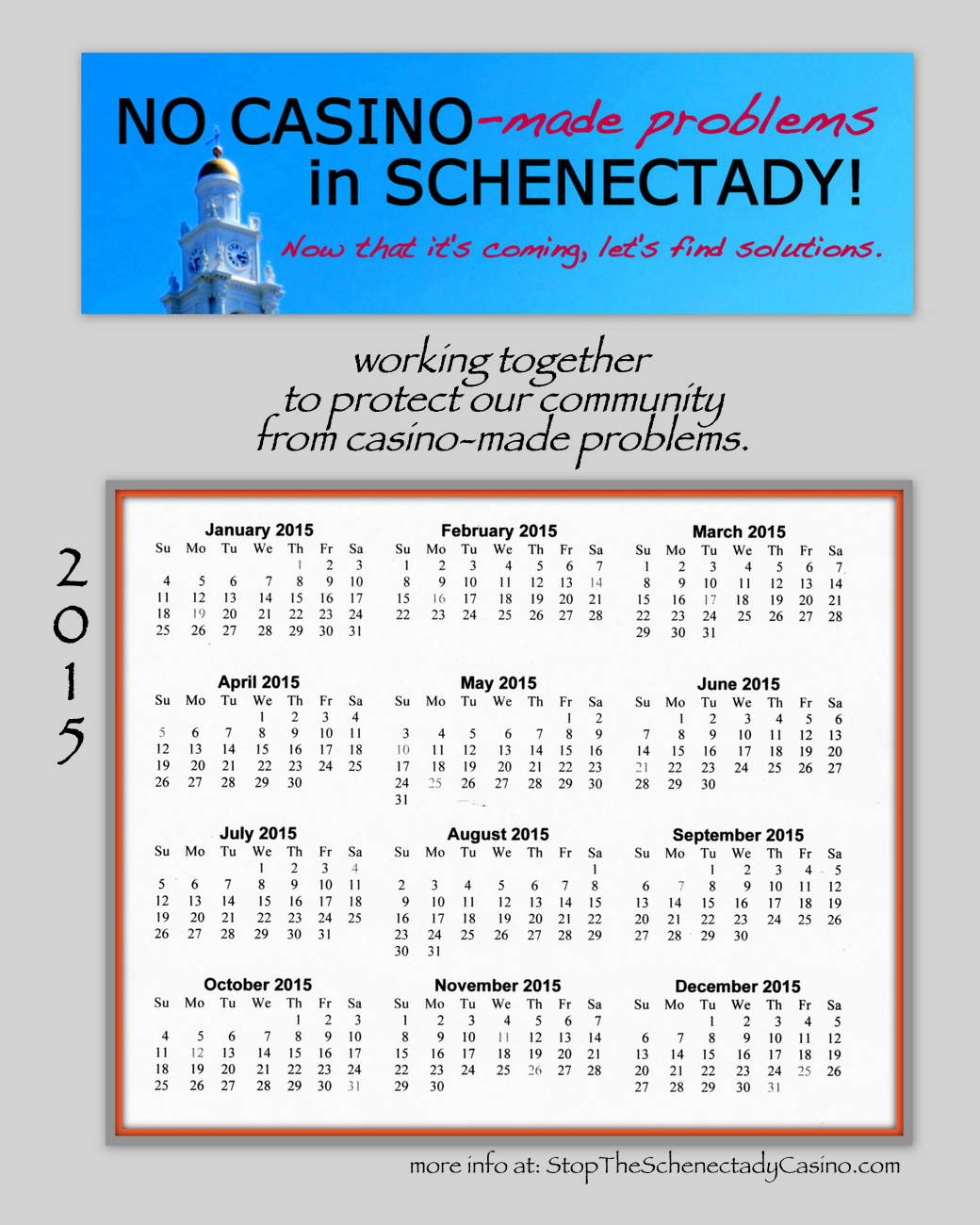
CasinoProblems2015Calendar It’s probably too early for public meetings on the best approaches for avoiding casino-made problems.  But, as the New Year unfolds, we hope the issues will be simmering on all our mental back-burners — whether opponents or proponents of the Schenectady application, in all sectors of our community: commercial, nonprofit, religious, political, academic, law enforcement, neighborhood advocates, and all people of good will.  Individuals and groups need to evaluate problems they feel are especially important and likely to occur in urban casino locations, such as an increase in certain kinds of crime and domestic violence, problem gambling (especially by the poor, elderly, young, and other vulnerable individuals), DUI and traffic problems, personal and business bankruptcy, evictions and foreclosures, etc., and a reduction in the quality of life and property values in nearby neighborhoods, including the Stockade Historic District. (See a possible list, with references, on our Issues page, and a more particular one centered on the Schenectady casino, in our Statement to the Location Board).

Because we are two years away from an operating casino facility, we have time to study experiences and experiments elsewhere and consult experts, to consider alternative approaches, to gauge the likelihood of nurturing community and political support for particular ideas and strategies, and to find individual and groups that have the commitment, ability, temperament, and energy to pursue and achieve our goals.  This need not, and probably should not, be a centrally-organized campaign, but it will hopefully be one where people and groups who share in the mission will also share a spirit of cooperation and mutual assistance in achieving our goals.

NoCasinoMadeProblemsB  You can click on the following link for a large jpg. file suitable for printing the one-page 2015 Calendar shown above as an 8″ x 10″ print. (you may reproduce it for any non-commercial purpose) We hope the calendar will be a reminder all year of the important task ahead.  Contact us with your ideas and/or your desire to be informed of our actions and meetings, or your willingness to be a volunteer in our efforts.