 . . S.O.S.Trees thanks the Schenectady Gazette opinion staff for printing “Save our healthy old trees” [pdf.] as a Guest Column, Sunday, April 24, 2016, D1.
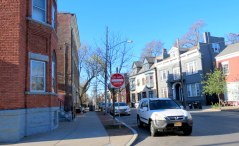
In 2013, Saratoga Springs acknowledged in its Urban and Community Forest Master Plan that “Different People See Trees in Different Ways.” While many folks love and value urban trees greatly, the Spa City Master Plan notes that some residents “see city trees as more nuisance than asset,” messy, in the way, or simply “easily replaceable.” Our S.O.S. Trees campaign hopes to raise awareness of both the benefits of urban trees, especially our mature street trees, and the many alternatives available to removal of those trees when repairing or replacing sidewalks.
- Below are other voices who agree that, in the case of Sidewalks vs. Trees, the balance of the evidence heavily favors trees. The defense “But, we’re fixing your sidewalk,” simply cannot justify the slaughter of street trees that are not dead, dying, or incurably dangerous.
- Share this posting with this shorter URL: https://tinyurl.com/SidewalksVsTrees
 On June 25, 2010, in the editorial “Stockade sidewalk-about“: The Schenectady Gazette Opinion Editor wrote:
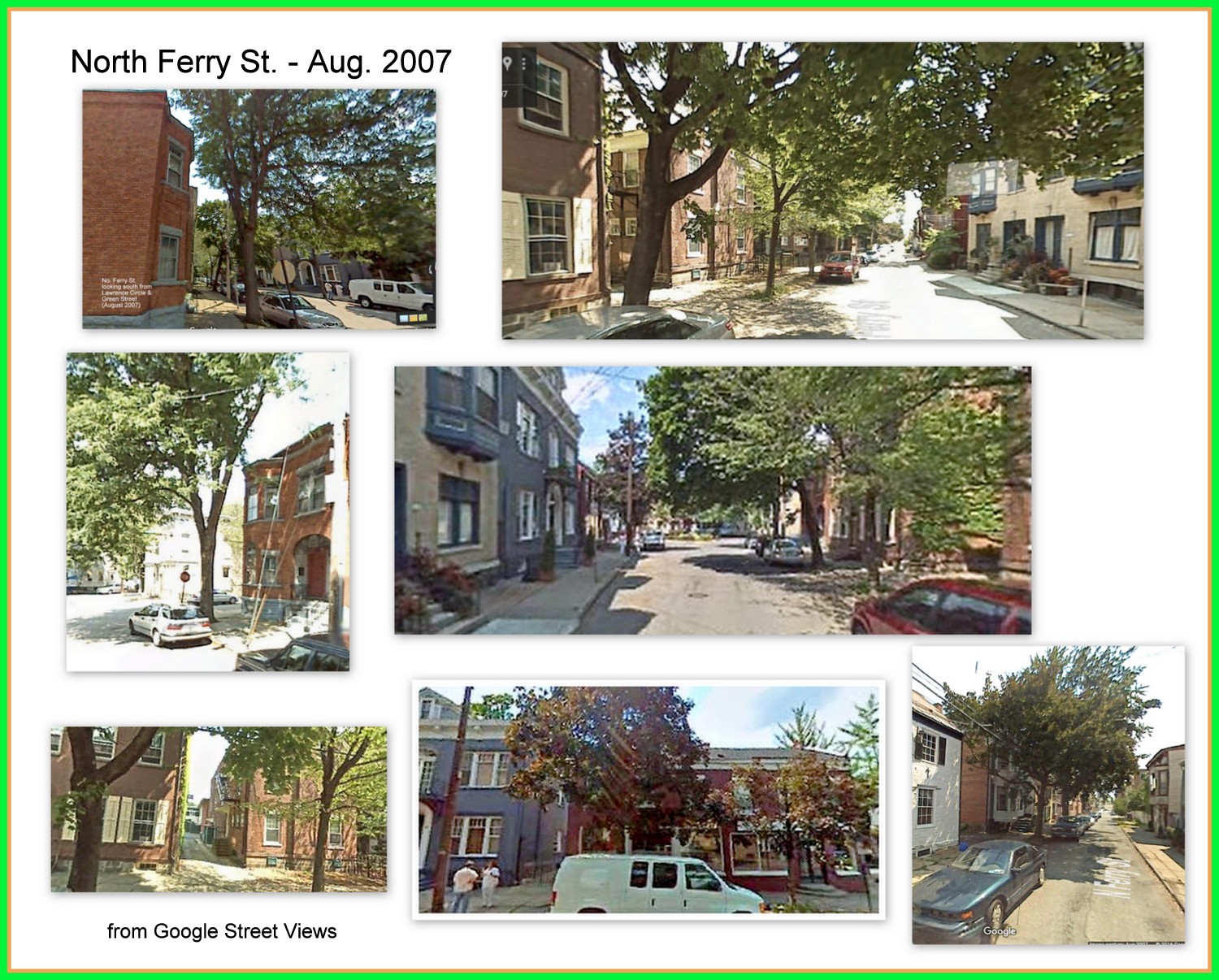
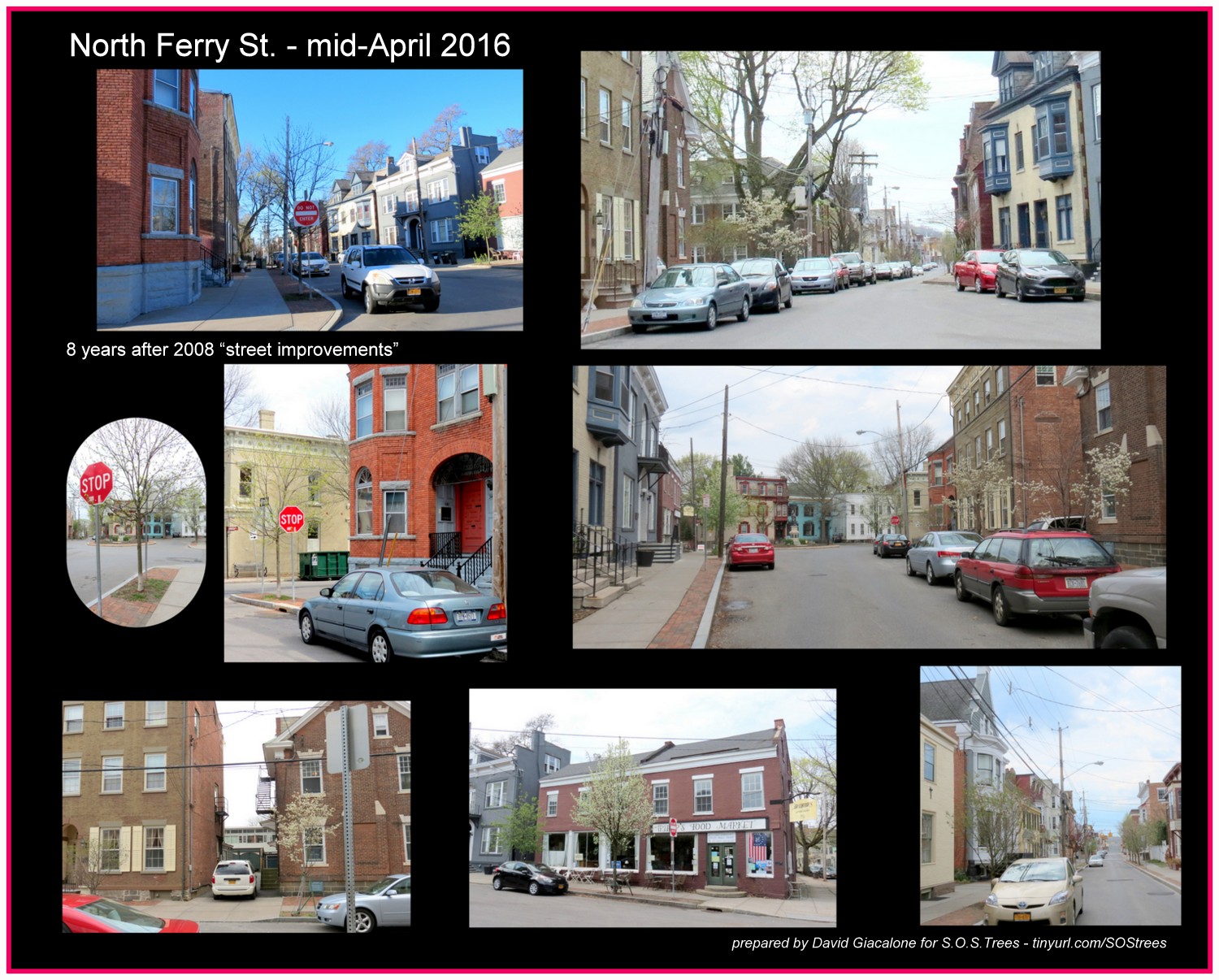
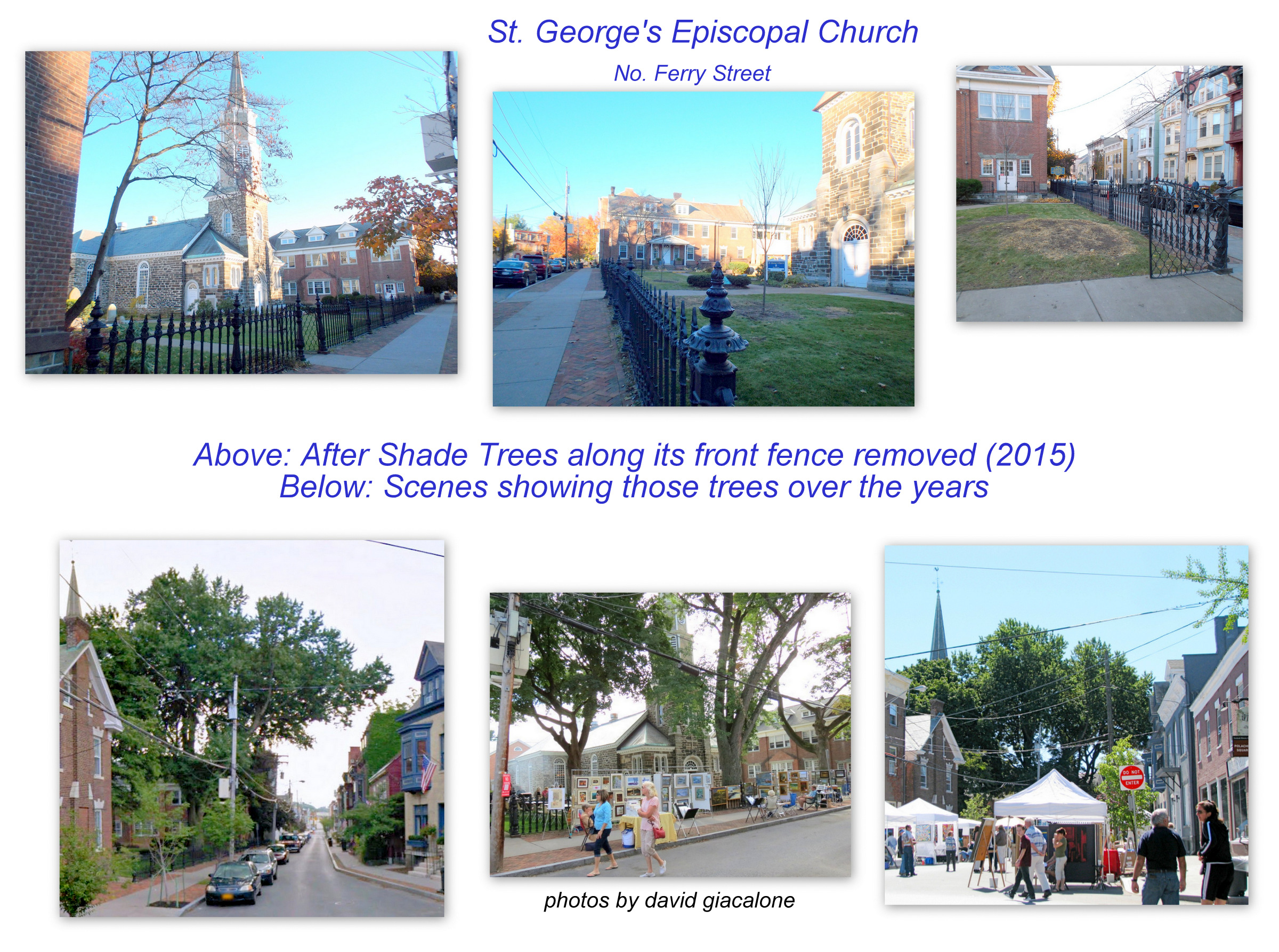
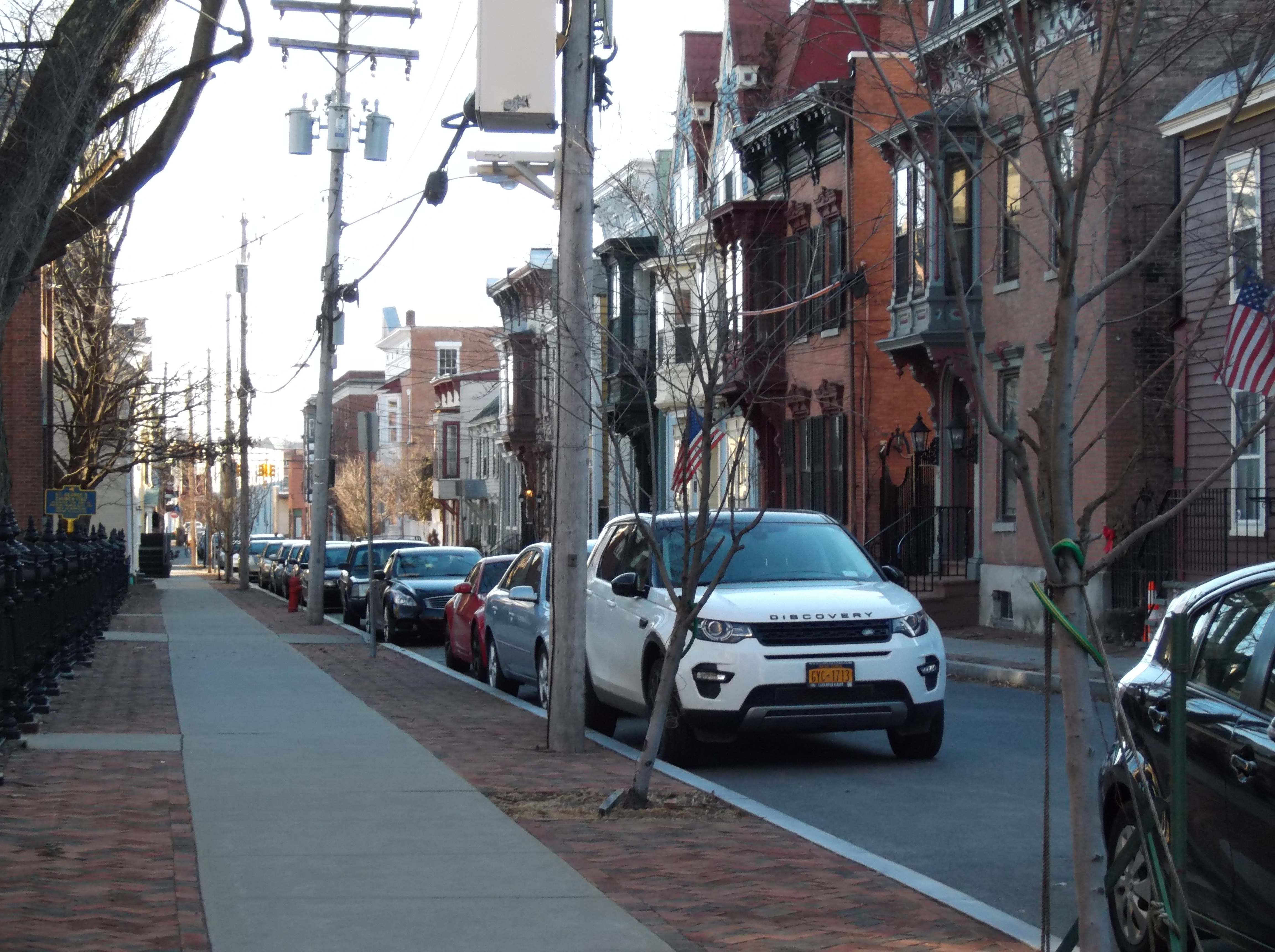
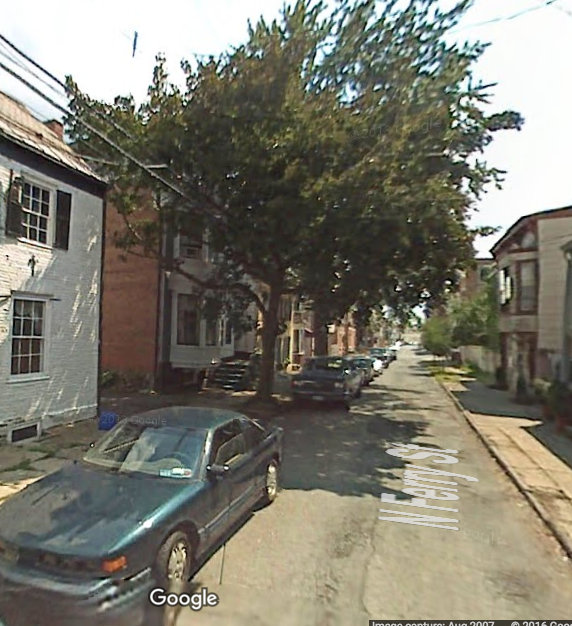
Whether it’s a dock, sidewalks or most anything else, residents of Schenectady’s Stockade tend to have strong opinions. And they were entirely right in condemning the city’s act of environmental vandalism two years ago when it chopped down some majestic old trees on North Ferry Street while repaving the street and redoing the sidewalks there. It was a major mistake, compounded by the fact that the city didn’t consult people in the neighborhood before doing it.
But trees, whose roots have heaved some of the sidewalks on Washington Avenue, shouldn’t be left to residents to decide about keeping, or be responsible for. Even if it costs extra to reroute the sidewalk around large trees, as was done on Lowell Road in the GE Plot, that’s how it should be done and the city should pay for it. If rerouting isn’t possible, then the street should be repaved without redoing the sidewalk.
And if it takes another year or two to work all this out, that’s OK. It takes a lot longer than that to grow a tree.

The City of Tacoma, Washington, declares its preference for saving trees on its Tree Removal webpage:
STREET TREE REMOVAL: for trees growing in the right-of-way, between the curb and sidewalk:
Tacoma’s urban forest is a valuable asset, and all trees on public property are protected. Trees provide increasing benefits as they grow, and mature trees are an asset that requires decades to replace. Tacoma carefully considers each and every request to remove a street tree, and encourages tree planting, regular tree maintenance, and alternatives to tree removal except where no viable alternative exists. Street trees can only be removed if they meet the criteria of being dead, dying, or dangerous. Conditions that do not warrant removal include the tree dropping fruit or leaves, the tree being perceived as too tall or making too much shade, or the cost of routine maintenance.
Saratoga Springs‘ proposed Tree Removal and Replacement provisions in its “Urban and Community Forest Master Plan” (at xxvi), adopted May 21, 2013, have a similar theme:
Tree Removal and Replacement
The Current process for tree removal involves the City taking action to remove dead or dying trees that pose a public safety risk or removing trees at the request of a landowner. This latter justification appears to happen as frequently for trees that pose a risk as it does for trees, which adjacent landowners wish to remove for personal reasons. Under the direction of the City arborist, the City will institute a policy and process of only removing trees that pose a risk to life or property as determined by a qualified arborist or forester.
 Conflicts with Urban Infrastructure is an important topic in the “Tree Guidelines for San Joaquin Valley Communities” (Western Center for Urban Forest Research and Education, 1999). The salient points made in the SVJ Report include (emphases added):
Dwindling budgets are forcing an increasing number of cities to shift the costs of sidewalk repair to residents. This shift especially impacts residents in older areas, where large trees have outgrown small sites and infrastructure has deteriorated.
According to the State of Urban Forestry in California report (Bernhardt and Swiecki 1993), the consequences of efforts to control these costs are having alarming effects on California’s urban forests:
➢ Cities are continuing to “downsize” their urban forests by planting far more small-statured than large-statured trees. Although small trees are appropriate under power lines and in small planting sites, they are less effective than large trees at providing shade, absorbing air pollutants, and intercepting rainfall.
➢ Sidewalk damage is the second most common reason that street and park trees are removed. We lose thousands of healthy urban trees and forgo their benefits each year because of [sidewalk damage].
Collectively, this is a lose-lose situation. Cost-effective strategies to retain benefits from large street trees while reducing costs associated with infrastructure conflicts are needed. Matching the growth characteristics of trees to conditions at the planting site is one strategy.
 The International Society of Arboriculture has taken a strong stand on the side of preserving trees, and for placing the responsibility on the municipality rather the property owner. For example, in its Guidelines for Developing and Evaluating Tree Ordinances (2001), ISA states:
4. Promote conservation of tree resources.
The benefits derived from the urban forest generally increase as tree size and canopy cover increase. Therefore, it is in the best interest of the community to protect its existing tree resources from loss or depletion. It is not possible to indefinitely preserve individual trees, since each tree will eventually die. However, it is possible to preserve both the urban forest and natural woodlands by restricting the indiscriminate removal of trees in all age classes, and by making provisions for natural or human-assisted regeneration. This embodies the concept of conservation.
19. Resolution of conflicts between trees and structures
Purpose: To set priorities for solving conflicts between trees and street improvements. Key elements:
● Priority of trees over street improvements (hardscape)
● Responsibility for approving corrective measures.
Notes: Tree-related damage to street improvements is common in many communities. Although tree roots are blamed for the cracking concrete and invading sewer lines, it is equally valid to point out that these structures fail because they have not been properly engineered to function in a landscape that contains growing trees and their roots. Unfortunately, the approach in too many cities has been to remove trees rather than to find a way to redesign structures to be compatible with trees. This provision can be used to establish the priority of trees over hardscape. Individual property owners normally do not have the resources or expertise to develop satisfactory solutions to tree- hardscape conflicts on their own. Therefore, the responsibility for correcting conflicts between trees and street improvements should not be assigned to the property owner. However, if the conflict results from actions by a property owner which violate municipal tree planting standards, the city may require the property owner to bear some or all of the cost of corrective action.
The ISA Tree Ordinance Guide presents two sample tree preservation provisions.
- [from theSan Luis Obispo, CA: City Code Section 12.24.150] A. When roots of a tree planted within the planting area damage city curbs, gutters and sidewalks (including driveway ramps), the city shall be responsible for appropriate corrective measures which are least damaging to the tree.
- [a sample provision from the Guide’s authors] Where sidewalk or curb damage due to tree roots occurs, every effort shall be made to correct the problem without removing or damaging the tree. The city forester shall be responsible for developing or approving corrective measures in consultation with the city engineer.
The UMass Urban Trees Factsheet, TREES AND SIDEWALKS, offers a useful perspective on approaching conflicts between them. The publication notes:
- Trees often ruin sidewalks, and sidewalk repair often kills trees.
- This conflict comes from the fact that sidewalks and trees have competing needs.
-
- Trees need a soil that is moist and loose, and that they can push aside as they grow.
- Sidewalks need to be smooth (but not flat) on a soil that will not shift with a load.
- Trees and sidewalks are costly and valuable, so both needs must be taken seriously.
After advising “If a tree is in poor condition, it is best to remove the tree and replace the sidewalk”, the Trees FactSheet offers several alternatives for trees in good condition:
- a sidewalk can be curved around the trunk (at least 2-3′).
- In some cases, a raised edge can simply be ground down, or smoothed over with asphalt.
- The new sidewalk may be ramped up and over the roots by starting further away.
- You can also do minimal excavation, and then pour asphalt directly over the roots.
- Gravel, mulch, pavers set in sand, or asphalt can be used instead of concrete.
 Chillicothe, OH The publication “Trees and Sidewalks in Chillicothe” offers a refreshing combination of attitude and practicality. The historic first (and third) capital of Ohio (pop. approx. 20,000) begins its description of the problems and solutions by saying:
Sidewalks and trees aren’t hot topics unless there are conflicts with them. Both sidewalks and trees are crucial in providing important services to our residents and visitors. When there are conflicts between trees and sidewalks, we must be thoughtful in our approach to effectively spend limited dollars and truly address the problem. Surprisingly, there are often efficient and inexpensive ways to repair walks and at the same time retain nearby trees.
The essay continues:
“Causes of the Conflict between Trees and Sidewalks Trees receive most blame when sidewalks fail, but construction techniques, old age, inferior construction materials, unstable soil or even traffic patterns also contribute to sidewalk failure more often than acknowledged.
“Tree related sidewalk conflicts can be delineated into two types of damage requiring different responses.
Sidewalk damage from trunk or root flare where the actual trunk or root flare of the tree lifts the sidewalk
Sidewalk damage from lateral roots where a root emanating from the tree has caused damage to the sidewalk”
The Chillicothe guide’s section “Trees to Retain and Trees to Remove” makes clear the priority to be given to saving trees (emphasis added):
Street trees are community assets. They provide tangible benefits that contribute to the quality of life in any town. Street trees absorb air and water pollution. They abate noise pollution, they provide shade and energy conservation and even raise property values and decrease crime and illness. The value of trees varies according to tree age, size, species and health and structure. Typically bigger trees provide more benefits and are more valuable. The value of large tree decreases when there are infrastructure conflicts or structural defects that predispose a large tree to failure.
People often lose sight about two important aspects of community forestry.
Trees take decades or even centuries to get big.
Most large trees are not replaceable or renewable in the urban environment due to site constraints and other environmental and social factors.
Once they are gone, eighty years or more of growth and services is gone.
In most towns, tree canopies are decreasing. Canopy loss translates into increased pollution, increase stormwater flooding, bigger carbon footprints, lower property values, and many other social, economic and environmental problems.
Trees to Retain….Trees to Remove and Replace
 Young trees are in a vegetative growth phase of life. During this phase, they are actively growing. This is when they will conflict with infrastructure. Once trees mature, they reach their genetic or environmental size and stop growing aggressively. Mature trees rarely do extensive damage to infrastructure. Usually the damage was done long ago when the tree was young and actively growing. In these situations, it is often best to retain the tree. In these situations, a properly repaired sidewalk will last a long time with minimal future damage from the mature tree. . . .
When considering sidewalk repair, there are several well established and inexpensive techniques available. The typical approach of ripping out the old and re-constructing a new walk is the most expensive and this can damage to nearby trees. If the tree isn’t removed, this type of work can render a tree hazardous. Techniques like ramping, grinding and leveling are less expensive than redoing a sidewalk. These do not threaten nearby trees.
Sidewalk grinding: Sidewalk grinding is a temporary measure that restores the offset or heaved portion of a sidewalk to original grade.
Sidewalk cutouts: “Borrowing” space from the adjacent sidewalk creates sidewalk cutouts. This alternative minimizes the sidewalk width for a limited distance adjacent to the tree. Sidewalk meandering: Meandering—realigning the sidewalk’s direction of travel—allows for more growing space for trees in an aesthetically appealing way. The amount of growing space created can be substantial and, therefore, sidewalk meandering is usually the most feasible way to retain large, mature trees. Also, increased distance from sidewalk edge to lateral roots or trunk flare allows for root pruning, when necessary, to occur further from the trunk, which reduces direct contact between the sidewalk and tree roots or trunk. Sidewalk meandering often requires permission from the abutting property owner to dedicate more of their property to the public right-of-way.
Sidewalk ramping: Sidewalk ramping allows existing roots to remain intact by raising the base layer and repouring concrete over the roots to create a gradually sloped ramp. It is used when removal of roots would compromise the stability of a tree. Damaged sidewalk slabs are removed and 4-6 inches of topsoil is placed on top of the existing grade. Sand or gravel and a base layer or crushed limestone is placed adjacent or around the subject roots. A new sidewalk is then installed on top of this new base.
Leveling: Leveling is a technique where a hole is drilled through the sidewalk and silicone/concrete liquid is pumped underneath the slab to raise it. This is becoming a common technique to extend the service life of sidewalks.
Flexible paving materials: Flexible paving comes in many forms, which include: interlocking pavers, common brick and pavers and rubber (Dublin, Ohio uses rubber.) This is the most tree friendly of all the sidewalk repair options.
 FHWA. Additionally, the Sidewalk Design Guidelines for accessibility under the The Americans with Disabilities Act of 1990 (ADA), published by the Federal Highway Administration in 1999), do not mention removal among the options presented when tree roots cause sidewalk upheaval.
Chapter 4 – 4.3.2 Changes in levels
Changes in level are vertical elevation differences between adjacent surfaces. Changes in level are relatively common on sidewalks, particularly in residential areas.
Changes in level that currently exist should be addressed through a maintenance program. Whenever possible, the cause of the change in level should be removed. For example, if the cause of the change in level is an overgrown tree root, the sidewalk should be rerouted around the tree with additional right-of-way or ramp up and over the roots. (Section 4.4 contains information on how to plant trees so that they will not push up through the sidewalk.) If rerouting is not a viable solution, changes of level should be ramped to provide a smooth surface.
Alternatives to Tree Removal are discussed in many online webpages and articles. Here are links to a few examples.

 . .
. . 








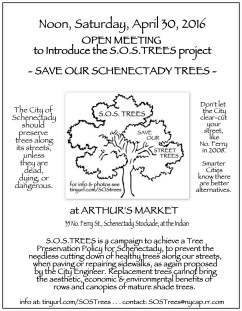 Click for a printable copy of our
 snowmen at the gates

