Not In Our Park!

red check follow-up: Two resolutions passed by the City of Schenectady City Council on June 12, 2017, represent a compromise solution that we hope will sacrifice, at most, less than 0.1 acre of parkland at Riverside Park. See the posting “what the parkland alienation resolutions mean” (June 12, 2017), at suns along the Mohawk.

 Please Note (Monday, May 3, 2017): For a detailed summary of the May 2 informational meeting on the Project, see our post strong, thoughtful opposition to pump station in the park” (May 3, 2017).

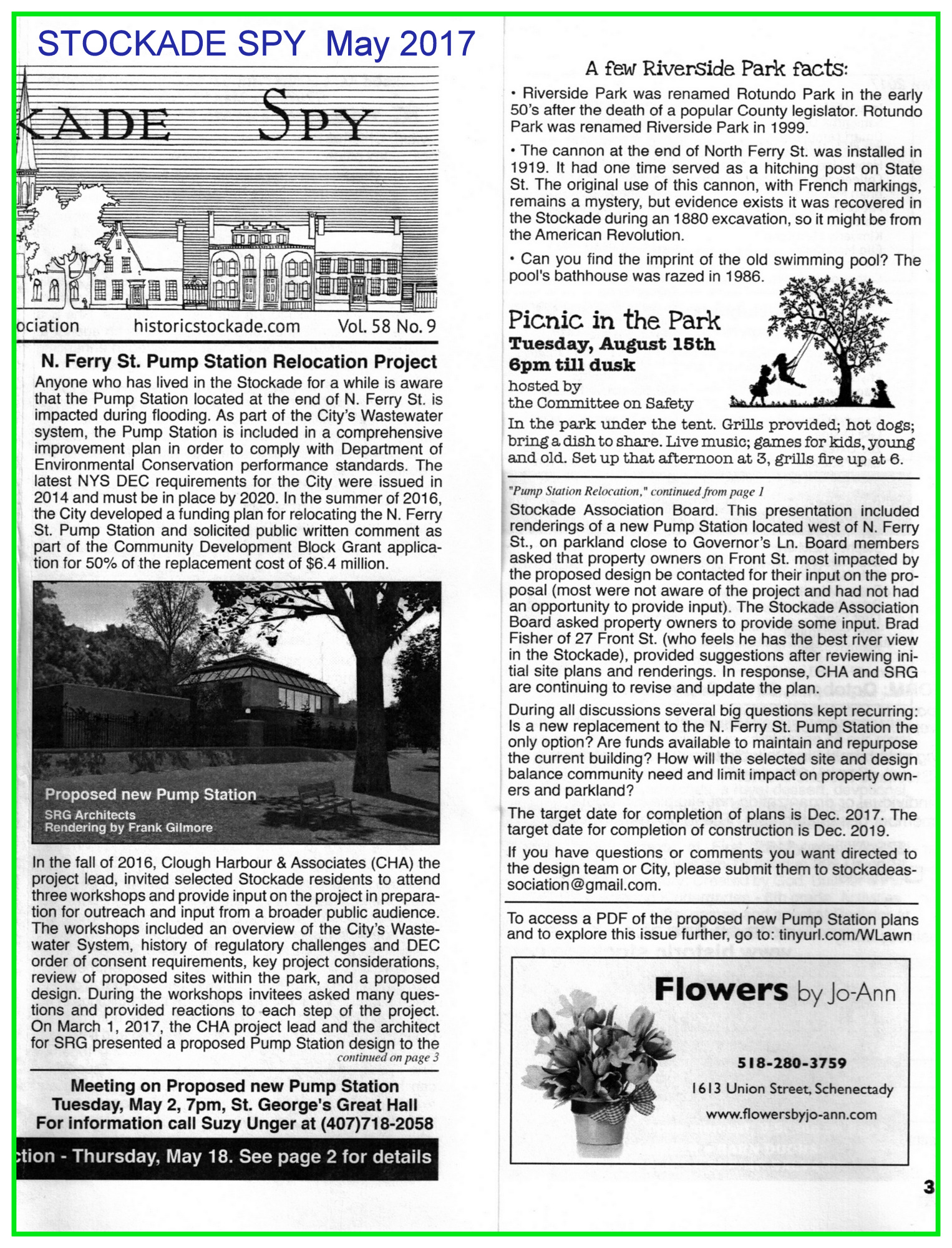
Click this link to see the 25-page Presentation to the Stockade Association Board of the proposed North Ferry Pump Station Project, given on March 1, 2017, by architect Frank Gilmore and CHA’s lead engineer Mike Miller. And, click this link for treatment of the Pump Station in the May 2017 Stockade Spy.

Original Posting

   . . 

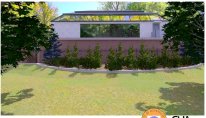
. . above: [L] the West Lawn of Riverside Park; [R] a rendering (from March 1 Presentation to SA Board) of a proposed pump station to be located on the West Lawn. . . For many more photo images, please seethe at-risk West Lawn of Riverside Park. .

below: a scene from the Stockade Association Memorial Day Picnic on the West Lawn (1970s; from “The Stockade – A Past Reclaimed,” Stockade Association)

WestLawn-MemDayPicnic

This afternoon, April 27, 2017, I sent substantially the following email message to the Stockade Historic District Yahoo! Email group:

Thank you, John [Samatulski], for saying aloud and in print what has to be said, and saying it so well. [click here for John’s email to the Stockade Yahoo Group] 

These points need to be made about the Stockade Association Board’s failure to report in a timely manner to the SA membership and the neighborhood on the character of the proposed Pump Station Project:

  1.  screen-shot-2017-04-18-at-2-08-05-pm When presented months ago with the Renderings of the New Pump Station Project there was NO OTHER PROPER RESPONSE FOR THE BOARD of an Association chartered to protect and preserve the residential nature of the Stockade, than to say “NOT IN OUR PARK” and “NOT BLOCKING the VIEWS of and from Stockade properties”. 
    1. westlawnfromesplanade That is even more imperative when the Objectives stated in the SA Constitution and By-Laws include “Development and improvement of the riverfront area”; Protection of historic properties [including their economic value]; and the Promotion of safety and the “aesthetic and physical improvement of the neighborhood”. 
    2. And, because SA has taken upon itself, and is seen by the broader community as having, the role of “Representation before any City or County governmental agency or component on matters affecting the neighborhood”, its failure to strongly oppose a proposal allows the Applicant, and City Hall, including the Mayor, and the planning and historic districts commissions (and their staffs), as well as the Media, to say with emphasis, “Even the Stockade does not oppose this!” [They literally did that with the Casino.]
  2. It does not take an engineer to know that a new pump station is totally inappropriate in Riverside Park, a small gem of a Park, with very limited lawn space. 
  3. A pump station project, and probably any project, that greatly blocks the viewing of the Stockade from any public space, especially rare views of our backyards, lawns and gardens, is totally inappropriate.*/
  4. newpumpstationcollge Our job — as residents, owners, and lovers of the Stockade, as well as the Board and the entire Association — is to say “NO! NOT IN OUR PARK! FIND ANOTHER SOLUTION.” The job of the City and its experts is to find a solution that meets the wastewater requirements of the City and State, or prove beyond any reasonable doubt that the new Station must swallow up part of the Park and destroy the Stockade viewshed.
  5. Delay This! By not alerting the neighborhood of the project proposals that were presented months ago to the Advisory Committee and then the SA Board, the Board has played into the hands of the City, its lawyers, and the project proponents, who will surely use a purported lack of time for complying with its agreement with the State as an excuse for not finding a suitable alternative. The Board members’ job was not to wait around for fine-tuning or the eventual unveiling by the proponents, so that they could say that comments were addressed, and a shrub or two was added or window glare reduced. Their job was to sound the alert that the quality of life in the Stockade was being threatened.
  6. An SA officer or Board Member, or candidate for those positions, who does not agree with one or more of the points above should declare their disagreement and give reasons.

You can find photos of the endangered West Lawn of Riverside Park, and images of the Renderings, at “suns along the Mohawk”, at http://tinyurl.com/WLawn . 

  • On a personal note, I must say that it is a relief to have others raising, in public and forcefully, issues that I have been addressing, and more. We cannot hope to protect the Stockade by playing (silent and minor) partners to so-called Partners in Progress at City Hall. Advocates need to advocate avidly to achieve their goals, and to be respected by politicians. And, we need to use all the available means of communication, such as email and the Stockade Association website, to keep the Stockade neighborhood informed ofnimportant matters.

Thanks for taking the time to consider these points. Please plan to attend the public presentation by CHA of its Pump Station Project on May 2, I hope we can be told the location and time ASAP.  at 7 PM at St. George’s. 

David at Cucumber Alley

______________________________________________

*/ Any Board or Association member who is asked to review a project in or impacting the Stockade neighborhood should have on the tip of his or her tongue or fingers reference to The Dept. of Environmental Conservation’s policy statement on Visual Impact Assessment [available at http://tinyurl.com/VisImpactDEC]. The DEC Visual Impact Policy Statement, among other things, says that a formal visual impact assessment is needed, with at least a line-of-site survey, whenever any component of a project can be seen from an historic district, such as the Stockade, with adequate mitigation measures taken to prevent any significant visual impact on or from the District.  [The Visual Impact Policy should also be posted at the Stockade Association’s very underutilized website.]

Even The Galesi Group and Rush Street Gaming stated, in their Application to the Casino Location Board for the Schenectady casino license, that a Visual Resource Assessment (VRA) in accordance with the NYSDEC Visual Assessment Policy was needed to identify the potential impact of the proposed development scenario on the visual character of surrounding neighborhoods. [Because they ignored the 80’ pylon tower in their own VRA and stressed the low-rise nature of the casino complex, they said it would have no impact on the Stockade.]

red check What’s So Special About Riverside Park?

Riverside Park is only 6 acres of land, stretched along 1/3rd of a mile of riverbank. In thinking about the impact on the Park, I hope decision-makers will keep in mind three sources of praise and caution from outside the Stockade:

  •  On January 26, 1998, a Resolution of the Schenectady City Council resolved, that Riverside Park “is recognized as a unique component of the [Stockade Historic] District and best serves residents and visitors as a quiet place to view the natural beauty of the Mohawk River.”  In addition, the Resolution stated that “to change its special nature would deprive visitors and disadvantage the homeowners who are the caretakers in this Historic District of national importance.”
  • With its combination of urban waterfront beauty and relative tranquility, Riverside Park was praised by the editor of Architect Forum as “probably the finest thing of its kind in America.” (Dec. 1961) 
  • In addition, and not surprisingly, the Mohawk River Waterfront Revitalization Plan for Schenectady County (2010) has noted that even recreational changes to the Park have been controversial. Therefore, the Plan notes (at 71): “Identifying the appropriate intensity of recreational use along the river has been a sensitive issue in the area of the residential Stockade neighborhood. Riverside Park provides a walking trail from which neighborhood residents view the river. The most active use relating to the river is the occasional fisherman. Thus, the nature and location of the Park “inhibits any significant expansion of use other than to improve it as a scenic overlook and to improve pedestrian and bicyclist access and connection to adjoining areas.” As a result, the only recommended projects in the Plan for Riverside Park involve making improvements in the park’s “current amenities,” connecting it to East Front Street Park and the Union Boathouse, better accommodating bicyclists through path improvements, and creating an alternative Bike-Hike trail. [Nope, nothing about losing a major piece of the Park for a modern, industrial-like project.]

Riverside Park and the proposed Pump Station

  Please see “the at-risk West Lawn of Riverside Park” at our sister site, “suns along the Mohawk”. Who is protecting our Park and neighborhood? More discussion coming soon [update (April 27, 2017) seeNot In Our Park!”].

. . This image of a snowman sentinel on the West Lawn, as seen from the rear of 29 1/2 Front Street, is now randomly used above as our header, alternating with our primary Snowmen at the Gates image.

. . a view of the West Lawn, Sunday morning, April 23, 2017 . . 

Poker strategy stumbles along the Mohawk (with updates)

 . . Rivers Casino Poker Room

 Despite good media coverage and optimism for River Casino’s roll-out of daily Poker Tournaments last week (see Times Union & Gazette), Schenectady’s Mohawk Harbor Casino posted record-low weekly revenue numbers for the second week in a row, with generated dollars down for the 7th time in 8 weeks. Total GGR for the week ending April 16, 2017 was merely $2,532,004, down  5.2% from the prior week’s nadir. Indeed, its Poker Table GRR during its first week of daily tournaments went down 12.9% from the prior week. And, slots GRR tumbled another 9.7%. Meanwhile, Capital Region competitor, Saratoga Casino and Hotel saw a 6.0% drop from its prior week’s Net Win numbers.

  •  For more information and discussion about revenues at the Mohawk Harbor Casino, see our posting on April 7, 2017, which has relevant charts and links; short URL: http://tinyurl.com/RiversDown . (Image at head of this blurb is  detail from C. M. Coolidge’s “A Friend in Need”.)

update (April 22, 2017, 12 AM): See “Income falls at Rivers, Saratoga: Gross revenues from gaming off more than 5% in week’s stretch” (Times Union, by Eric Anderson, April 22, 2017), which noted:

For Rivers, it’s the lowest weekly revenue figure since its opening in early February, and it came despite a series of poker tournaments during the week.

The poker room has been popular among casino customers, officials have said.

Observers have suggested that extensive roadwork on Erie Boulevard outside the casino may have played a part in the decline. . . .

The casinos haven’t released attendance figures, so it’s not clear how the restaurant and other food outlets have performed.

follow-up (April 28, 2017): Finally some good news for Rivers Casino Schenectady and those counting on its revenue stream. For the week ending April 23, 2017, GGR were $2,866,673, up 11.6% from last week’s lowest-ever figures. See the Official Weekly Report. A screen shot of the April numbers is immediately below this blurb. The Net Win figures up the road at Saratoga Casino were up 3.9%.

RiversRevs28Apr2017

revenues last week worst yet at Rivers Casino in Schenectady

 Rivers Casino’s 9th week of operation generated its worst week of revenues yet at Mohawk Harbor in Schenectady.  Revenues were down for the 6th time in 7 weeks, registering at $2,669,892, a reduction of 7.86% from the prior week’s dismal numbers. Its closest geographic competitor, Saratoga Casino & Hotel, saw a much smaller reduction last week of 1.5%. Here is a composite of the reported numbers on the Racing Commission site:

RiversRevsTo09Apr2017

For more information and discussion about revenues at the Mohawk Harbor Casino, see our posting on April 7, 2017, which has relevant charts and links; short URL: http://tinyurl.com/RiversDown .

print “His Station” by Coolidge

 The Schenectady Casino started daily poker tournaments last Monday, April 10, 2017, in the hope of increasing revenues. [see Gazette coverage, and Times Union coverage of the poker strategy] Those results will not be public until next Friday, April 21, 2017.

A shorter URL to use to share this posting is http://tinyurl.com/RiversRevsDown .

. . for discussion of projected revenues, check out what do those Casino revenue figures mean? (
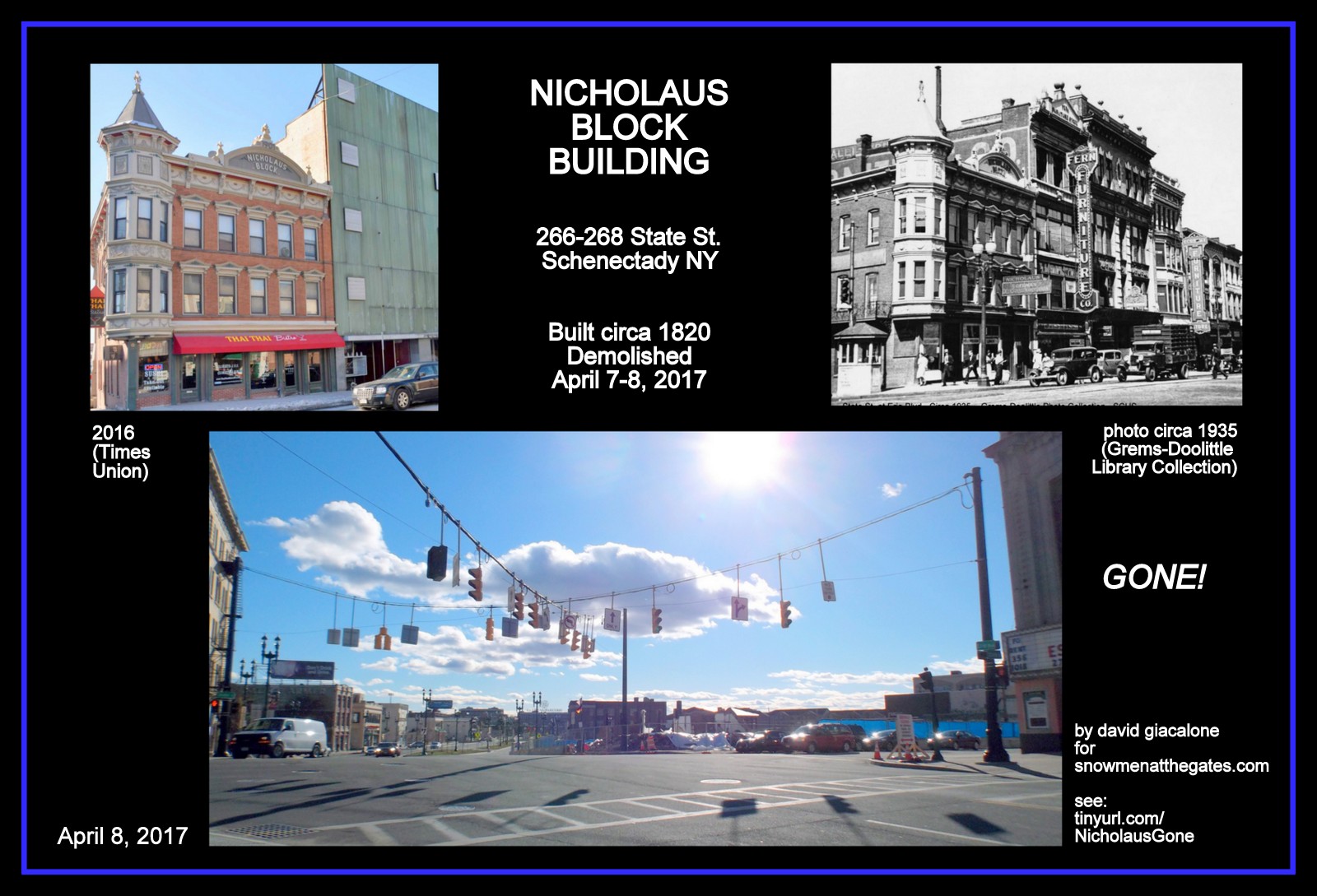
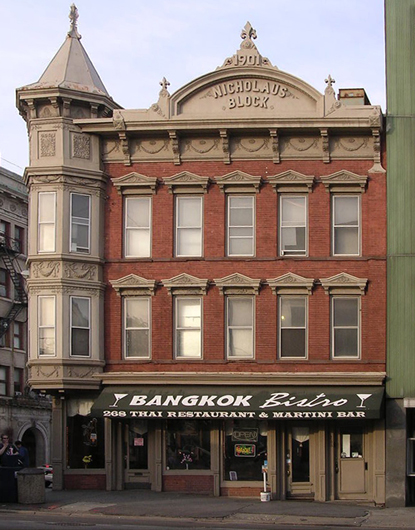
Nicholaus Block building demolished amidst dissembling and dismay

. . click on the above collage for a larger version . .

detail from Howard Ohlhous photo


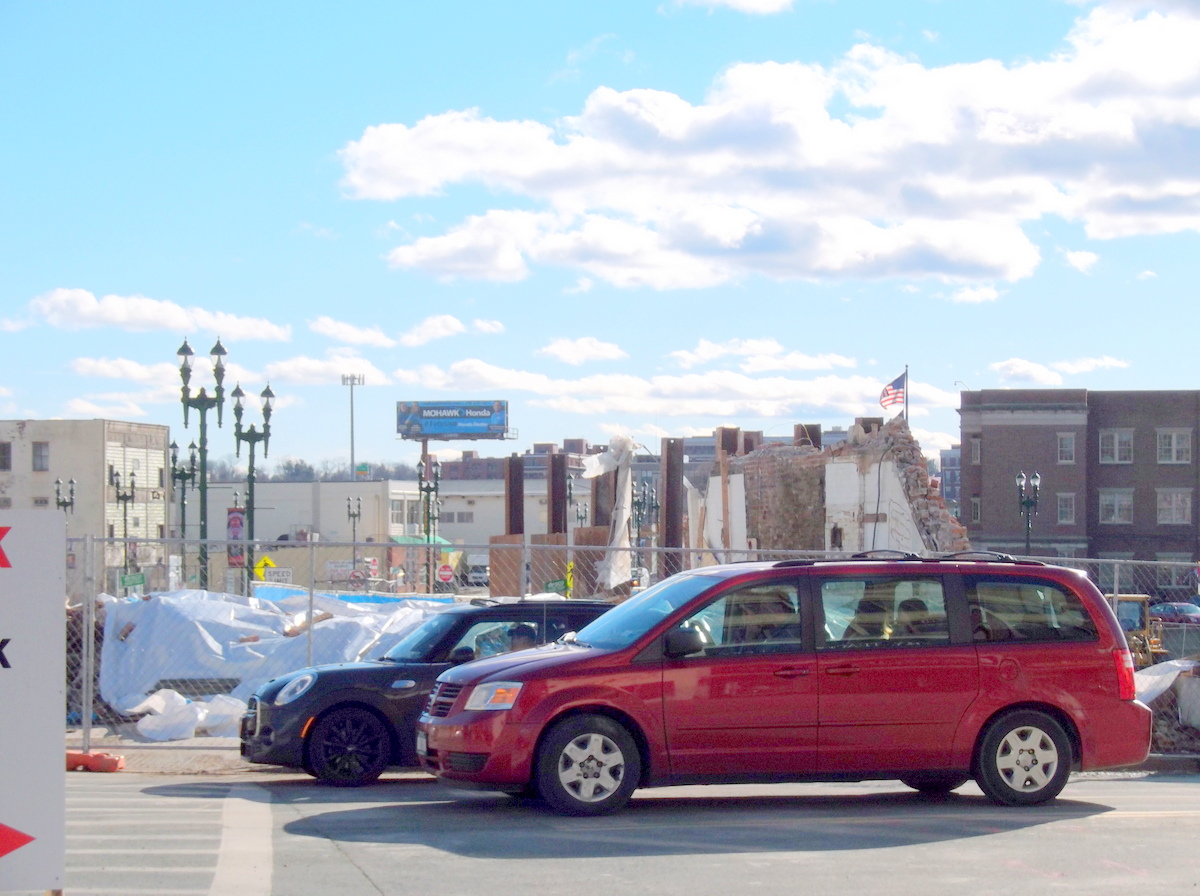
Admirers of the Nicholaus Block building and advocates for preservation of our City’s fine old buildings were instantly filled with dread Friday afternoon, April 7,2017, when the Schenectady Police Department announced the immediate closing of the blocks alongside the Building. We were told that an engineering firm monitoring the structure had concluded that the building posed an immediate threat to public safety and could collapse. Sadly, we were right to fear the worst: by late that evening demolition had began on the grand structure, a beloved relic of the City’s German immigrant culture. There will be much finger-pointing and wringing of hands in Schenectady over this tragic episode in our history of preservation failures. But, I will try to keep this posting a eulogy for a structure that was a wonderful piece of Schenectady history for almost two centuries.

  • You can read the explanations given by our civic leaders in “Schenectady’s Nicholaus Building reduced to a memory: Overnight demolition brings down two centuries of history” (Albany Times Union, by Robert Downen, April 8, 2017); and “Schenectady’s Nicholaus Building: What happened? The iconic building was erected in 1820″ (Schenectady Daily Gazette, by Daniel Fitzsimmons, April 7, 2017). Suffice to say that Metroplex Chairman Ray Gillen and both the Mayor and Corporation Counsel of Schenectady say that they did everything they could do to save the building, including having engineers draw up a plan to stabilize it and offering to buy it, with no response from the owners, Viroj and Malinee Chompupong. As of the posting of this piece, the Chompupongs have not commented on the course of events since he building shifted and was evacuated in April 2016.
  • Followup (April 11, 2019): Exactly two years to the day that the Nicholaus Block Building was demolished, the front page of the Sunday Gazette was dominated by an article headlined, “Apartments at Schenectady’s most prominent intersection welcome first tenant: Electric City project has transformed corner of key intersection” (by John Cropley, April 7, 2019). Purposeful or inadvertent irony?

My research last night uncovered two excellent histories of the Nicholaus Block Building, and I recommend your taking the time to read them, rather than having me grab a few quotes from their narratives:

  1. An extensive piece at MyUpStateNYPhotos, originally posting on March 18, 2016, and updated yesterday, April 8, 2017. In addition to the building’s history, it has a good description of the problems that began in April 2016 during excavation for the Electric City Apartments complex next door, and ended in the demolition. It also notes that Nicholaus building suffered a large explosion in 1975, and the recent widow Mary Nicholaus considered demolition, but decided to repair it and continue.
  2.  A weblog post at the Grems-Doolittle Library Blog of the Schenectady County Historical Society, Good Food Without Frills”: Nicholaus Restaurant in Schenectady (May 14, 2014, by Library Volunteer Ann Eignor), which has photographs of both the exterior and interior of the building (including its famous bar; see image to the right from the Larry Hart Collection), as well as the Nicholaus family and restaurant staff, and a menu with German Specials, plus Loppa, a macaw parrot that was a longtime mascot at the Bar and was stuffed upon its demise and later donated to the Historical Society.

A Gazette article from 2014 gives a quick summary of the building’s history. It has the now-ironic headline Schenectady’s iconic structures remain amid era of change: One of the city’s best features is its diverse stock of buildings, old and new, crumbling and stately” (by Bethany Bump, Sept. 7, 2014). The youthful Ms. Bump tells us:

Nicholaus Block (266-268 State St.): Modern day Schenectadians know the brick building at the corner of Erie Boulevard and State Street as the home of Thai Thai Bistro (and before that, Bangkok Bistro). One of the few remaining buildings from the Erie Canal-era, it features bay windows and an ornamental roof engraved with fleurs-de-lis.

The Nicholaus Hotel opened here in 1901. It housed the German-themed Nicholaus Restaurant until 1975 and then Maurice’s Readi-Foods until 2004. A good part of the building was actually built in the late 1820s, soon after the Erie Canal came through, and was used for many years as a saloon.

coming soon, without the Nicholaus Block gracenote

The editor of this website moved to Schenectady in the apparently pre-modern year of 1988, and my first residence in Schenectady was on the block across the street from the Nicholaus Building, at Barney Square. That was the era of the popular luncheon spot Maurice’s Readi-Foods. I immediately admired the style of the old building, as I walked to my first local job, at Family Court. Since then, I have admired the beautiful bar and marveled at the Hofbrau-Haus murals that still graced the main dining room of the two subsequent Thai restaurants. I’ve continued to admire the building over the years, and am happy to say that I walked past it almost daily in the past month, on a new strolling-exercise regime. I am going to miss the Nicholaus Building, and surely will be mumbling about the bland modern building that will soon dominate that block.

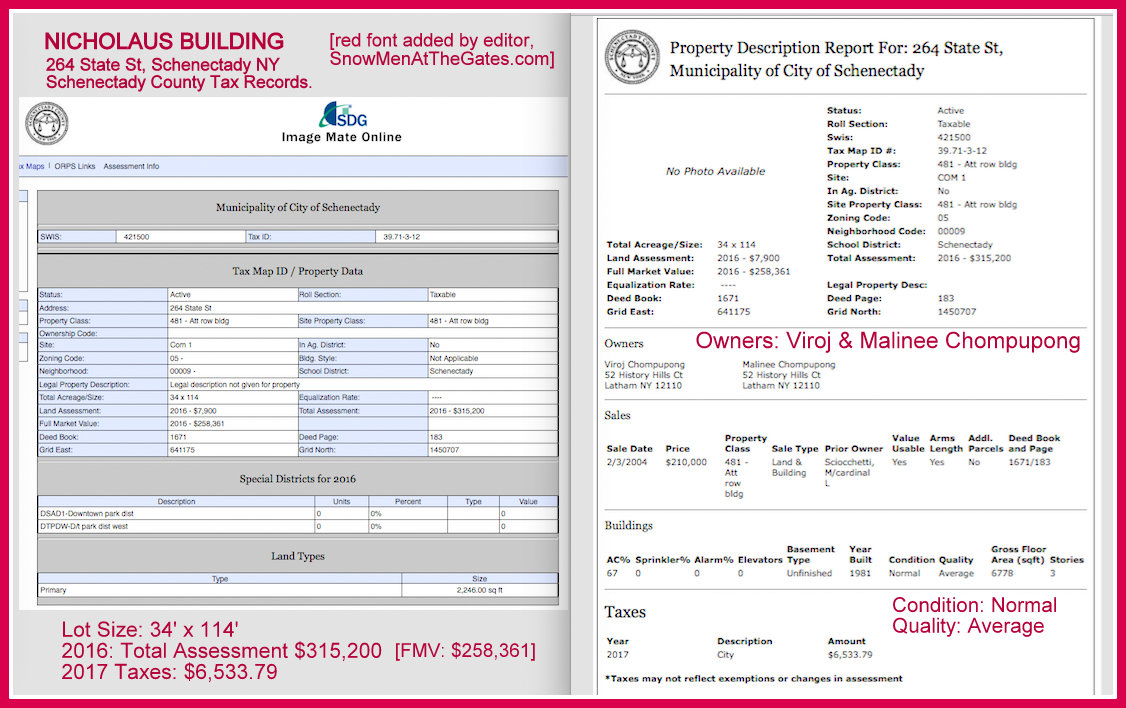
 . . click this image to see County Tax Records for the Nicholaus Building; Note: The lot size is 34 ‘ by 114’; it was assessed at 2016 for $315,200. A short link for the above Tax Info is http://tinyurl.com/NicholausTax

The Nicholaus Building holds far more “personal” memories for the residents of Schenectady than most of our other lost structures. I hope its demise will inspire sharing those stories (for example, by leaving a comment to this webposting). Whether it will cause the populace to be more vigilant and more vocal about our desire to preserve the dwindling stock of fine old buildings is another matter. Will Mssrs. Gillen, McCarthy, Gardner, and other decision-makers who act as if all development is good development, and all developers civic-minded heroes, get our message? We need to raise our voices much higher.

. . as if it were never there . . 

Postscript: I originally planned to keep this posting eulogistically upbeat, but the Snowmen At the Gates part of my brain has to gnash its teeth a bit. Yesterday, I wrote at the Gazette website in a Comment:

The fate of the Nicholaus building represents the further loss of our trust in the leaders of our City and Metroplex. After so many half-truths, so much deception, and so many promises of preservation not kept, we never know if we can trust the information and excuses we are given for their actions and inaction. We keep hearing about a Renaissance in Downtown Schenectady, but it often feels like the Dark Ages.

Last week, our leaders held a party to congratulate themselves for bringing the Casino to Schenectady, giving themselves far too much credit, in my opinion. They also boasted about spending two years orchestrating a free shuttle from Downtown to the Casino, at taxpayer expense. Perhaps Metroplex and City Hall should have spent a bit more time trying to save the Nicholaus Building.  They might have, for example, pried some money from Rush Street Gaming, which has voluntarily given millions to other cities for community projects, to use to fix the Nicholaus stability issue. Or, a Metroplex loan or grant for the Nicholaus might have been offered, as such architecture is also a draw for downtown.

Now, we hear the City “will be seeking to recover the $168,000 cost of the demolition from the Chompupongs.” [Follow-up: May 13, 2021, Daily Gazette, “Court fight continues over demolition of landmark Nicholaus Building“, by John Cropley.] I’m scared to speculate on what will replace the Nicholaus Building in that wedge at the corner of Erie Blvd. and State Street. Perhaps, we will have a little bit of lovely green space, to compensate a bit for all of the green grounds originally promised for Mohawk Harbor, but now covered with parking lots and crowded structures.  If it is eventually replaced by another building, I hope we will not get yet another less-than-mediocre façade slapped at too-little-expense on an unremarkable structure. Is that too much to ask? In Schenectady, perhaps it is.

See Sara Foss’s opinion column, “The Nicholaus Building could have been saved: Sometimes buildings fall into disrepair … but that’s not what happened here” (Daily Gazette, April 11, 2017). “How it will all play out is anyone’s guess, but if you ask me there’s plenty of blame to go around. The big losers are the residents of Schenectady, who lost a valuable piece of history last week and still don’t know exactly why.” And, see: “Need answers in Nicholaus demolition: Serious questions remain about building’s destruction” (Daily Gazette, April 17, 2017), an OpEd piece by Gloria Kishton, chair of the Schenectady Heritage Foundation. Ms. Kiston wrote:

After the building was damaged, it was appropriate for Metroplex to hire a well-regarded engineering firm to provide plans for stabilizing the building.

But, they should also have paid for the repair work. Highbridge/Prime is receiving a $1.2 million Empire State Development grant through Gov. Andrew Cuomo’s Regional Economic Council.

These funds should have been used to repair the building.

It was outrageous and unjust to expect the owners to pay for repairing damage others caused, and to recoup the expense through insurance or litigation.

Adding insult to injury, the city of Schenectady intends to hand them the bill for the “emergency” demolition!

Now that the pesky Nicholaus Building is gone, Highbridge/Prime will proceed full speed ahead with its development.

. . share this post with this short URLhttp://tinyurl.com/NicholausGone

For More Downtown Dismay, see:

 . . Nicholaus what?

record decline at Rivers Casino Schenectady


For the fifth time in six weeks, week-to-week net revenues at Rivers Casino in Schenectady declined last week. [see the composite Report to the right; and the Official Weekly Report.] The 19.8% fall in revenues, down to $2,897,721, was the largest to date at the Casino, which opened February 8. While Rivers Schenectady saw a significant decline, revenues at nearby Saratoga Casino edged up 1.8% to a Net Win of $2,858,905. (Compare the figures reported March 31, 2017 by the Times Union’s Eric Anderson, here; and click here for our prior revenue coverage)

  •  Rivers also reported its Revenue Tax distributions for February 2017, showing that Schenectady County and the City of Schenectady each received $191,991 as their home community share of revenues paid to the State. The average daily GRR for the opening weeks in February were, however, significantly higher than the daily average since then. Nonetheless, the payment of $191,991 for the 22-day partial month of February would result in an annualized total of $3,185,305. When selling the Schenectady Casino to the Racing Commission and the public, Rush Street (and Mayor Gary McCarthy) projected payment of $4.1 million each (22% more) to the City and the County once revenues stabilized.

. . share this post with this short URLhttp://tinyurl.com/RiversDown

update (Saturday, April 8, 2017): The Schenectady Gazette covered revenue and tax distribution for February and march in an article in today’s paper, “Rivers Casino revenues up in March, still behind projectionsFigures from first full month of operation reported” (Brett Samuels, April 8, 2017). As I wrote in a Comment left at the online webpage for the story (which also suggests other issues needing coverage):

deskdudeThe real news is not that — OMG!! — revenues for a 31-day month were higher than for a 20-day month, but that revenues have been down five of the past six weeks. In fact, the decline last week was 19.8%, while Saratoga Casino had about a 2% increase.

The Gazette article does give a nice summary of the projection shortfall issue (while also suggesting reasons revenues might rise as the year progresses):

If the current pace of just over $200,000 per month continues, the city and county would take in about $2.3 million for 2017, falling well short of Rush Street Gaming’s projections submitted in its 2014 application with the Gaming Commission. . .

That economic impact analysis, which included five-year projections for gaming revenues, estimated the low-end gaming revenue for the city and county would be about $3.3 million each for the city and county.

In preparing its 2017 budget, Schenectady County used the low-end revenue estimate, $3.3 million, and pro-rated it to a March opening. That would leave the county expecting about $2.75 million in casino revenue this year.