doldrums along the Mohawk (and, an undertow, too)

The press has told us that revenues are up significantly the first half of 2018 compared to the same period last year (see our posting). So, I was somewhat surprised this afternoon looking at the Gross Gaming Revenue figures for the first three full weeks of July 2018: Despite a 17% increase in Slots/ETG GGR, the Total GGR was down 9.5% compared to the same period of 2017 ($9,475,893), while Table Game GGR fell a remarkable 53%. Click for the Rivers Casino Weekly Revenue Report. And, click to see a chart of the numbers for the first three weeks of July in 2017 and 2018.

RiversGGR-CompareJuly2018 full-month follow-up (August 4, 2018): Rivers Casino Gross Gaming Revenue numbers for the week ending July 30, 2018 were posted today, allowing us to tally the full comparison of the two Julys at Schenectady’s Rivers Casino. The numbers and totals can be seen on this chart. Here’s the summary:

The Gross Gaming Numbers at Rivers Casino at Mohawk Harbor for July 2018 were:

  • in Total, at $11,644,566, down 3.3% over July 2017
  • for Slots/ETG, at $8,574,114, up 19.4% over July 2017
  • for Poker Tables, at $454,123, up 9.5% over July 2017
  • for Table Games, at $2,616,325, down 41.1% over July 2017

. . share this posting with this short URLhttps://tinyurl.com/MohawkDoldrums

questiondudequestionmarkkeyRed Moreover, revenue so far in for the full month of July 2018 was down 3.3% over July 2017, despite Rivers Casino and Mohawk Harbor having achieved/installed virtually all of the “wait-until” features that we were told will stabilize and generate the projected revenue:

  • the opening of the 200-unit River House apartments in August 2017 at Mohawk Harbor
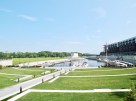
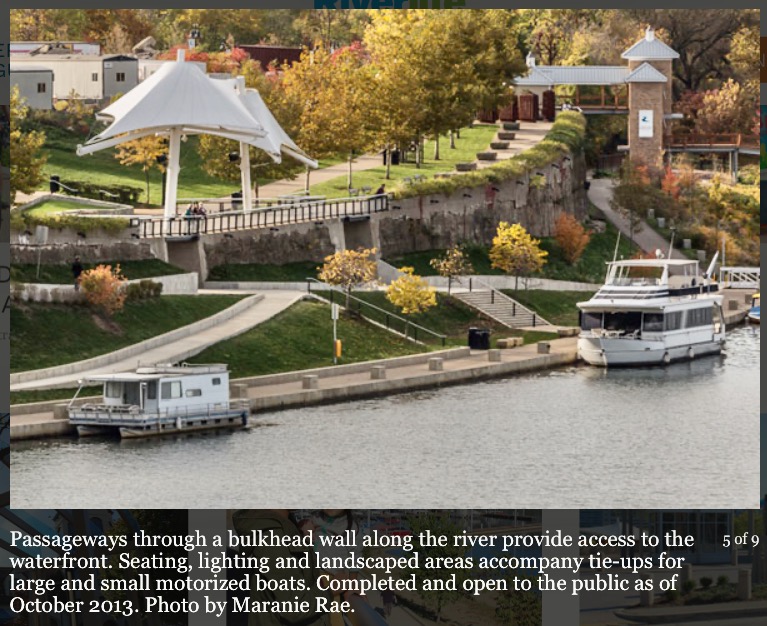
  • MHMarina-Amphi3Jul2018the availability for the summer boating season of Mohawk Harbor Marina, which was opened in November 2017.
  • opening of the Harbor Amphitheater, and presentation of free Harbor Jam concerts this summer at the Marina every Saturday night since June 23. And, note this follow-up (Aug. 2, 2018): In today’s Gazette article “Harbor Jam heats up in Schenectady: Free outdoor concert series is packing them in at Mohawk Harbor” (at 8 of the Ticket section, by Indiana Nash),  are told: “The series has drawn more people into the casino as well as to places like Druthers Brewery and Restaurant, which is located on Harborside Drive.” In the print edition, the sub-headline states “Fans flock to free series, helping casino, restaurants.”
  • another big crowd for a set of impressive Fourth of July Fireworks

  • MHDruthers30May2018 the much-publicized and anticipated opening of Druthers Brewing Co. at Mohawk Harbor on June 21
  • The Casino’s Landing Hotel being open the entire month of July (only a week last year)
  • The installation of a “CYCLE!” bike-share station at Mohawk Harbor
  • MohHarb30ftPylonthe erection of a giant (30′ by 18′) shopping-mall style pylon sign, with large and bright LCD screen, advertising the Casino and many amenities of Mohawk Harbor, at the intersection of Mohawk Harbor Way and Erie Blvd.

DiscoverSchenectadyLogo In addition, the new Schenectady County Tourism and Convention Bureau, has been active all year, with a budget over $400,000. The Tourism Bureau, with its Discover Schenectady website, puts a lot of stress on Schenectady’s Casino, giving it its own “Casinos” Category (and related webpage) on the Things To Do pull-down menu. The Casino’s Convention Center is also a focus of Bureau activity. It is funded with Schenectady County’s recently-raised room occupancy tax and other sources, including the state’s “I Love NY” program.

  • The Board of the Convention and Tourism Bureau, naturally, includes representatives of the Casino, and its business partners, and Mohawk Harbor. The vice president is Brooke Spraragen, director of project planning at The Galesi Group, the developers of Mohawk Harbor, and owner of the land under the Casino parcel.

redflag-circle Our July 16, 2018 posting noted that the increase in gambling revenue at Rivers for the 2nd Quarter of 2018 came totally from Slots and Electronic Table Games. We need to raise a red flag about just whose money is floating Rivers’ boat and helping to fill the tax coffers of the City and County of Schenectady. Many detractors of casinos, especially casinos in urban areas, fear that a worrisome percentage of slots dollars come from local problem gamblers, and the most vulnerable members of our society, not from traveling high-rollers or members of the comfortable middle class simply spending disposable leisure dollars. For example, the Report Why Casinos Matter states that:

Problem gamblers account for 40 to 60 percent of slot machine revenues, according to studies conducted over the past decade or so.

If such concerns are valid, cheerleaders celebrating increased revenues at our Casino might want to pause to ask about the potential social costs of choosing to base our financial policy on such regressive taxation. As MIT professor Natasha Dow Schüll, author of Addiction by Design, wrote in the New York Times (Oct. 10, 2013): 

Surely, civic leaders looking to close budget gaps can find more ethical alternatives than capitalizing on such traps.

Ms. Schüll also noted: “Studies by a Brown University psychiatrist, Robert Breen, have found that individuals who regularly play slots become addicted three to four times faster (in one year, versus three and a half years) than those who play cards or bet on sports.” That “has to do with the solitary, continuous, rapid wagering they enable. It is possible to complete a game every three to four seconds, with no delay between one game and the next. Some machine gamblers become so caught up in the rhythm of play that it dampens their awareness of space, time and monetary value.”

  • DownGraphPeople One number that jumped out at me from the Rivers Casino report for this past week, ending July 23, 2018, is the total GGR from Table Games: $225,435. That is by far the worst week yet for Table Games at Schenectady’s Rivers Casino. It is 46% lower than the prior worst Table Games week, and one-ninth the take of the best Table Games week at Rivers Casino ($2,039,456). With slots use rising and table games flat or declining, it is more and more difficult to accept the notion we get from Rush Street and our City Hall that people see Rivers Casino as a Destination Resort.

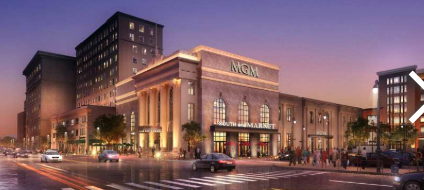
  • MGMSpringfield-renderMGMSpringfield-rend2  And, speaking of destination resorts and trouble ahead, see the Times Union “New competition for Capital Region gambling dollars(by David Lombard, July 26, 2018), an article about MGM Springfield, the almost-billion-dollar casino opening August 24th, just 100 miles away in Western Massachusetts, and already being advertised heavily on local tv as a true Las Vegas-style casino
redflag

Slots

 follow-up (Sunday, August 5, 2018): Sara Foss has again used her Gazette column to raise the issue of the social cost of casino revenues on gamblers and our community. See “Foss: Increase in casino revenue comes with social costs” (Sunday Gazette, Aug. 5, 2018). The column notes a 21.8 percent increase in slots revenue from February through June 2018 from the same time period during 2017.  Sara then states: “This is an impressive increase, but here’s the thing: Slots are highly addictive.”

Sara also quotes Phil Rainer, director of clinical services at The Center for Problem Gambling in Albany, saying “I find slots particularly deplorable.” Sara concludes by saying:

But I find it difficult to celebrate the boom times at Rivers’ slot machines.

For most people, playing the slots is harmless entertainment.

But for others, it’s a huge waste of time and money.

Local governments might reap the benefits of an increase in gaming revenue. But the social costs that go along with it shouldn’t be ignored.

Tellingly, Sara Foss says (emphasis added):

Now that [the Rivers Casino is] here, I want it to be a success. 

But it isn’t always clear to me what that means, because a casino isn’t a benign presence

Similarly, from my own point of view, it is difficult to come up with a formula that attempts to wish the Casino well in growing its gaming revenue (and keeping its employees employed), while somehow limiting the additional injury caused by problem gambling.  I wish we could figure out a way to improve gambling revenues with the least damage to the community.

Screen Shot 2017-09-11 at 11.21.31 AM The ability to attract more non-slot gamblers might be a benefit in several ways:
  1. If they are from out of town and stay overnight, they add sales tax revenues (sales, food & beverage, room occupancy)
  2. Also, if from out of town, they do not steal Leisure Dollars from other local businesses {the “Substitution Effect”); and,
  3. If Table Game players are in general less poor than Slots players, and not on fixed-incomes, they are less likely to wreck havoc on family budgets and tranquility, and to increase the need for more social services.

PGAMlogoEVERY One thing for sure: Our community (and perhaps especially our schools) needs Problem Gambling Education and Prevention Programs. New York State has promised a small amount of funding for such programs, but — unlike other NYS communities with casinos — neither the City nor County of Schenectady has done so. See, for example, our posting here.

disbelief-foreheadsmack

For more on the very predictable dilemma Schenectady faces trying to protect the community from the negative effects of Rivers Casino, and especially the growing reliance on slots dollars, see our post “Slotsification on the Mohawk” (July 13, 2018).
the Large Vessel Dock at Mohawk Harbor

LargeDockView2

.. . NOTE (Jan. 16, 2020): This issue is on our front-burner again, because Metroplex, Schenectady City Hall, and the Schenectady Downtown Revitalization Program are discussing the installation at public expense of a large vessel dock for Mohawk Harbor, and selling it as a “public access dock.” See the Follow-up discussion at the bottom of this posting, and the Update immediately below this paragraph..

UPDATE (January 26, 2022): According to the Daily Gazette, Metroplex has reported that “Mohawk Harbor dock moving forward in Schenectady following delay” (Chad Arnold, January 26, 2022, C1). Metroplex Chair Ray Gillen told the Gazette that “the goal is to design the dock this year and begin construction sometime in 2023 following a series of public hearings to gain additional input.” See the Gazette article for more details and Gillen statements.

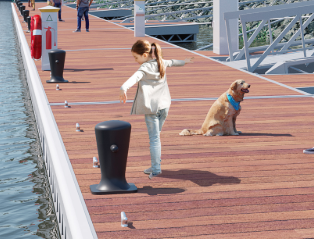
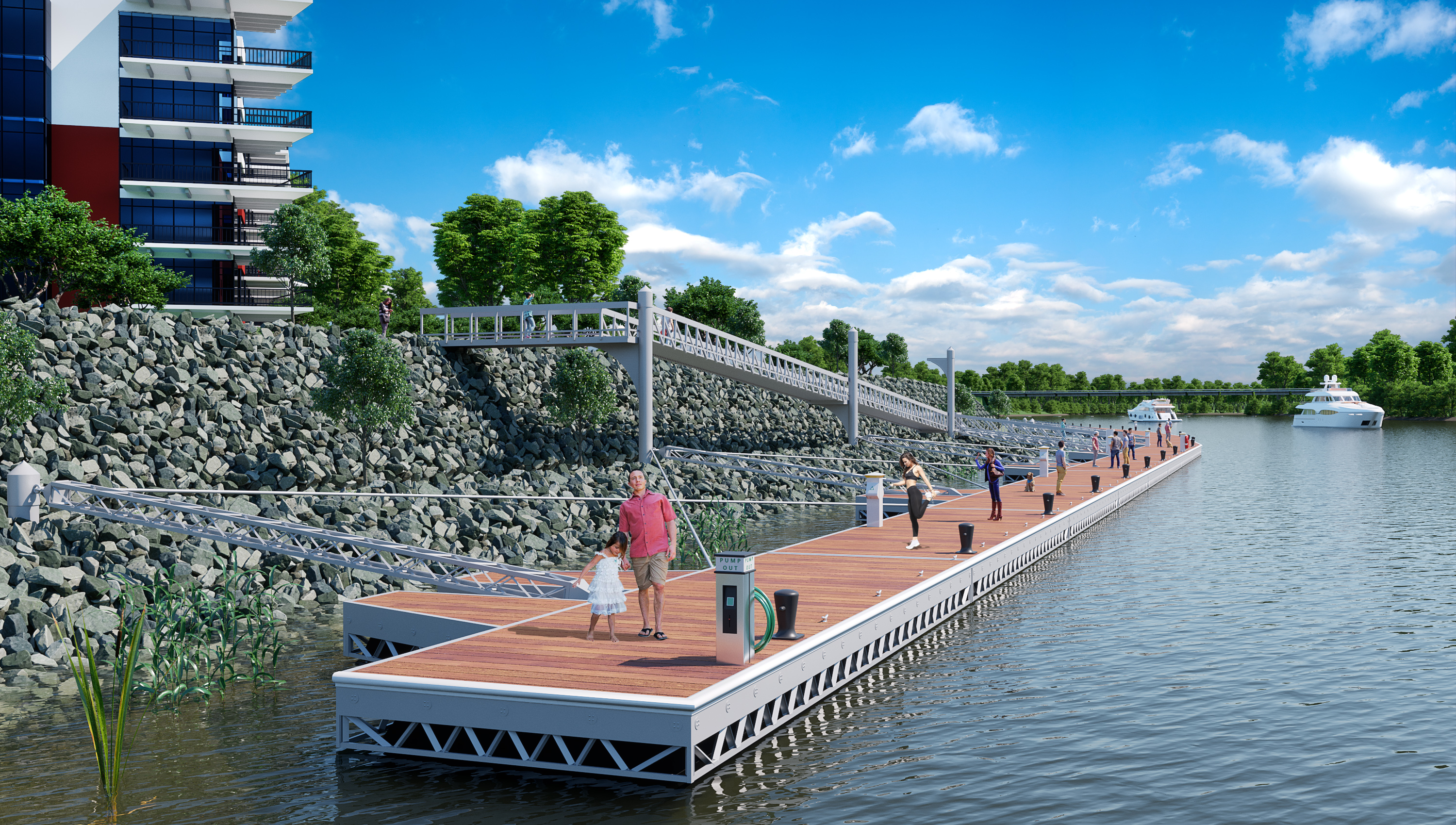
Follow-up (March 5, 2022): The Large Vessel Dock is on the City Council Committees Agenda for March 7, 2022, at 27-43) in a resolution allowing the Mayor to enter a contract with Metroplex for $75,000 toward design and engineering expenses. The above rendering appears on p. 41 of the Agenda. It gives a taste of how closed-in one might feel on the dock with several large vessels docked close to eachother.

original posting:

 A Gazette article today reports that the City Council of Schenectady unanimously approved a Resolution authorizing the Mayor to seek State funding for a Large Vessel Dock along Mohawk Harbor. “City to apply for funding for new dock at Mohawk Harbor: The dock would be used for larger boats to dock at the harbor” (by Andrew Beame, July 24, 2018) The article tells us that:

The resolution allows the city to work with Schenectady Metroplex Development Authority to submit the application [to the state Regional Economic Development Council].  Ray Gillen, chairman of the authority, said the grant would cover 80 percent of the cost to construct the $2 million dock.

The Galesi Group, the developer of the harbor, would be donating the rest, Gillen said.

Gillen said the dock would be 680 feet long and 12 feet wide. He also said it would be able to be removed during the winter months.

In addition, “The project would allow for larger boats that pass by the harbor to dock there, visit the casino, tour the city and a host of other activities.” Mr. Gillen noted that the facility would also allow the city to host regattas and other rowing events.

“This will be a public amenity,” Gillen said. “If we get the grant, it assures total public access to the riverfront.” (emphasis added)

As a longtime advocate for true public access to the riverfront, I hope this project will help achieve that goal. I may be adding more information in the very near future, but especially wanted to get online for public review of the two renderings (one above and one immediately below) of the Large dock presented by Ray Gillen to the City Council Committee meeting on July 16, 2018.

LargeDockView1

As the Council Resolution mentions a Matching Grant, I asked for more detail, and Mr. Gillen wrote me that:

“The match is 15%.  The state proves 85% if we win the grant. The match is being donated by the developer.  The developer built the amphitheater and major sections of the trail and the marina at their cost with no public support.  These are all very nice and well used public amenities.”

  • My thanks to Ray Gillen for providing me with the two renderings above. Our “Smart City’s” City Hall should have provided them in the Agenda appendix, making use of its website’s Agenda page. Council member Vince Riggi was good enough to send me a link to the video of Gillen’s presentation made to the Council Committee on July 16. It is very difficult to see details from the picture at the Committee Meeting. See my best screen shot of it (at about 2:30 into the video) here: https://tinyurl.com/MHLargeDock.


The funding process, and any resultant construction, will take quite awhile, and I hope that lots of thought will be given to how such a dock can in fact be used by the public, including families with children and dogs, or the elderly, handicapped, and less mobile, in a safe manner. For example:

    1. If the dock is successful — that is, busy — how welcome will non-boating members of the public be? How visible will the River be behind large vessels?
      1. Also, will those with boats that are smaller than 40-ft. be allowed to use the large vessl dock?
      2. Will there be fees for using the dock? If so, how will they be structured?
    2. How will the dock be supervised? The proposed dock at Riverside Park several years back was to have no supervision.
      1. Will folks with bikes, skateboards or rollerblades take them from the Trail to the dock, and use them on the dock? Would visitors in normal leisure or business footwear be able to navigate a wet dock? What effect would “horseplaying” adolescents or rowdy drunks have on others on the dock?
      2. Would you feel comfortable bringing small children or elderly relatives (especially if handicapped), a dog you are walking, or a school class, to a 12′-wide dock, with water on both sides, and no railings? How long would a couple or group stay on the dock if there are no chairs or benches? How easy will it be to get these folks safely back up that long sloping ramp?
      3. How stable will the dock feel underfoot? How will strong winds affect safety?
      4. Don’t safety issues at marinasviz., dock users unintentionally falling into the water and drowning — suggest that a Large Vessel Dock could safely accommodate no more than a small number of non-boating, casual “users” at a time? Required safety ladders and life rings seem unlikely to provide adequate assurance of appropriate use. 
    3. Will there be pedestrian access after dark? What lessons can we take from the drunken beer parties that took place for years at the Gateway Landing dock late at night?  Would a large vessel dock be a magnet for inebriated customers at the various Mohawk Harbor establishments, or those attending Amphitheater events in the thousands?
    4. Not Available in Winter Months: The large dock will be removed during “winter months”, the portion of the year when ice build-up is possible, which is at a minimum January through March.
    5. casino-attg-landscapeDetWhat happened to the Site Plan approved by the Planning Commission, in which a pedestrian bridge from the Trail went to a quiet Overlook that would allow safe viewing of the River, close-up, but with a railing for safety? Wouldn’t the 680-foot dock preclude such an amenity for public use.

It is disconcerting that another Resolution impacting Mohawk Harbor and Rivers Casino was brought before the Council in what has now become a customary rush. The State proposal requests and development decisions are made annually, with submission deadlines this time of year. The fact that this was “merely” permission to submit a proposal should not have justified a lack of fuller discussion, with public viewing of the images prior to the Council vote.

As happened with the proposal for a dock at Riverside Park in 2010 (see the discussion of issues and concerns in our comprehensive posting), we need to ensure that the availability of State funding — Getting Something For Free, with no local dollars spent — does not preempt thoughtful consideration of the impact of the Large Vessel Dock on waterfront use at Mohawk Harbor. And, especially on its ability to achieve, as Mr. Gillen promises, “total public access to the riverfront.”

. . . .

redflag-circlefollow-up (January 16, 2020): Should taxpayers or the developer of Mohawk Harbor and the Rivers Casino pay for a large-vessel dock at Mohawk Harbor? Please consider:

The image below was submitted to the Gaming Commission Location Board with Rush Street and Galesi Group’s application for a gaming license at Mohawk Harbor. As was required in the then-existing Schenectady Waterfront zoning provisions, it shows a riverbank that would allow the public convenient and safe access to the waterfront, with space for safe strolling, sitting, picnicking, etc.

CasinoRiverbankRendering

The Casino Applicants demanded that the permanent public right to access and enjoyment of the waterfront be removed from our zoning Code, and our subservient leaders readily acquiesced. [The then-director of Planning noted “they’ll have access to the retail.”] As a result, a steep, inaccessible, riprap riverbank was constructed by Mohawk Harbor along the last remaining portion of Schenectady riverbank available for potential increase in public access to the river:

MHriverbank

mhtrail29octd

  • See our posting “Restore riverfront public access at the casino” (August 10, 2015) for the story of how the people of Schenectady lost their right to use and enjoy the Mohawk Harbor waterfront, and the importance of true public access when a city’s scarce riverbank properties are re-developed.
    • Also, due to the great deference given to the desires of the Casino and Galesi Group by Schenectady’s Planning office and Metroplex, the public has also been deprived of recommended safety elements along the ALCO bike-ped path, with taxpayer moneys (apparently 85%-90%) used for construction that would more appropriately have been provided by the Developer. See, e.g., “Poorly planned safety-fence going up along Mohawk Harbor trail.”
  •  Having taken away our public access to the waterfront, Mohawk Harbor, Metroplex and City Hall apparently want us to believe that building a giant large-vessel dock with public moneys will somehow provide the public with the waterfront access they were denied. See the renderings at the top of this posting and decide whether such a structure could provide meaningful, safe, convenient access to the waterfront for the many sorts of people who comprise our public (local and visitors), and the many activities usually enjoyed along a lovely riverbank.
    • At the January 16, 2020 Schenectady DRI public workshop, Metroplex Chair Ray Gillen asked me to contact him to talk about my concerns over the Dock, and I will do so. I was surprised to hear Ray say they have not yet designed the dock and that the renderings submitted to City Council in 2018 were simply conceptual examples. When considering who should pay for it, the question is whether any huge Dock, open on both sides, could accommodate meaningful public access, and whether installing such a structure will prevent other attempts at meaningful public access.

In deciding whether taxpayers should provide a $2 million large vessel dock for Mohawk Harbor, while requiring a “donation” of only $300,000 from Mohawk Harbor’s owners to pay for an amenity that so directly benefits them, we hope decision-makers will be very skeptical of the claim that the Dock will provide “total public access to the Riverfront”, and ask cogent questions about its safety and convenience for the General public. In addition,  please keep in mind:

  1. sections removed at the Developer’s request

    PUBLIC ACCESS ABORTED INTENTIONALLY. The aborted guarantee of meaningful public access rights at Mohawk Harbor (ALCO site) was the direct result of pressure from the Galesi Group and the Casino to deny those rights to the public. Read the Code sections stricken at Rush Street’s behest in the image to the left, which were created to ensure permanent public access and enjoyment of the riverfront, with an esplanade and pathway anticipated along the riverfront with many amenities to help make the visit worthwhile. Were the developers reluctant to have riverfront access that attracts members of the public who want to stay awhile along the river, rather than just passing through on the bike-ped path? Did they want only Customers to come to the riverside of the casino complex?

  2. STANDARDS IGNORED. Overseen (orchestrated) by Metroplex, the Planning staff and Commission made woefully inadequate efforts to ensure that the Developer satisfy the §264-14(E)(4)(a) standard that the trail “shall endeavor to be located reasonably adjacent to the undeveloped shoreline wherever practicable.” They also failed the goal of §264-14(A)(2)(h), “To preserve, to the maximum extent practicable, the vegetation and natural features along the Mohawk River“.
    1. And, see “Poorly planned safety railing erected along Mohawk Harbor trail” (Oct. 15, 2018). It is too short and too close to the bike-ped path. It fails to follow the C-3 zoning requirement that there be the customary two-foot shoulder PLUS ten additional feet buffer on the riverside of the Mohawk Harbor shared-used path.
    2.  In addition, the sturdy ALCO trail “interpretative” signs installed by the County are closer than the 3′ ft. minimum lateral distance from the bike path stipulated in Schenectady’s Master Bike Plans, when best practices call for 3′-5′ distance, even for signs on flimsy poles, much less these heavy-duty signs. See “Who botched placement of the ALCO trail signs?“, which notes many more safety problems. For example,  “There is no hard surface off the path “tread” for sign-readers in a wheelchair, or with a cane, walker or motorized scooter, to stop; nor for a curious bicyclist; nor for pedestrians who want to avoid unpaved ground around the sign when it is wet, slippery, or muddy.
  3. GREAT POTENTIAL LOST FOREVER. As a consequence of the developer’s demands and willfulness, and the indifference of Metroplex and our Planning Office, the aesthetic, recreational, and safety benefits to the public envisioned in the City’s waterfront zoning regulations for Schenectady’s last developable waterfront property, have been lost forever.
  4. GENEROSITY TO OTHER CITIES. The many millions of dollars that Rush Street Gaming gives or offers to other casino cities, above any taxes due, while passing out relatively small “donations” to Schenectady organizations and government. For examples, see our post “Rush Street’s Giveaways“.
  5. SECOND-CLASS SCHENECTADY. Rush Street’s gracious granting of public access at its Philadelphia and Pittsburgh casinos, while treating the people of Schenectady like second-class citizens. As we asked years ago:

In addition, the Alco Plant shoreline (image below, by Ohlhous, 2011) had great potential for the kind of waterfront strolling, lolling and playing that people everywhere expect when their City undertakes to redevelop its shoreline.

IF ONLY

If the goal is genuine public access to the Mohark River, couldn’t the $2 million be better spent? The current proposal from Mr. Gillen appears primarliy to be helping to bring more (big) spenders to Mr. Galesi’s Mohawk Harbor and Rush Street’s Rivers Casino?

  • Could the ten-foot wide path at the bottom of the steep riprap bank (see detail at left) be converted into a safe, pedestrian pathway, with convenient access points constructed from the upper level?
  • Could we have learned from the South Shore Riverfront Park in Pittsburgh, where  a “former steel mill barge dock has been converted to a public park in an innovative project that straddles a railroad tunnel and overcomes a 40’ drop in elevation to provide access to the Monongahela River. Switchback terraces connect upper and lower plazas to create an exciting outdoor public space for recreation, relaxation and special events.”

how is Rivers improving its numbers?

Schenectady Gazette business editor John Cropley wrote an article today describing the improved financial numbers coming from Rivers Casino at Mohawk Harbor for the first six months of 2018, compared to 2017. See “Rivers Casino financials improve in first half of 2018“, July 16, 2018) Cropley tells us:

abacus Halfway through 2018, Rivers Casino & Resort is showing improved financial performance, with revenue in every month so far this year stronger than in the same month of 2017.

The facility, which opened on the Schenectady waterfront in February 2017, reported gross gaming revenue — money gambled minus winnings paid to gamblers — was up 15 percent for the February-June 2018 period.

Taxes paid on the gross gaming revenue in February-June 2018 were up 19.7 percent from the same period in 2017.

If Casino revenues continue at this pace for the entire year, Schenectady’s reduced projection of its casino income for 2018 — $2.3 million in gaming tax dollars from the State — will be met.  [For background, see our posting “Casino Reality vs. Casino Projections“; and “TU compares casino revenue reality to casino projections“.]

NoComment-thanks My curiosity was piqued, of course, when I saw these words in today’s Gazette article:

 Officials at Rivers would not comment on what the casino has been doing to improve its financial performance.

GGR-Apr-JunCompare

That got me wondering what they are hiding, since simply saying something like “we’re advertising more and doing more promotions”, or similar explanations, would not be compromising their competitive position by leaking trade secrets. Several possible reasons came to mind, and related questions led me to look at some of the Rivers casino revenue figures from 2017 and 2018. I focused on the past three months of 2018, April through June, and the same period for 2017. (I hope that journalists or policy wonks with better tools and incentives than I will want to compare all the available months.) Click the image to the right above to see the figures for April to June; and click this link to do your own number crunching: Rivers Casino Weekly Gross Gaming Revenue (GGR) figures.

As a result of my dipping into the Rivers GGR numbers, I learned that, for the second quarter of 2018, the 14 weeks from April through June, as compared to the same period from 2017:

  • Total GGR was up just over 18%
  • GGR from Slots/ETGs was up almost 33%
  • GGR from Table Games was down about 1%

The Slots increase is, therefore, driving the improved 2018 numbers on the Mohawk. There is no obvious reason to expect the trend the rest of the year is or will be significantly different.

senior-playing-slots As we reported here, 63.6% of total GGR in 2017 at Rivers Casino Schenectady was from slots and electronic table games. It appears that an even larger percentage will come from slots in 2018.  Dependence on Slots GGR almost certainly means that Rivers is not attracting high-rollers from distance places, but is instead counting on a very local market and more than casual customers. And, while we know that not every slots player is a senior citizen, and many seniors are quite savvy about gambling and its risks, researchers tell us that senior are particularly susceptible to casino pitches, while being less likely to seek help for problem gambling symptoms. Moreover, our prior remarks seem pertinent still:

Thanks, Gramps! [B]ecause Slot revenues are taxed at 45%, but table and poker revenues at 10%, slot players are transferring their money to the State, County and City to reduce our taxes to a much higher degree than Table Game players. Indeed, about 89% of the gambling tax paid by Rivers Casino [in its first year came] from slot dollars. If slots are mostly played by senior citizens, any local tax break is mainly being paid for by Grandma and Grandpa, and Auntie Tillie (and, of course, other vulnerable groups, such as the poor).

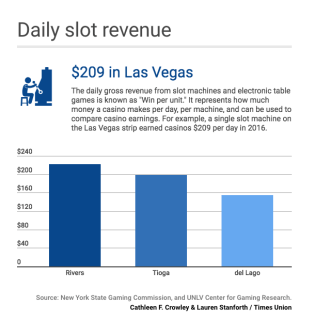
In addition, reporting by Times Union “data journalist” Cathleen Crowley suggests another potentially disturbing factor related to reliance on slots for increased GGR: Rivers Casino may be paying out too little to its slots players. See “This is how much the casinos are making from slots, poker and table games” (Times Union, Cathleen F. Crowley, Sept. 24, 2017). According to the TU article, Rivers has far more money at the end of the day in each slot machine [“win per unit”] than its Upstate competitors: $222 earned per day for Rivers; $197 for Tioga Downs; $155 for del Lago, while the Las Vegas average win per slot machine in 2016 was $209. Here’s a chart from the Times Union (click on it for a larger version) that makes the point:

TU-DailySlotRevs

  • Looking at the Win Per Unit over the same three-month time period, the average per week went from 191.28 from April-June in 2017, to 252.85 for those months in 2018.

So, it seems Rivers is bringing in more of the type of player who plays slots and ETGs (Electronic Table Games), or getting them to sit longer and visit more, and is paying out less on Slots/ETGs than other casinos. Has the mix between Slots and ETGs change significantly? Is Rivers working harder at bringing folks in from Senior Centers or churches? Is “grandma” paying even more this year for our gaming tax revenues, while waiting to see how much Mayor Gary McCarthy and City Council will cut her property taxes?

It seems the moaning we hear and read about the poor returns from slots at Rivers may be warranted. How long can that go on? Is this why Rivers does not want to talk about how it gets its increased GGR? As always, if we have gotten this wrong or even slightly askew, we hope the folks at Rivers Casino or other experts will explain it to us, so we can fine-tune, reconsider, explain it better. 

01_sm0714_cover107-border

For background on how slot machine revenues might be optimized, see “Management” (by A. Cardno and R. Thomas, from Slot Management & Marketing Magazine). The authors suggest that a high WPU [win per unit] may be problematic from the player’s perspective.

. . share this webpost with this URL: http://tinyurl.com/MoreRiversSlots

ooh update (July 20, 2018): The GGR for the week ending July 15, 2018, $2,709,766, is the worst since the week ending April 1, 2018. And, it is 30% lower than the GGR for the week ending July 16, 2017, which was $3,882,454, although Slots revenue last week was up 10% from the corresponding week in 2017.

too many underage gamblers at Rush Street facilities?

underagegambler The Times Union (here) and the Gazette (here) are reporting that Rivers Casino at Mohawk Harbor’s operator, Rush Street Gaming, is appealing a penalty under consideration by a NYS Gaming Commission hearing examiner for violations of “regulations regarding permitting an underage patron on the gambling floor” and “permitting a person under 21 to make a wager at its facility.” Rivers wouldn’t discuss the dispute at this point, pointing to the pending hearings.

You may recall that Rush Street was fined $6000 last year for allowing a minor to gamble at its Schenectady Rivers Casino. See “Underage gambler caught — but only after he won $1,300 on slot machinesSchenectady casino fined for letting him on the gambling floor” (Albany Times Union, by Paul Nelson, March 24, 2017); “State fines Rivers Casino $6k for underage-gambler” (Schenectady Daily Gazette, by Steven Cook, March 23, 2017). 

In 2016, Rush Street touted its record for ensuring that only appropriate persons are allowed in its casinos:

“We have a strong history when it comes to responsible gaming at our other properties, including operating under statewide self-exclusion policies, and we look forward to continuing that same record of excellence in Schenectady.” (See “New York to step up effort to battle problem gambling“, by Haley Viccaro, Schenectady Gazette, March 2, 2016).

SugarHouseEntryway

Despite that assertion, a bit of Googling this evening uncovered numerous instances of Rush Street casino cousins in Pennsylvania being fined for violating underage gaming regulations. For example, on October 4th, 2017, the Pennsylvania Gaming Board fined Rush Street’s SugarHouse Casino $10,000 for failing to prevent underage access to the gaming floor. As we noted two years ago, the Pennsylvania Gaming Control Board had also announced, in a press release on May 23, 2012, that SugarHouse was fined $70,000 “for seven instances where underage individuals [ranging in age from 17 to 20] engaged in gaming.”

Similarly, the Rivers Pittsburgh casino has had multiple underage gaming fines. For example, in February 26, 2014, the Pennsylvania Gaming Control Board levied a fine of $15,000 against Rivers Casino in Pittsburgh for permitting an underage patron to gamble and consume alcohol at its property. The Pa. Board had also levied a $45,000 fine, in November of 2012, for four such incidents earlier that year.

  • Moreover, Schenectady’s Pennsylvania Cousin Casinos have both also had multiple fines for permitting persons on the self-exclusion list to gamble, and even for extending credit, and sending solicitations to such persons. E.g., here and there.  Should we expect the same here, too?

The fines are obviously meant to motivate better procedures and practices to prevent underage and self-exclusion-list patrons into the Casino. Perfection can’t be achieved, but a real commitment, starting at the top and embraced by all Rivers employees, will hopefully mean a lot fewer violations. “Expect Tough Monitoring” should be the message in our community — especially aimed at our area colleges and high schools.

Here is an excerpt from an earlier post at this website, discussing underage gambling:

propshopsrules Many people are concerned that the younger you are when introduced to casino gambling the more likely it is that you will develop a gambling problem. The mixture of alcohol and gambling is even more worrisome. See our posting “what will the casino mean for Union College students?“, which discusses such issues, and our particular concern over Rush Street Gaming’s practice of targeting younger gamblers. And see “Rush Street takes aim at adolescents” (Sept. 9, 2014).

Reallyatstake.png


Also, check out a program sponsored by the Pennsylvania Gaming Control Board, called “What is Really At Stake“, to learn about the risks of underage gambling.

Consequences

. . share this post with this shorter URL: https://tinyurl.com/UnderageRushSt

still waiting for Lady Liberty

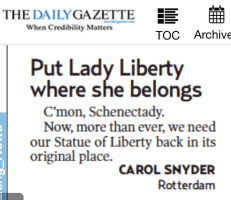
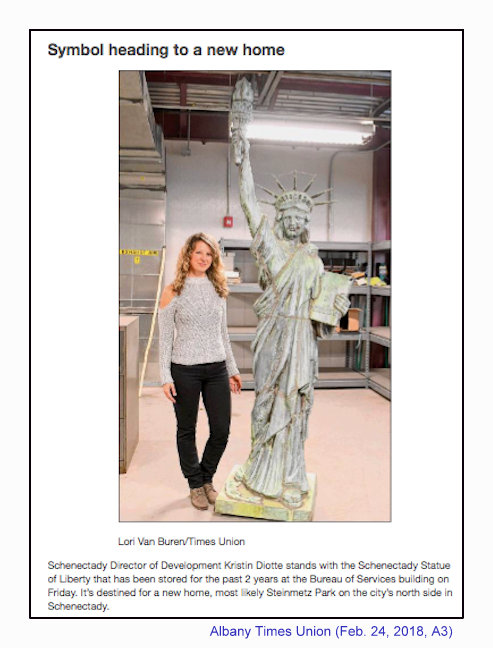
LibertyGazLTE-Snyder . . GP-DiotteLadyTU24Feb2018 

update (July 9): Still no Lady . . LL9Jul

LadyLiberty15Sep2016

 Lady Liberty is indeed timeless. But, Schenectady should not have to wait even one more week for Mayor Gary McCarthy to relent on the strange and belated notion of installing our replica Liberty statue somewhere other than her home in Liberty Park, once construction and expansion of the Park into “Gateway Plaza” was completed. That return was the only alternative for Lady Liberty in the Final Gateway Plaza Implementation Plan, which was created in 2012 and approved in August 2013 (Resolution No. 2013-206). Nevertheless, years later and behind the scene, Gateway Plaza designer Mary Wallinger somehow got the Mayor and Metroplex Chair Ray Gillen to agree to ignore the official Plan and instead to exile Lady Liberty.

Why? Because Ms. Wallinger (who is also Chair of the City Planning Commission) now insists Lady Liberty is not “modern” enough for her current vision of the Plaza as a symbol of Schenectady. She and the Mayor also lured the good folks of Goose Hill into asking to place Lady Liberty in a Veterans’ Memorial in Steinmetz Park, creating totally unnecessary civic turmoil. [for a fuller explanation of the Decision Disruption Process, see this post.]

OUR POSITION: Lady Liberty should be immediately returned from its storage-during-construction to Her original home, Liberty Park (a/k/a Gateway Plaza), and McCarthy and Wallinger should apologize to the people of Goose Hill for offering them a treasure that was not available for relocation.

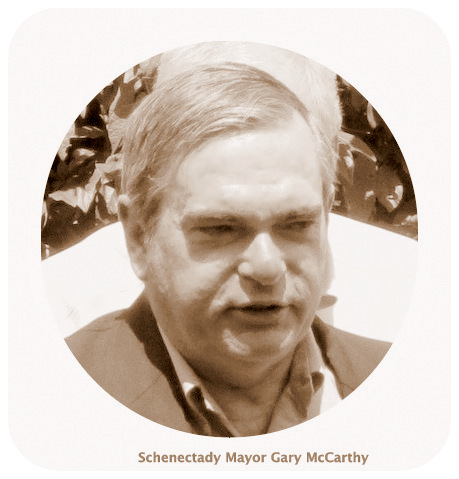
mayorgarymccarthy2013sep The Mayor says he has not made his decision yet about where the Statue will be installed. But, there should be no new decision to make. The Decision was made in 2013, in the publicly supported and officially approved Final Gateway Plaza Implementation Plan.  All the Mayor need do now is say that, after full consideration, he fully endorses the Original Decision for returning Lady Liberty after the new Plaza is completed, as there is no safety or fiscal reason, and no other justification, to change a Final Plan.

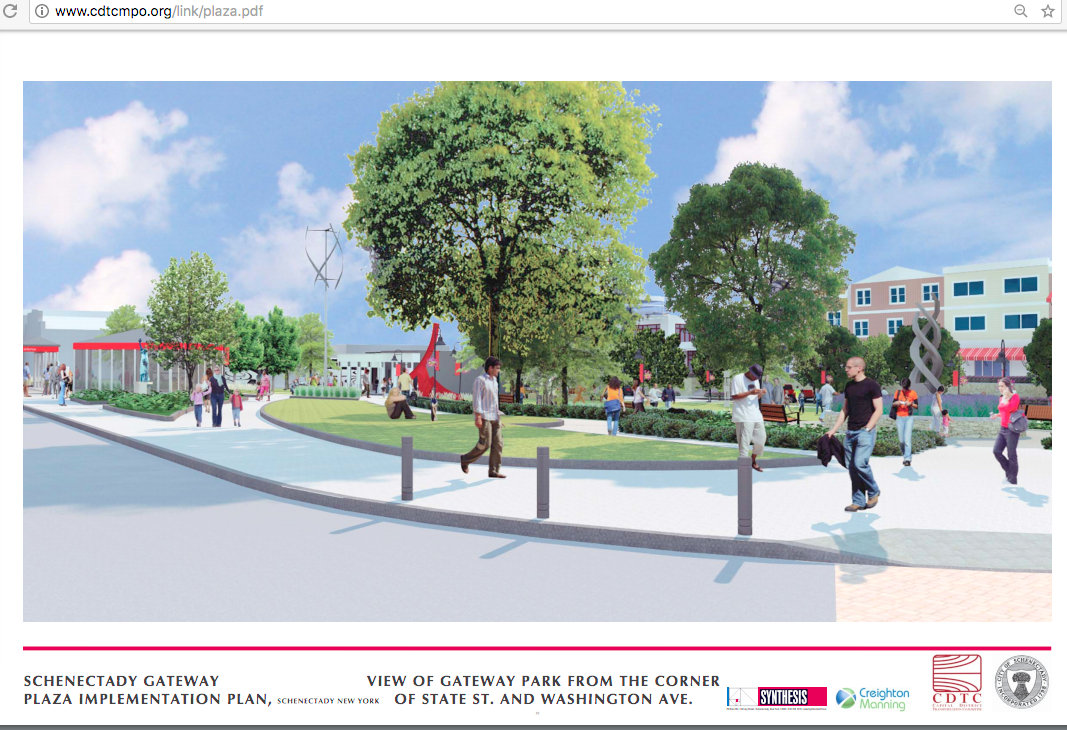
GP-Rendering-LibertyDetail . . GP-Rendering-ViewWash-State

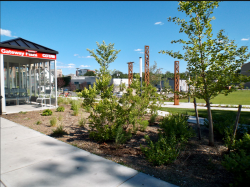
Above is a detail [L] from an Implementation Plan rendering [R], which shows the designated spot for the replica’s return, along State Street, next to the CDTA bus shelter, only yards away from, and more visible than, the Lady’s original location.

Nonetheless, neither a batch of Letters to the Editor since mid-March nor a Gazette Editorial in April supporting the return of the Lady to Liberty Park, has produced Her popular, commonsense, and Plan-promised return. Nor has the coming of Spring and now even Summer, which should make frozen ground excuses a moot issue. Not even a plea in the Gazette last week from Schenectady County’s “Mr. Veteran”, James A. Wilson, did the trick. (“Return Lady Liberty on July 4th” June 27, 2018):

There will not be a better time than to have the famous “Lady Liberty,” or the Statue of Liberty replica, put back in her rightful home in Liberty (Gateway) Park in Schenectady. It’s still the center part of the city for beauty and visibility to all residents and the statue was there for over 50 years.

Put the statue back on the 4th of July.

As of today, July 7, 2018, almost a full year after the Liberty Replica was removed to protect her from construction, Lady Liberty is apparently still in a municipal storage facility.  So, what will it take for the Mayor to step up and Do the Right Thing (or, passively, Not Do the Wrong Thing)? Yes, he has been busy making our City smart, but this is not a complicated decision. It is late, but not too, late for Gary McCarthy to be the Lady’s Champion.

gpladylibertyspot.jpg . . . LadyLibertySpot25Jun1

Above: At the end of June, for the first time, the designated spot for the return of Lady Liberty had substantial plantings (several small trees; photo on Right). When asked about the new trees, Mayor McCarthy told Gazette reporter Andrew Beam that he had not known of the planting. Those trees can and should be replanted, to honor the planning process, the City’s promises, and Lady Liberty’s importance in the past, present and future of Schenectady.