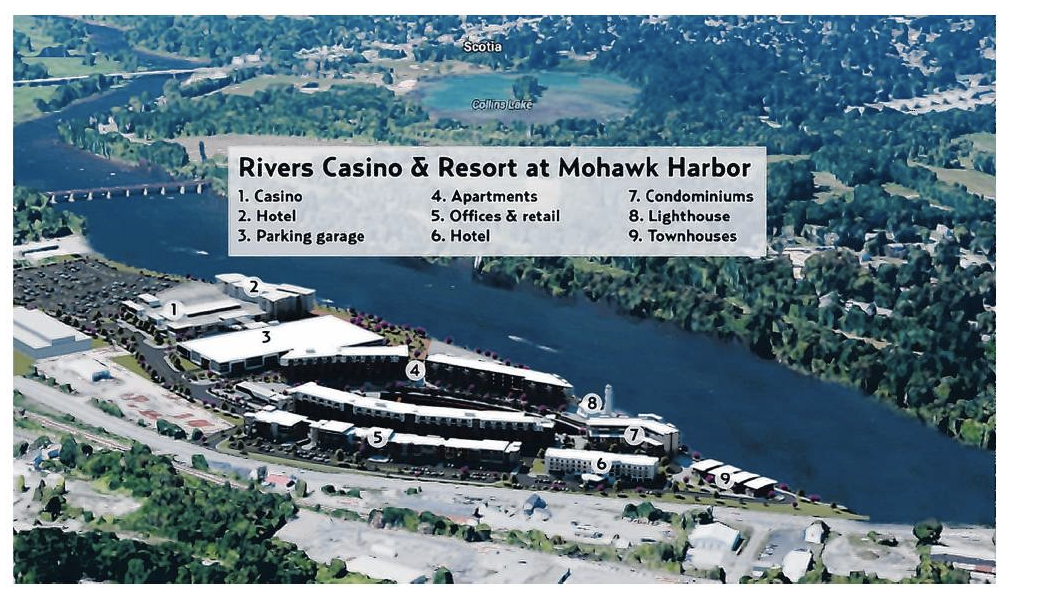
–  click this link for our Statement to the Location Board on the problem with having a casino so close to Union College
.
– original posting with updates [more updates have been placed at the end of the posting] –
 A Niskayuna mother (and managing partner of an Albany-Poughkeepsie law firm), Carol A. Hyde, asks some very important questions in a Letter to the Editor printed in today’s Schenectady Daily Gazette (“Union, SCCC will be affected by casino,” June 7, 2014, C7; available by subscription). Her main question is how the casino will affect already-poker-crazy students living practically right across the street? Will they study less and spend their money becoming gambling addicts? Click on the image at the front of this paragraph to read the Letter. Thank you Ms. Hyde for your letter, and thank you, Gazette, for printing it.
Note: Union College has a policy requiring all undergraduate students to reside in College housing. From the perspective of the casino operators, the policy conveniently places the vast majority of the student body just an easy stroll away from the proposed casino.
We should, of course, also ask how safe students, perhaps especially female students, would be or feel at night walking in the adjacent “College Park” neighborhood or on Campus, given the expected increase in street crime when the casino opens. [see the section on Crime below.] What other problems might we expect when a casino open 24 hours a day is located near a campus already known as a major party school (e.g., with the highest ranking among all small colleges; also see here), with an abundance of “keggers” and poker parties?
- Studies. There is a significant amount of literature and scholarship on college students and gambling, including the increased susceptibility of younger gamblers, alcohol’s connection to problem gambling, and the connection between proximity and increased gambling. For example: 1) College Student Booklet (Illinois DHS) “Festering Beneath the Surface: Gambling and College Students“; 2) Problem and Pathological Gambling Among College Students, Randy Stinchfield, William E. Hanson, Douglas H. Olson; 3) California Council of Problem Gambling, College Student Web pages; and, see our Issues Page re Young Gamblers for a fuller list.
-
“Colleges and universities located near gambling facilities had higher rates of student problem gambling behavior for their students”, See “
College Problem Gambling Literature Review“, Jim Emshoff, Ph.D., Georgia State University (Jan. 2008), and citations to other resources.
- The Handout on Problem Gambling from Union College’s Wicker Wellness Center, notes:”Gambling is in some ways a ‘norm’ among college students. The most popular games are casino activities such as cards and gambling machines.”
 Targeting the Young Gambler: (Aug. 1, 2014): Rush Street Gaming is experienced in marketing to the Young Gambler. For example, Rush Street Gaming’s SugarHouse Casino in Philadelphia has introduced a “simplified craps game” called Props & Hops (purportedly alluding to craps terminology), which was developed because “A lot of people, especially the younger kids, are intimidated about craps.” (See SugarHouse Press Release, April 30, 2014; and “Sugarhouse Develops a New, Simplified Craps Game For Younger Players“, CBS6 Philadelphia, May 1, 2014; SugarHouse Props & Hops Brochure.) They also greatly increased the number of poker tables at SugarHouse, a game particularly popular with college students. Their Schenectady Application shows that the Schenectady casino will have a dozen poker tables in a 3000 sq. ft. hall.
- We can also expect a Schenectady casino to organize or facilitate groups of students coming from neighboring states where you must be 21 to gamble.
- Gambling at a Casino appears to be more addictive than gambling online, according to work done at the Harvard Medical School Division on Addiction. See “Gambling Online, Gambling in Casinos: What’s More Addictive?” (The Atlantic, July 2014).
- Gambling Age? We apologize for our earlier error in stating that the permitted gambling age will be 18 at the “destination gaming facilities” that will be licensed under the Upstate New Gaming and Economic Development Act of 2013 (click for the text of the Act). You must be 21 to gamble at any new facility licensed under the Act. Although the general age to gamble in New York State is 18, the Act added an exception for the casinos, stating:
§1332. Age for gaming participation 1. No person under the age at which a person is authorized to purchase and consume alcoholic beverages shall enter, or wager in, a licensed casino; provided, however, that such a person may enter a casino facility by way of passage to another room . . . “
Any winnings by a person prohibited under the above section must be forfeited and put into the State’s gaming revenues fund. Those under 21 are still allowed in other parts of the casino facility (restaurants, entertainment events, etc.), but not the actual “casino” rooms where the gambling is allowed.
“Racino” locations and Indian reservations may continue to allow 18 year-olds to gamble. Such facilities either send them into special under-21 areas or give them wristbands indicating they are under 21, so they won’t be served alcohol. Attempts by lawmakers and others to raise the gambling age at the racinos have gone nowhere in the State Legislature. See, e.g., “Bill to raise gambling age to 21 reintroduced: Addabbo, Goldfeder sponsor proposal” (Queens Chronicle, by Dominic Rafter, Feb. 7, 2013); and the ChangeTo20 campaign.
 “Quicksand Credit“: As Casino-Free Philadelphia explains: “SugarHouse casino [owned by Rush Street Gaming], as well as most other casinos in the country, offer their customers unlimited lines of credit, which can only be used to gamble at the casino. There is no interest on the line of credit, and it must be paid back in 30 days.The casinos call this a “convenience” so you don’t have to carry large amounts of cash to the casino — but they’ll happily give you more cash than you have. Having access to a line of credit makes a person more likely to keep playing — making SugarHouse’s billionaire investors richer.
- Gambling and Budgets: At the Union College website, I found a Student Guide for studying abroad in Australia. In the section How Much Money Will You Need?, there is a subsection titled Spending Money, which contains this guidance:
A word about gambling
During the last three or four years we have occasionally received calls from parents concerned about the amount of charges appearing on bank cards or credit cards. They felt that our recommendations and estimates here about money were too low and not realistic. Thus far, in each case where our estimates have been far off, it has turned out that students were attracted to a very rich and active life at a local casino in Brisbane. BE FOREWARNED! Gambling can be addictive and is very, very expensive. In the long run, one seldom ‘wins’. If you think you will give the casino a try, set a maximum budget IN ADVANCE and do not deviate from that sum.
.
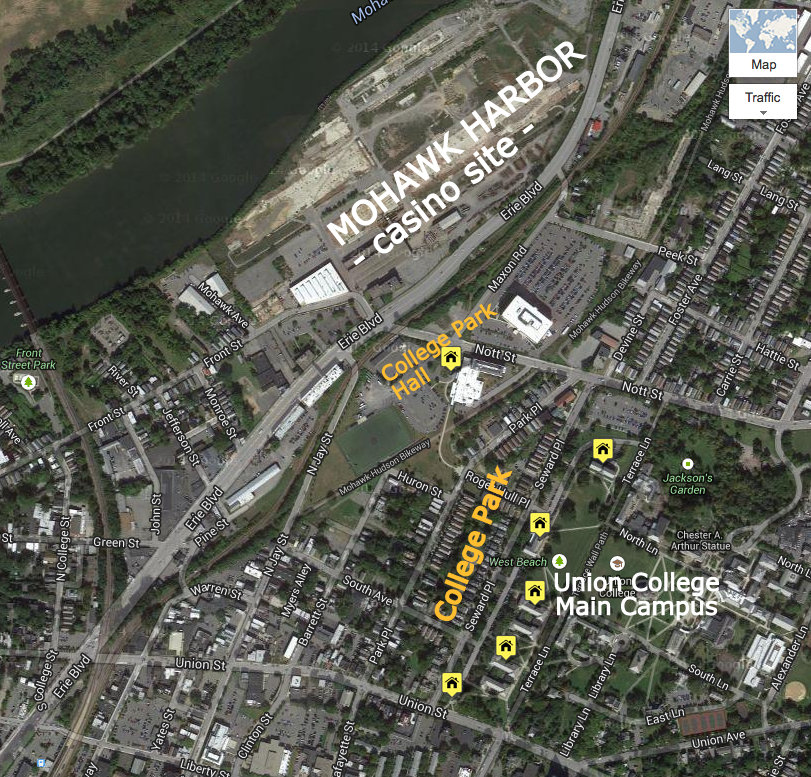
– how close would the casino be to Union College’s 2200 undergraduate students?

– Google map with Union College Residence Halls –
- 257 students at College Park Hall (former Ramada Inn) – about a block away. Indeed, the casino appears to be closer than any other restaurant or bar.
- 130 upperclass students in the renovated homes, and fraternity houses, comprising the College Park Neighborhood Apartments on Seward Pl. and Huron St. – 3 blocks away. update: A large new housing complex for upperclassman was announced at the end of July that would also be in the tiny College Park neighborhood.
- residence halls on main campus – 4 blocks away.
- update (July 12, 2014): the new rendering of the casino project shows the casino itself located right at Nott Street and Erie Boulevard, so that all the young prospective gamblers (or the elderly from East Front Street) won’t need to trek a long distance into the 60-acre site.
– share this post with this short URL: http://tinyurl.com/schdycasino-colleges
 Note: What a difference two hundred years makes. As a religious school, Union College naturally prohibited all sorts of vices (from drinking spirits and engaging in “carnival entertainment,” to using gaming devices) in the early 19th Century. However, if you click on the image at the head of this paragraph you will see legislation passed in 1813 by the New York State Legislature concerning Union College students and gaming. In two hundred years, the State went from criminalizing to enabling gaming by the students of Union College:
“[I]t shall not be lawful for any person to entice the students of Union College . . . into the vice of gaming, by keeping within the first and second wards of the city of Schenectady, any billiard-table or other instrument or device for the purpose of gaming” [with a fine of $25.00 “for every such offense”]. See The Laws of Union College (1915), at 46.
[Note: Look at the size of that fine: $25 per incident was real money back then, the equivalent today of over $300.]
CRIME: The entire Union College complex, including the Main Campus, the College Park off-campus housing area and College Park Residence Hall, are clearly within the radius of surrounding neighborhoods likely to experience increased crime after the opening of a casino. See our posting will a casino bring more crime?, and materials referenced there. As explained in our post “did crime go up around the SugarHouse casino?” a study that Rush Street Gaming uses to claim that crime went down in the area surroundings its SugarHouse Casino in Philadelphia has many caveats (e.g., it did not cover DUI or prostitution), and states, for example (emphases added):
 “Violent street felonies increased in the target area compared with the control area.” And,
- “Vehicle crime decreased in the target area relative to the control area; however, there was substantial displacement indicating that the introduction of the casino made the vehicle crime problem in the combined treatment/buffer area worse than before the casino was opened.”
- Philadelphia PD created a 14-man dedicated police unit whose sole task was to patrol a one-half-mile square around the casino.
What About the Parents? It would seem sensible for Union College parents to protest having a casino a short stroll from where their young adult children will be living and pursuing an education. My question to the UC office for parent relations have, like all other correspondence to the school staff, gone unanswered. This is what Mike Hendricks, Editor-in-chief of Albany Business Review, had to say on the topic, in a Viewpoint column called “Computer chips or poker chips” (June 16, 2014):
The casino would be less than a five-minute walk from the relatively new dorm off the Union College campus. One of the premier institutions in Schenectady, Union College is one of those high-tuition private colleges. Whatever I might think about the economic viability of a casino, if I was the parent of a high school senior picking a college and I had to pay that kind of tuition, I might find a casino across the street from the dorm to be concerning.
Hendricks is concerned. I’m concerned. So, why isn’t Pres. Ainlay concerned enough to say something? At the very least, shouldn’t the School press the Schenectady applicant to prevent gambling by those under 21, as was done at two of the four Indian casinos in the State? Union College might also ask the Location Board to impose such a restriction as a term in any gaming license that it grants in Upstate New York. Update (March 6, 2016): A major Q&A article with President Ainlay in the Gazette about the relationship of Union College and the City fails to mention the casino. “Q & A with Stepen AInlay: City, School ‘Tied at Hip’,” by Zachary Matson (online March 5, 2016)
 Donation Deafness? Buddy Blindness? We don’t pretend to know why Union College has been so silent and evasive on the topic of the casino. It is difficult to avoid speculation on the institutional silence. Historians consider Union College to be the Mother of the American fraternity movement and system, and believe that the establishment of the first fraternities at Union College, in off-campus residences, in the 19th Century, was the beginning of the end of the in loco parentis concept (schools acting “in the place of parents”) at American colleges. But, UC’s apparent casino indifference can’t merely be because the Administration doesn’t want to sound like a worry-wort nanny or a substitute for Helicopter Parents. The School’s comprehensive Wellness Center and its Honor Code show that Union College does feel obligated to help its students to develop into healthy and socially-responsible adults.
 Is the President’s role as Fundraiser-in-Chief at the core of the School’s failure to voice concern over the proximity of the proposed casino? The pool of actual and potential big donors is not that large in a City as small as Schenectady, and its academic, business-development, and political “elites” can’t help rubbing elbows on boards of directors, at awards, cultural, and fundraising events, and private parties among friends.
Is the Administration reluctant to ruffle the feathers or create bad will with business leaders as prominent as the heads of the Galesi Group, or with County, City and Metroplex officials whose cooperation might be important in the future? Is it afraid that it will tarnish its image as a main element in the “revitalization” of Schenectady and development of the region?
Stephen Ainlay also wears the hat of the Chancellor of Union University, which includes Union College and Union Graduate College, along with several other units. The units of the University have been structured to be self-governing, with fiscal independence, but they surely pay attention to the opinions and needs of the heads of each part of the Union Family. Is Chancellor Ainlay reluctant to rain on the parade of David Buicko, the COO of the Galesi Group, which owns the ALCO site and is the developer of the Mohawk Harbor complex? I suspect that it might be difficult — consciously or not — to openly oppose a casino that is being sought by David Buicko, when he is considered a Community Partner and major fund-raiser by Union Graduate College. Its President recently nominated Buicko for a Community Hero award, saying:
 “I can think of no other single individual who has had the broad and positive effect on Schenectady that Dave Buicko has had. . . .
“Nothing that has been done to date in Schenectady will be quite as transformational as the innovative and break-through project planned for the Alco site on the Mohawk River that Dave initiated in the last year. “ [see “Union Graduate College Community Partner Dave Buicko Receives ‘Hero Award’” (Union Graduate College News, May 27, 2014)
Mr. Buicko also had some very kind words about the incoming Dean of the Graduate College, in 2011. Here’s an excerpt from Union Graduate College News, September 4, 2011, “Bela Musits Named Dean”:
“Bela Musits is an innovator, well-respected and admired throughout the business community,” said David Buicko, President, Galesi Management and Chair, Center for Economic Growth Board of Directors. “Naming him Dean of the School of Management is a coup not just for Union Graduate College but for all of us invested in economic development. I look forward to helping him succeed in his new role.”
Buicko is chairing Union Graduate College 2011 Scholarship Scramble golf tournament at Eagle Crest Golf Club in Clifton Park on September 16, 2011.
How connections with community and business leaders mesh with Union College’s promise to “work with city leaders to ensure that any and all revitalization efforts dovetail with our responsibility to our students,” is an important question I hope will soon be clarified.
 Young people are “the future of casino gambling”: This is what the report Why Casinos Matter, from the Institute for American Values (2013) has to say about young people and casino gambling:
Young people are viewed as the future of casino gambling. 
A recent American Gaming Association survey of casino visitors ages 21- 35 found that young people had the highest rate of casino visitation and the greatest level of acceptance of casino gambling among all casino visitors. Nearly 4 out of 10 (39 percent) had gone to a casino in the past year, and 9 out of 10 agreed that casino gambling was acceptable for themselves and others. Machine gambling was ranked as the most popular game among young adults. Frank Fahrenkopf of the American Gaming Association highlighted this news in a 2013 industry report, stating that young people are “the very people with whom the future of our business lies.”
 That future is not far off. More than any earlier generation, today’s young people are technologically primed for gambling. From an early age, kids learn to play games by tapping buttons and tracking images on screens. They spend money with a swipe of a debit card. They play video games. They live on social media. For these reasons, young people are a soft target for Internet gambling—the next frontier for legalized gambling.
The first national U.S. survey of gambling among adolescents and young adults found that gambling among youth is widespread. It estimates that three-quarters of a million young people ages 14-21 are already problem gamblers.
See the article, Mining Millenials (Global Gambling Magazine, by Marjorie Preston, July 29, 2014,
Vol. 13, No. 8), for an example of how the gaming industry perceives young gamblers and the challenge of appealing to them.
 The Teenage Protection Alliance has started the ChangeTo20 campaign, to make 20 the age of majority at which individuals may gamble. They are focusing first on New York, because of the rapid expansion of Casinos that is expected in the next year or two. We hope their work will help raise consciousness of the many problems caused by allowing teenagers to gamble.
.
 Schenectady County Community College. Yes, we are also worried about the effects of a close-by casino on the students at Schenectady County Community College. SCCC has about 2700 full-time and 1700 part-time students and now has a large residence hall. Anticipating the expansion of gaming in the State, SCCC started a Casino & Gaming Management A.A.S. Program, which will have close ties to the proposed casino. The main campus is less than one mile (by foot or car) from the proposed casino site (and I imagine many SCCC students will be cutting through the Stockade for a shortcut to the casino).
According to the Albany Business Review (by Megan Rogers, June 16, 2014):
“Schenectady County Community College board of trustees will vote tonight to support the $450 million Rivers Casino and Resort at Mohawk Harbor, about a mile from its campus.
“The Schenectady, New York casino project would provide an “invaluable and close-at-hand” resource to students in the two-year school’s casino gaming management, culinary, tourism and hospitality programs, according to the resolution.”
Is the SCCC Board of Trustees aware that casino employees make up a very large percentage of the troubled people calling Problem Gambling Help Lines? Young employees and interns might, of course, be even more at risk than their older colleagues.
Followup: See “Students all in on casino future: Many see SCCC program as ‘head start’ to local jobs’,” (Sunday Gazette, at C 1, by Zachary Matson, March 13, 2016).
CONCLUSION (for now): As was stated in the Sunday Gazette OpEd piece linked above:
There are many good reasons for a socially-responsible university to oppose its City or State basing economic development and revenue raising on the operation of casinos. Moreover, there seems to be no justification for Union College to remain silent when the location of a proposed casino so directly threatens its community, including the psychological, physical, social, academic and vocational welfare of its students.
MISCELLANEOUS UPDATES and FOLLOW-UP COMMENTS:
Looming Pylon: Note: in addition to the many issues discussed above, the Casino will have a giant pylon sign structure at the corner of Front and Nott Streets, just a little over a block from the College Park Residence Hall. it will be 80′ tall, with a very large, inner-illuminated white sign declaring the name of the casino on top, and 32′-tall LCD screens on each of its v-wings, with nothing taller than a railroad underpass between the sign and the dormitory. See, e.g., “bait and switch along the Mohawk“.
ha  . .
. .
– click on the collage above to see The Casino & the Dorm –
[prior] follow-up (Sept. 19, 2014): An article in today’s Schenectady Gazette finally has a response from Union College President Stephen Ainlay on the issue of the nearby casino. (“Area colleges betting on Schenectady Casino,” by Haley Viccaro, Sept. 19, 2014). The article states:
Union College President Stephen Ainlay said he has some concerns about a casino being built around the corner from the 120-acre campus off Nott Street.
“Are there anxieties? Yes, there are,” he said last week after Union’s annual business campaign breakfast. “There are things we are worried about, so we’re watchful, I guess you would say.” . . .
Ainlay declined to comment on his specific concerns or a potential rise in problem gambling among Union’s undergraduates, but students at the college say they would visit a casino that’s only about a 10-minute walk from campus. Casino patrons must be 21 or older to gamble under terms of the Upstate NY Gaming and Economic Development Act. In June, Union had 500 graduating seniors, most of whom were 21 or older.

[prior] update (Aug. 8, 2014): This is the only statement we have been able to obtain from the Union College Administration in response to questions about the casino:
 “President Ainlay stands by his statement that we are supportive of Schenectady’s ongoing revitalization efforts and understand the interest in bringing revenues and jobs to the city. We stand ready to work with city leaders to ensure that any and all revitalization efforts dovetail with our responsibility to our students. I hope this helps in your conversations with the community.”
The statement was sent to Schenectady Councilman Vince Riggi on July 1, 2014, by the Chief of Staff in the Office of the President on behalf of Pres. Stephen C. Ainlay. Riggi was promised a reply from Pres. Ainlay upon his return from vacation in mid-August, but he has not received one. The same response, verbatim, was sent to a Schenectady Gazette reporter. Our requests for amplification or clarification have gone unanswered.
 (September 1, 2014): Perhaps yesterday’s Viewpoints column in the Sunday Gazette, “Too tempting?: Casino could create young gamblers, but college remains silent” (D1, August 31, 2014, by David Giacalone) will finally merit a response from the President’s Office, a professor, or some other responsible member of the staff. Click here for the text of the “Too tempting?” OpEd piece in a pdf file.
update (March 29, 2015): see our posting “Taj casino doesn’t want a college next-door” (March 29, 2015).

 . . .
. . . 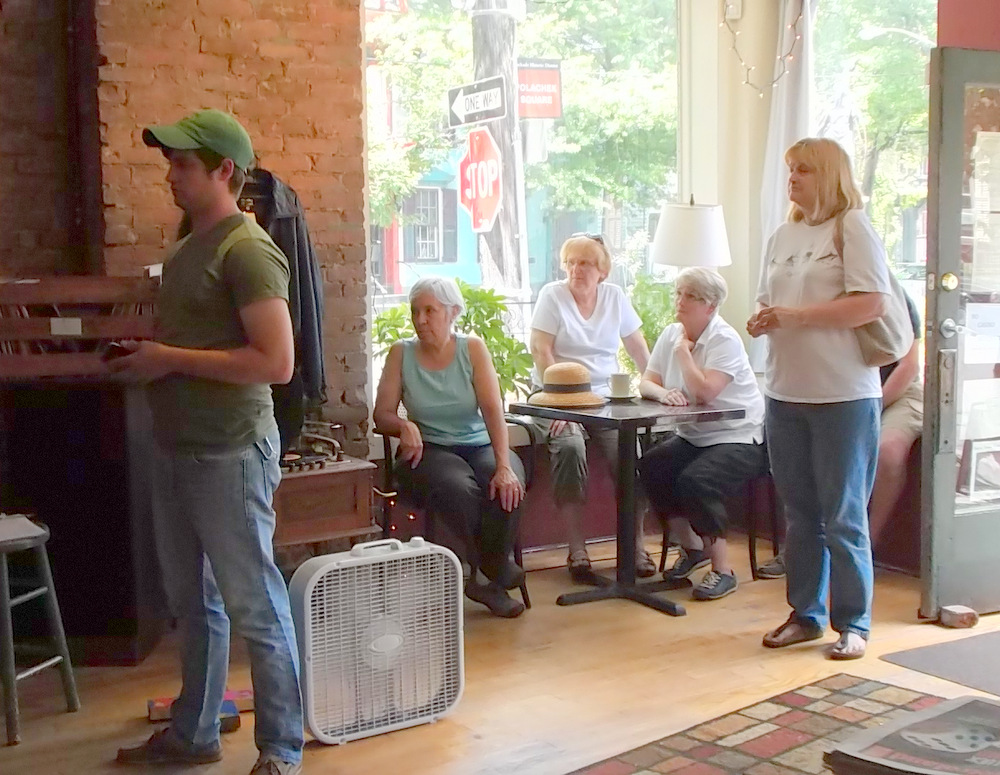
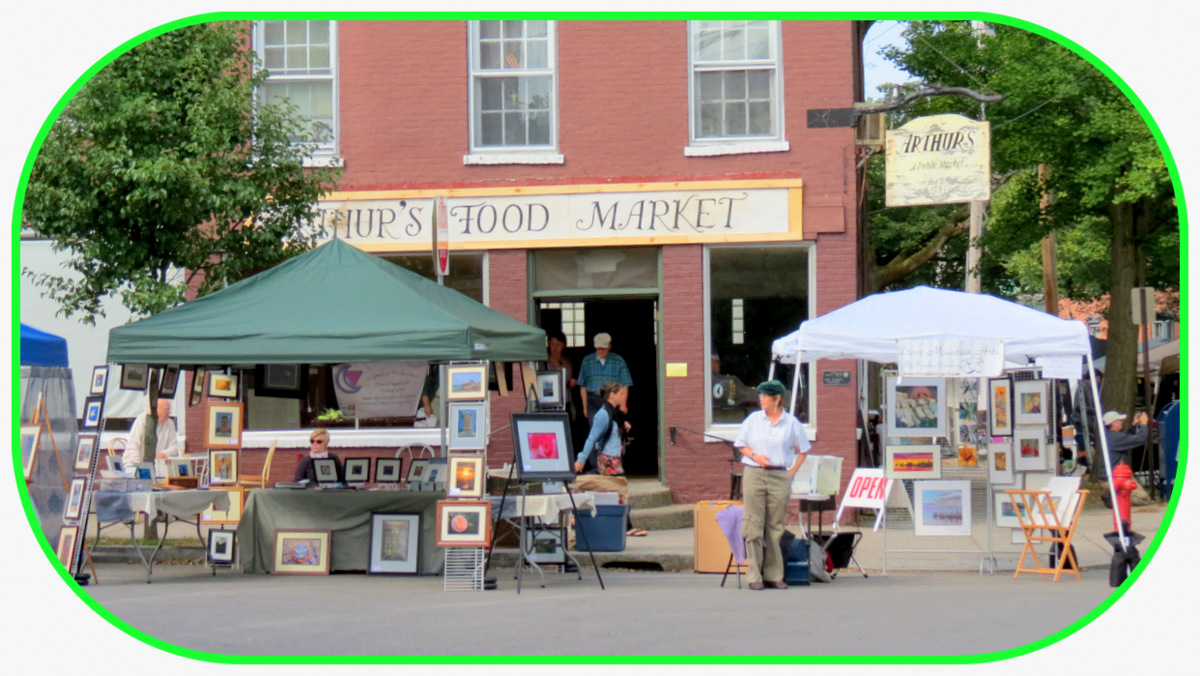
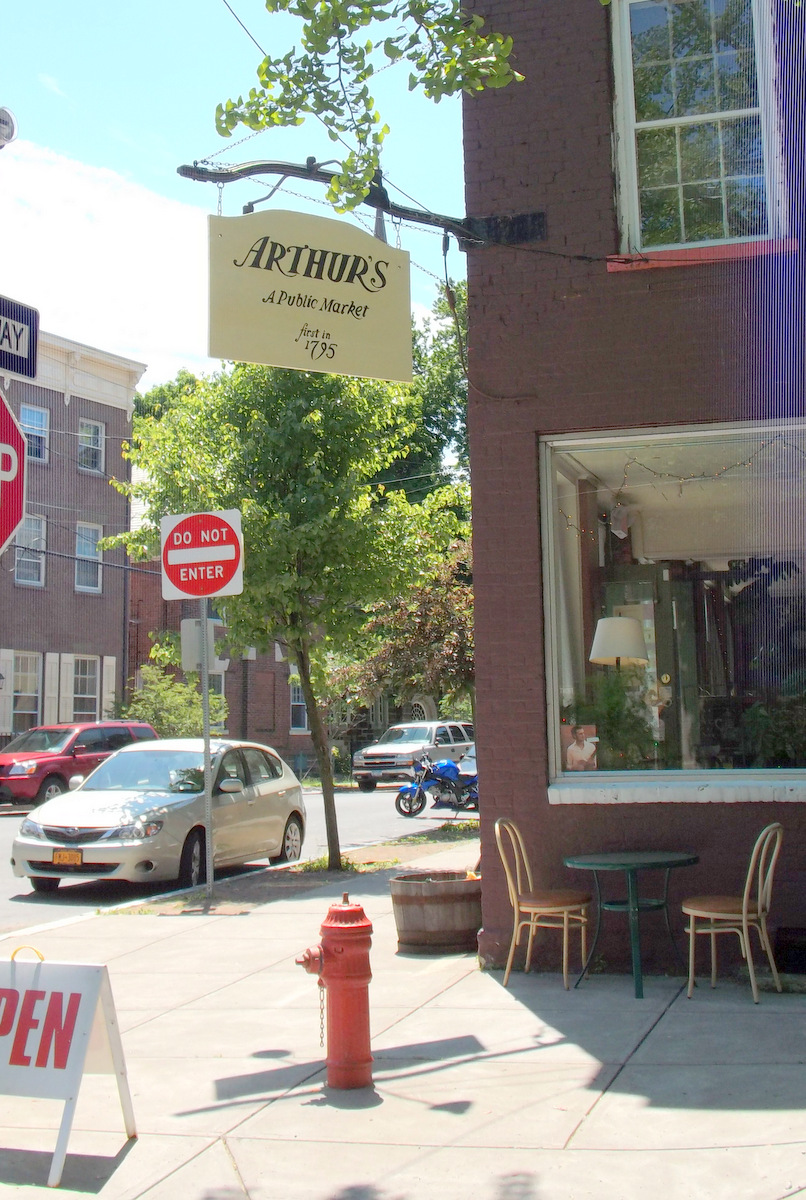
 About three dozen Casino Opponents created an atmosphere of urgency and caring, in the comfortable surroundings of the redesigned Arthur’s Market. The subtitle of the TU article is “Stockade-area residents stress ‘people’ as council vote on gaming site nears” . And, although “people” were/are our first priority, the Meeting stressed the many ways a casino would harm our people, community, businesses and future — using studies, literature, experience elsewhere and common sense. Many also stressed how the sneaky and cliquey process used by the applicant and by City Hall (Mayor and Council leadership) to push this proposal through tars the project and the Administration, insults the public and democratic principles, and creates suspicion and anger.
 . . .
. . . 
 Grade-schoolers Tianning and Hainuo Hodgkins, plus little Concetta, added energy inside Arthur’s, and made their beliefs known with chalk on the sidewalk, proclaiming “no casino.”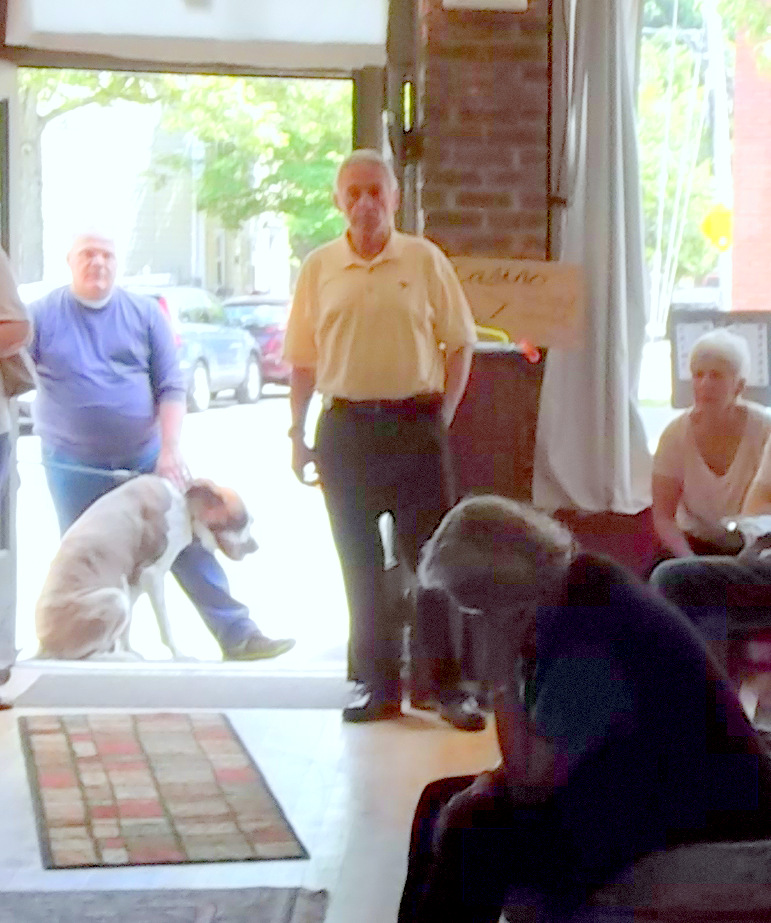
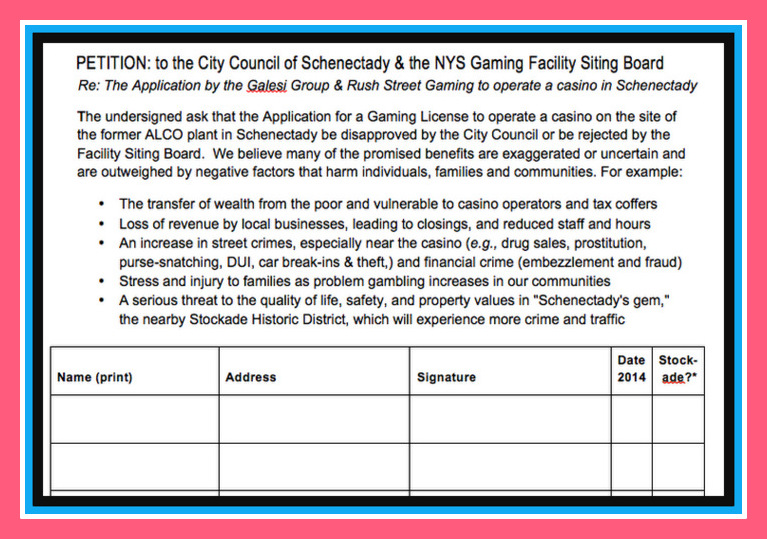
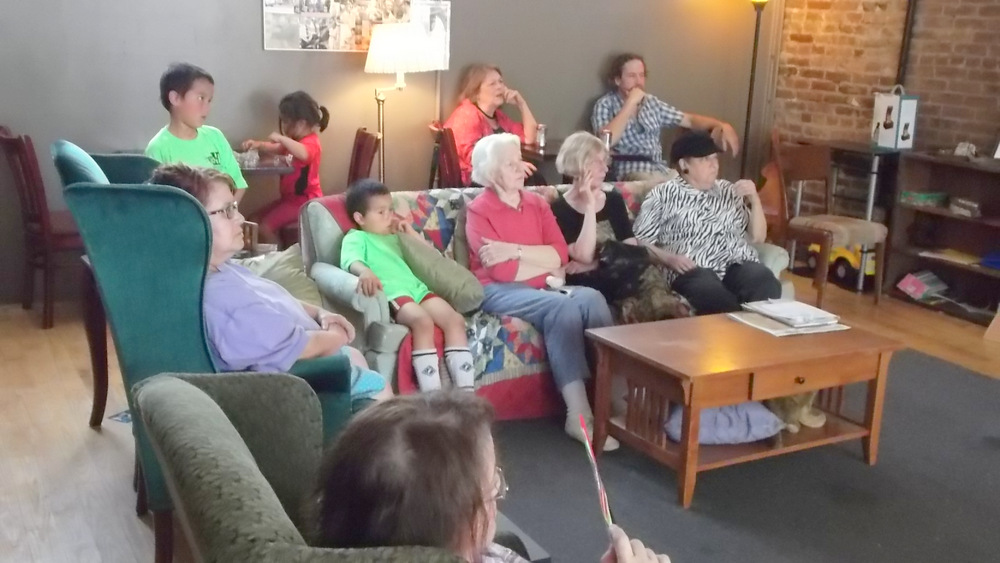
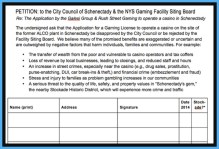
 Many thanks to all who came to show their support of the No Casino campaign, and to those helped organizing and putting on the Meeting: Richard Genest, our host at Arthur’s Market; Donna Lagone and Jessie Malecki, who did most of the work of circulating the petition in the Stockade; Mohamed Hafez, who physically got the petition to churches and businesses on his side of town, and spurred on the No Casino campaign with his energy and writing skills; and Tom Hodgkins, who made signs and decorations, but also crunched numbers to show us the strength of the opposition in Schenectady County, and brought along his best reasons for wanting to preserve and improve Schenectady, his three great kids.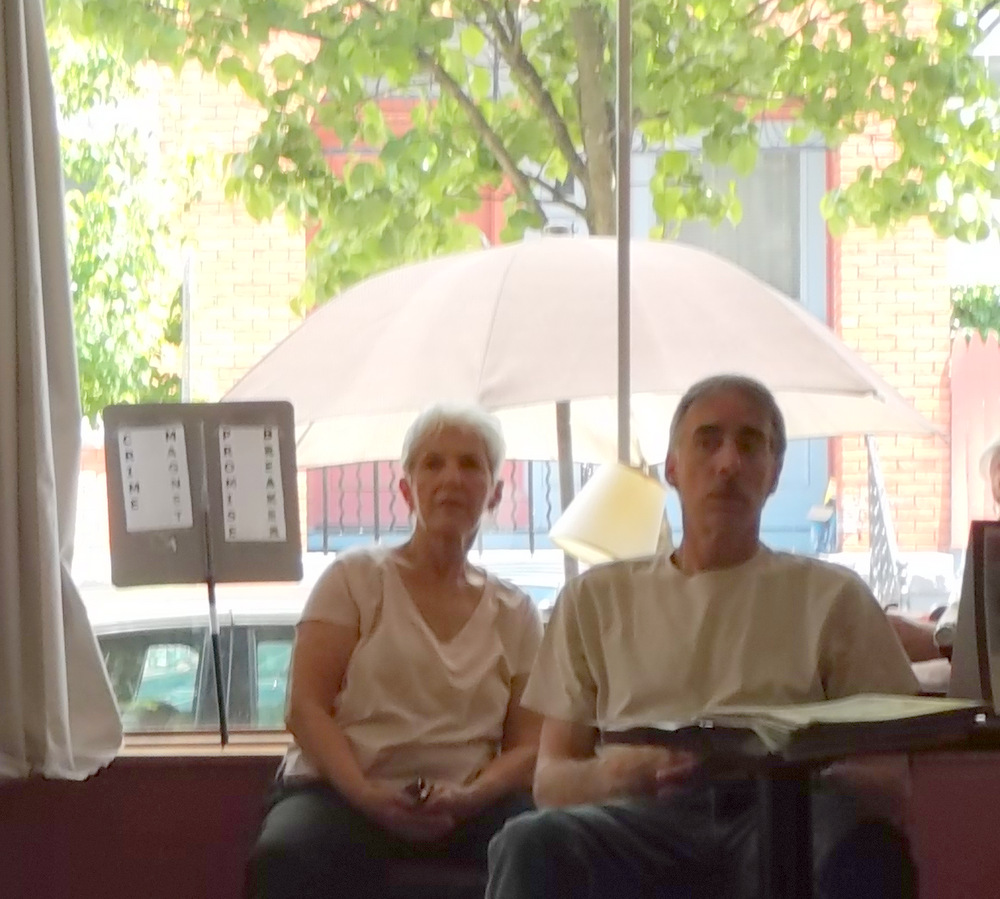










 That’s a significant spread, but apparently not significant enough for any of the County legislators to even bring up the subject during casino discussions.


 snowmen at the gates