.
I am reposting here a version of the Tale of Schenectady’s Lady Liberty and the Mayor that I posted at the Facebook page of Schenectady Residents for Responsible Development on Saturday, October 10, 2026.
.
You can find many postings, with updates, about the travails of Schenectady’s Lady Liberty and attempts to assure Her the respect She deserves in the Gateway-Liberty Park category of this website.
.
Yesterday (Friday, October. 9) I discovered that 9 years of efforts on many fronts by many Schenectady residents have finally restored our Lady Liberty Replica to a condition worthy of its symbolism and status, two and a half years after it was returned from exile to its home at Liberty Park. It took far too long, but citizen advocacy has helped to correct a gross lack of transparency (with unexplained backroom decisions and flaunting of a duly approved comprehensive plan) and an inexplicable lack of respect for our City’s history and public opinion.
.
Below I have done my best to succintly describe the battle to bestow appropriate respect on our Lady Liberty and to undo shameful violations of the most basic requirements of good government. Belated success does not, of course, mean we can safely reduce our vigilance and perseverence in our fight for responsible government in Schenectady. You can find more details, including links to important documents and informative images, at https://tinyurl.com/TimelessLiberty ..
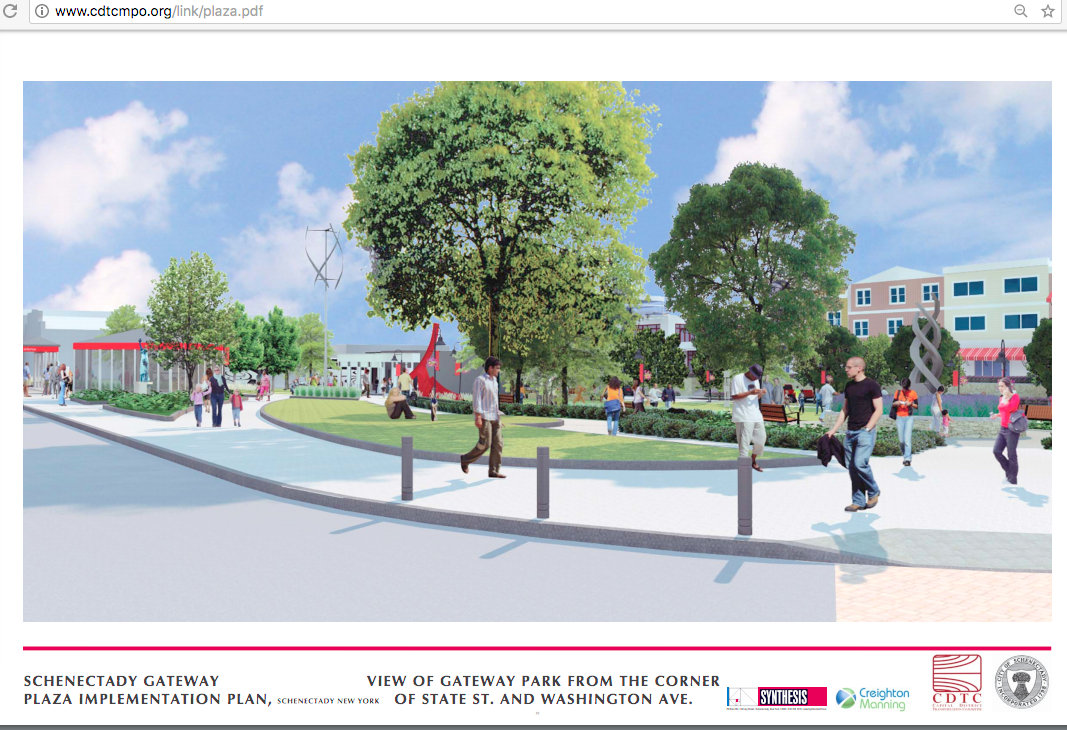
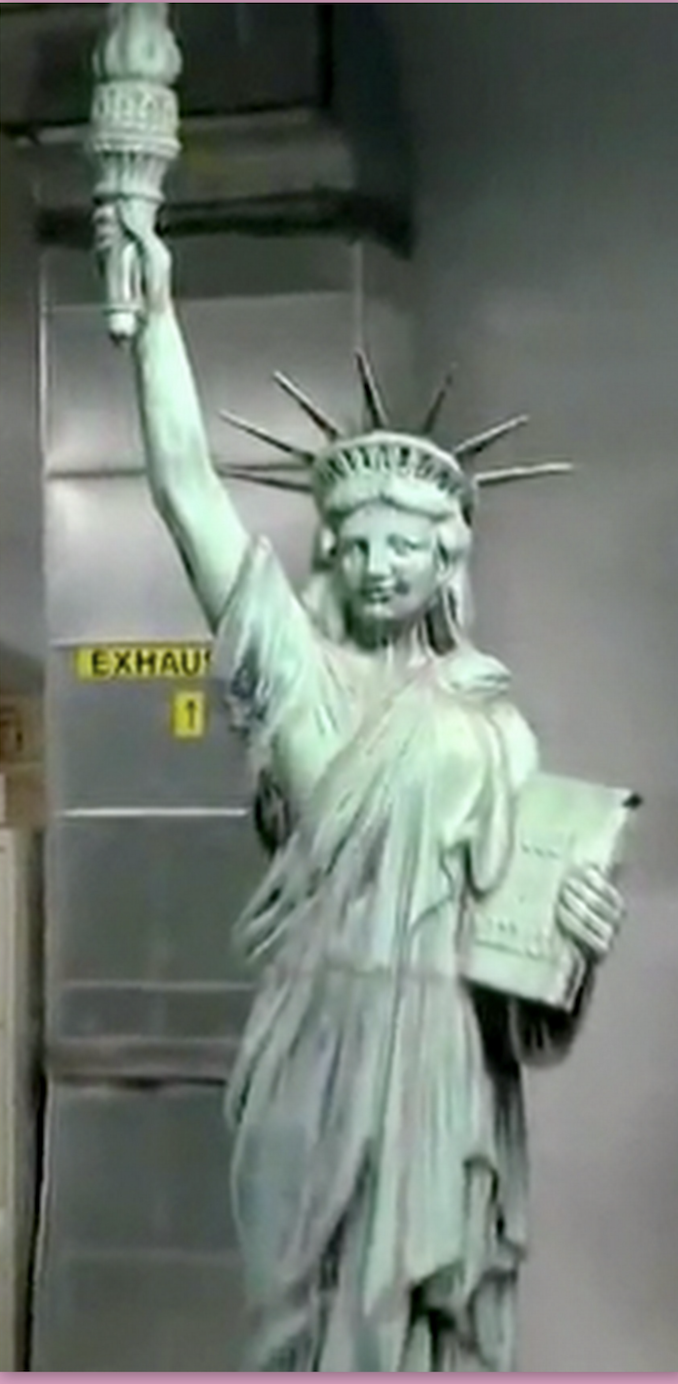
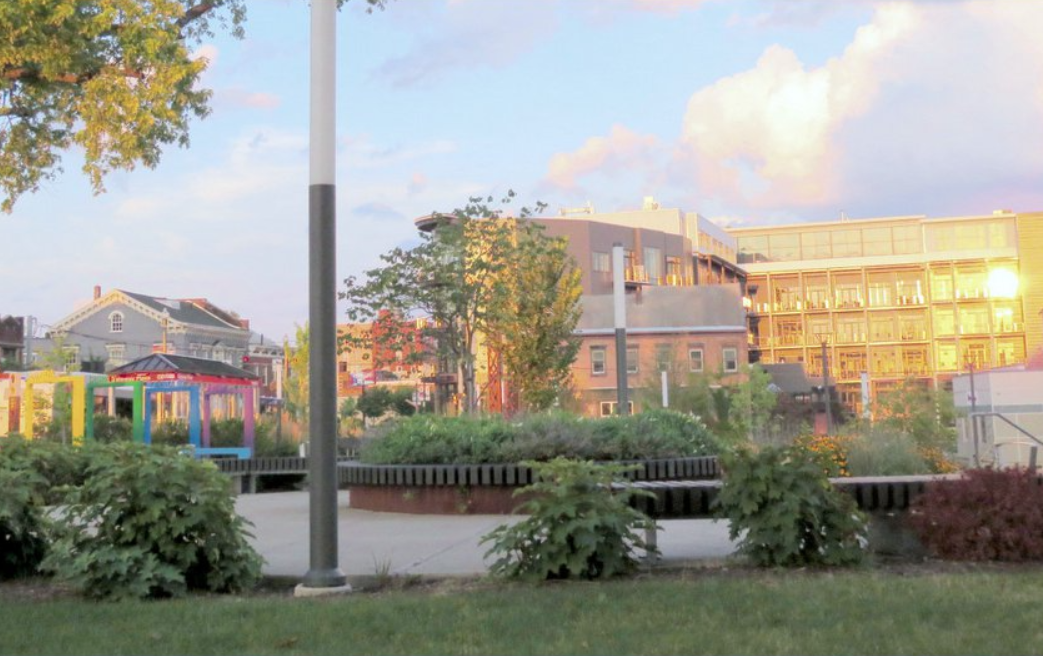
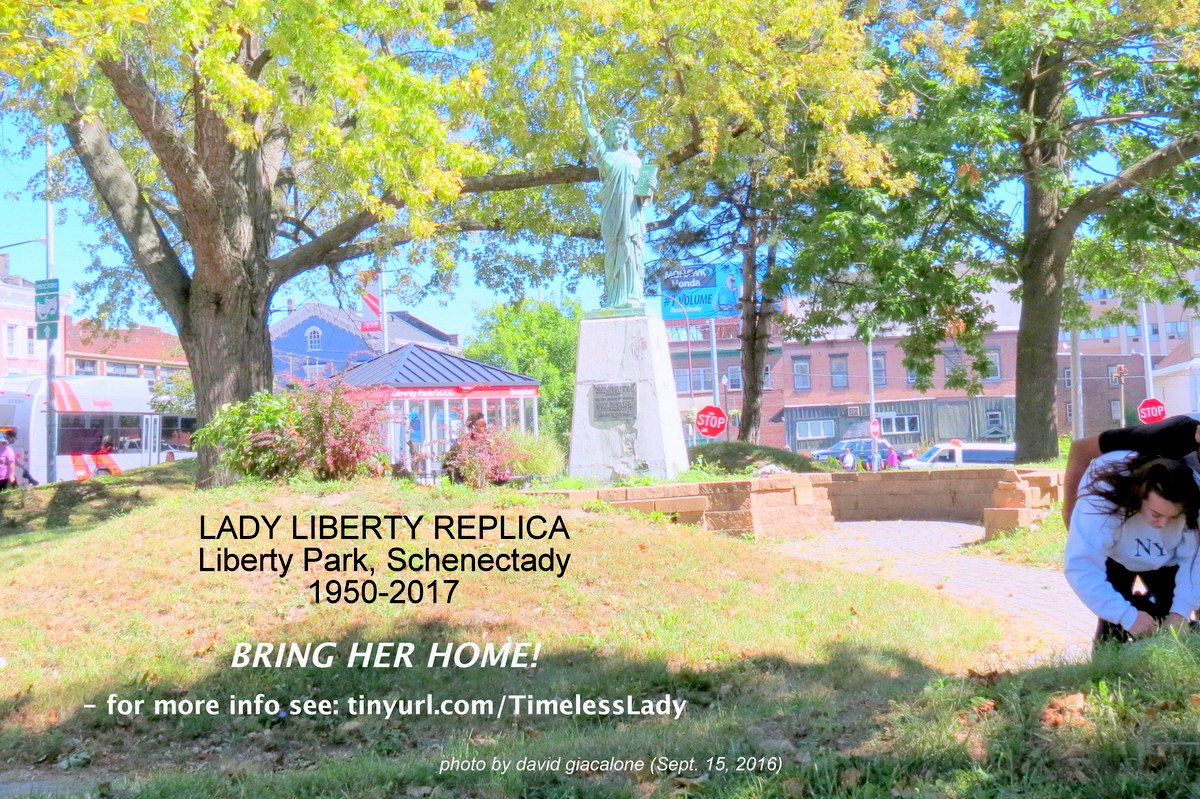
Schenectady’s Lady Liberty Replica was donated to the City by local Boy Scouts in 1950, and placed at a location that was soon named Liberty Park. It stood there until August 2017, when it was moved to the City’s storage facilities to protect the statue while Liberty Park was enlarged as part of Gateway Plaza.
.
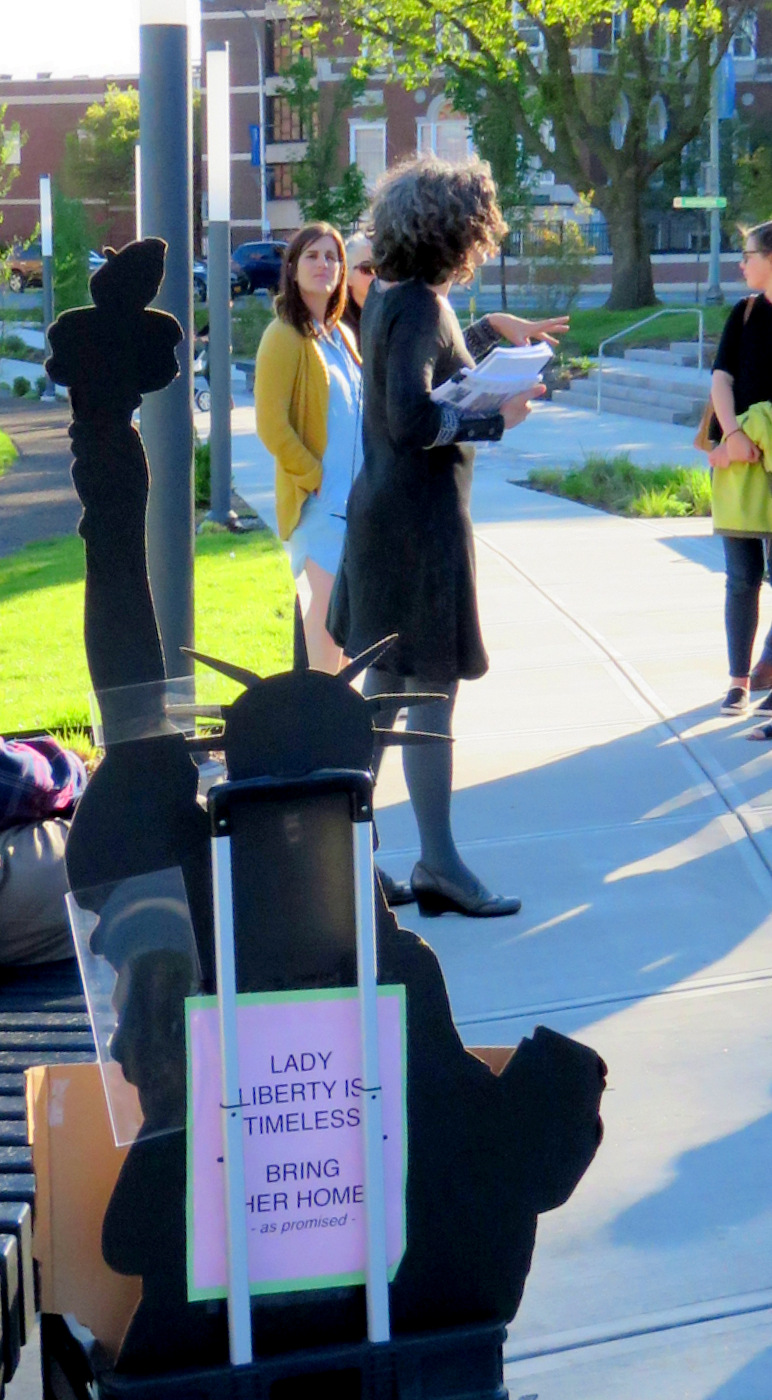
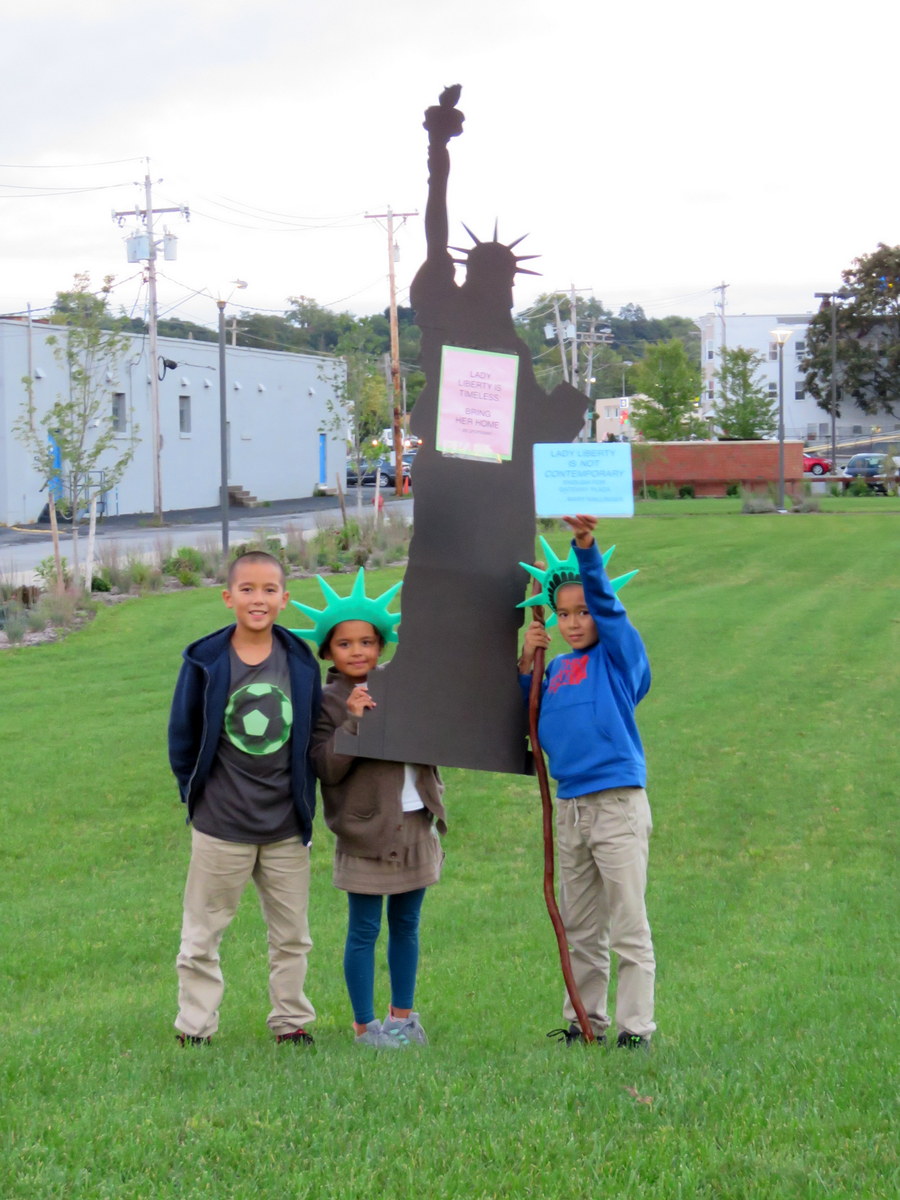
The Gateway Plaza Implementation Plan was primarily written by Mary Moore Wallinger and approved by City Council and the Mayor in 2013. The Plan called for the return of Lady Liberty once construction was complete. Without public discussion, Ms. Wallinger decided Lady Liberty was not contemporary enough for the Plaza she had designed, and failed to return the statue to its home.
.
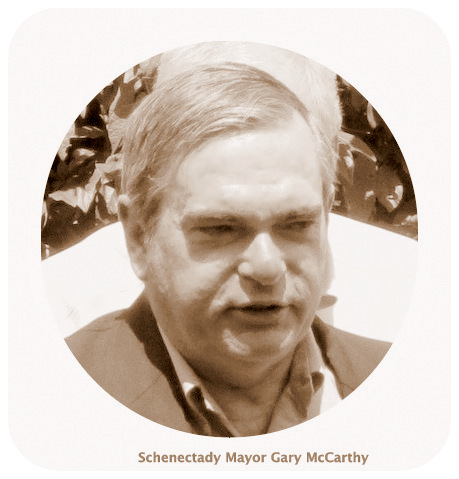
 Mayor Gary McCarthy silently approved of keeping Lady Liberty in storage. Many believed the Mayor backed Wallinger because she was then chairman of the City Planning Commission and often took action favorable to the Mayor.
.
From March of 2018 through October 2022, 40 Letters to the Editor and editorial pieces were published calling for return of the Lady to her Liberty Park home. See https://tinyurl.com/Letters4Lady . Editorials, articles and television coverage of the situation failed to achieve fulfillment of the approved Plan.
.
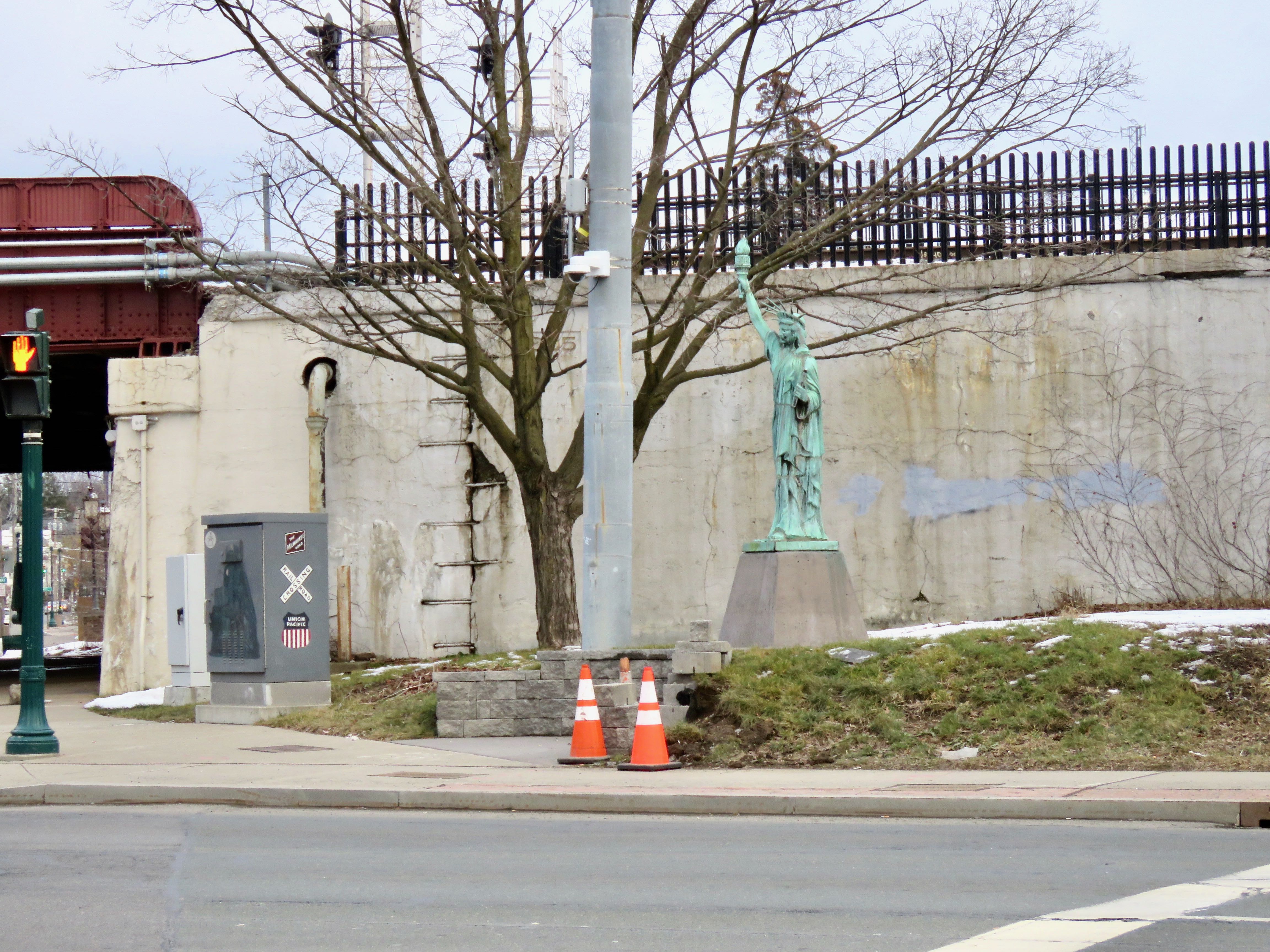
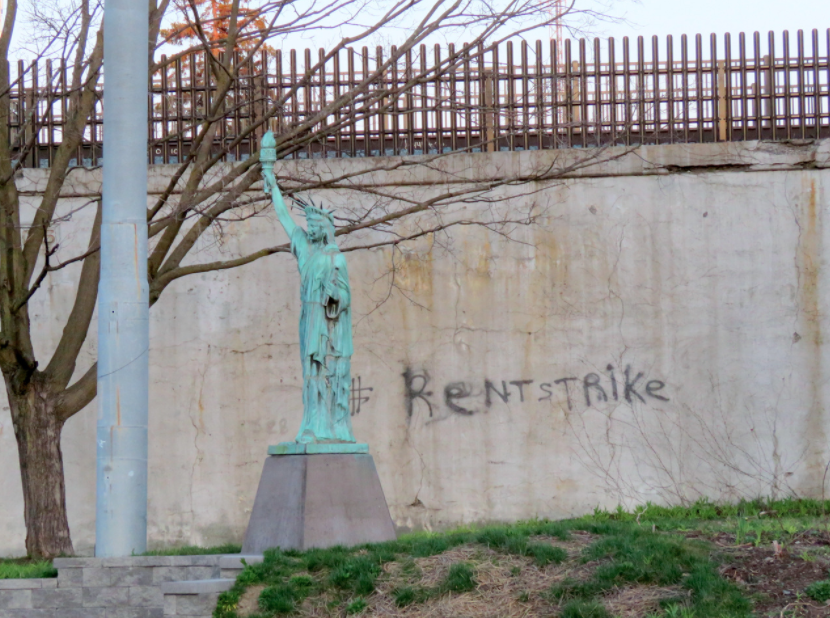
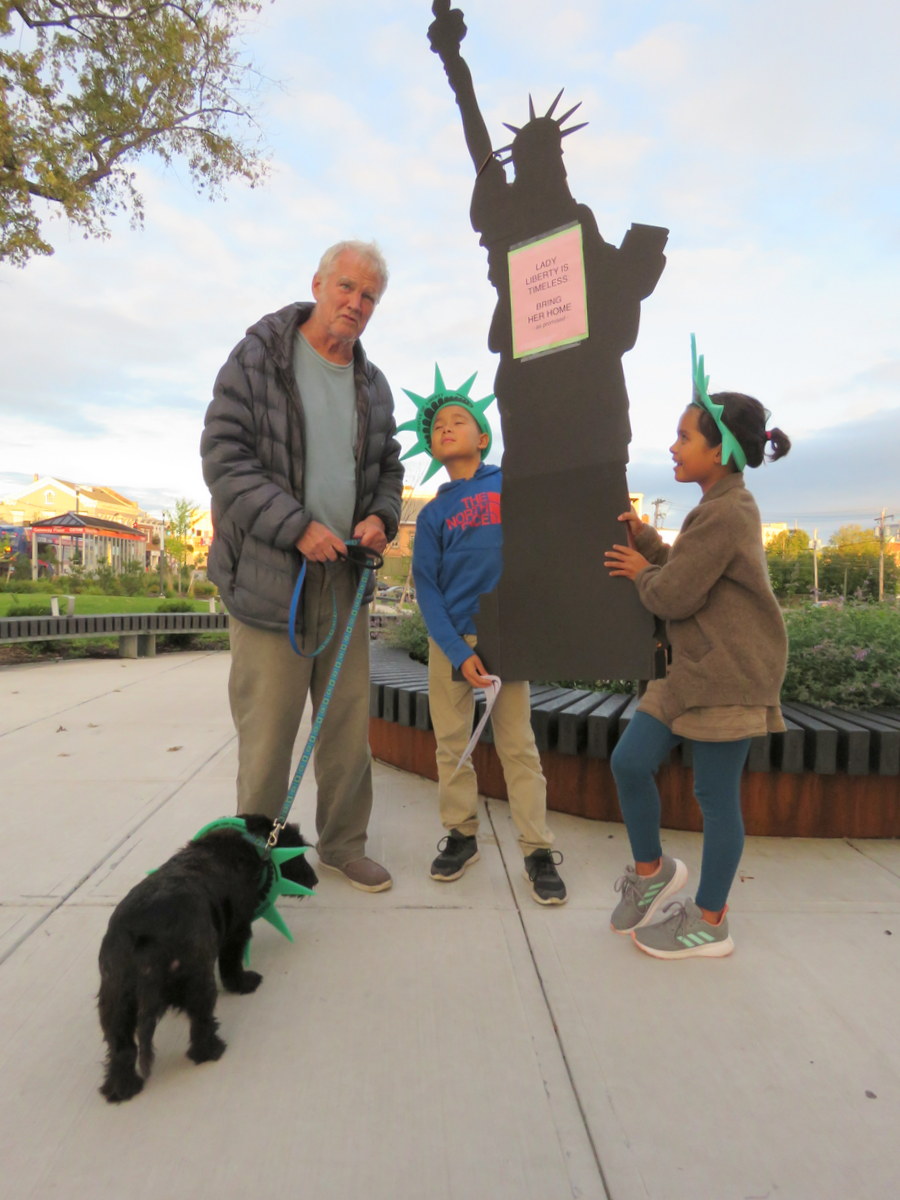
In late August 2019, after two years in storage, the Mayor exiled Lady Liberty to an ugly spot along the train trestle at the SE corner of Union Street and Erie Boulevard (image above). The spot never received signage, a marker or plaque, or landscaping. It had virtually no foot traffic, but did have a lot of exhaust from vehicles and trains that increased the amount of soot accumulating on the statue.
.
In November,2021, after pleas from the public at Council meetings, the Council passed a resolution recommending that the Mayor return the statue to its Liberty Plaza home. Nonetheless, nothing moved the Mayor to follow the approved Gateway Plaza Plan and the clear preference of the public.
.
.
Until, that is, Wallinger endorsed Marion Porterfield in 2024 in a primary against the Mayor. Shortly thereafter. In early March 2024, the Mayor unceremoniously had the Lady returned to Liberty Park, saying when asked he had not done so for years because he had taken the advice of a mediocre architect.
.
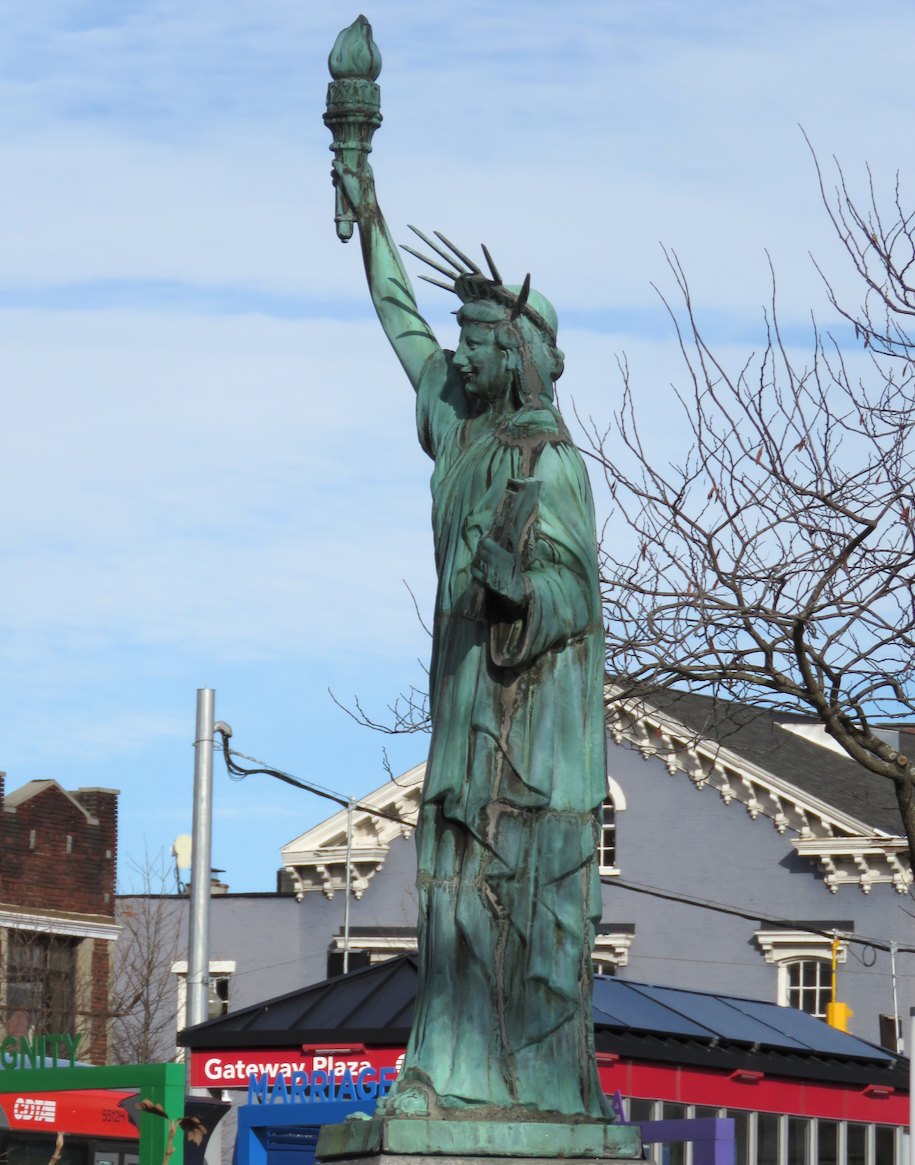
The statue was intolerably filthy and in need of repair when it was returned in March 2024 to Liberty Park:
.
.
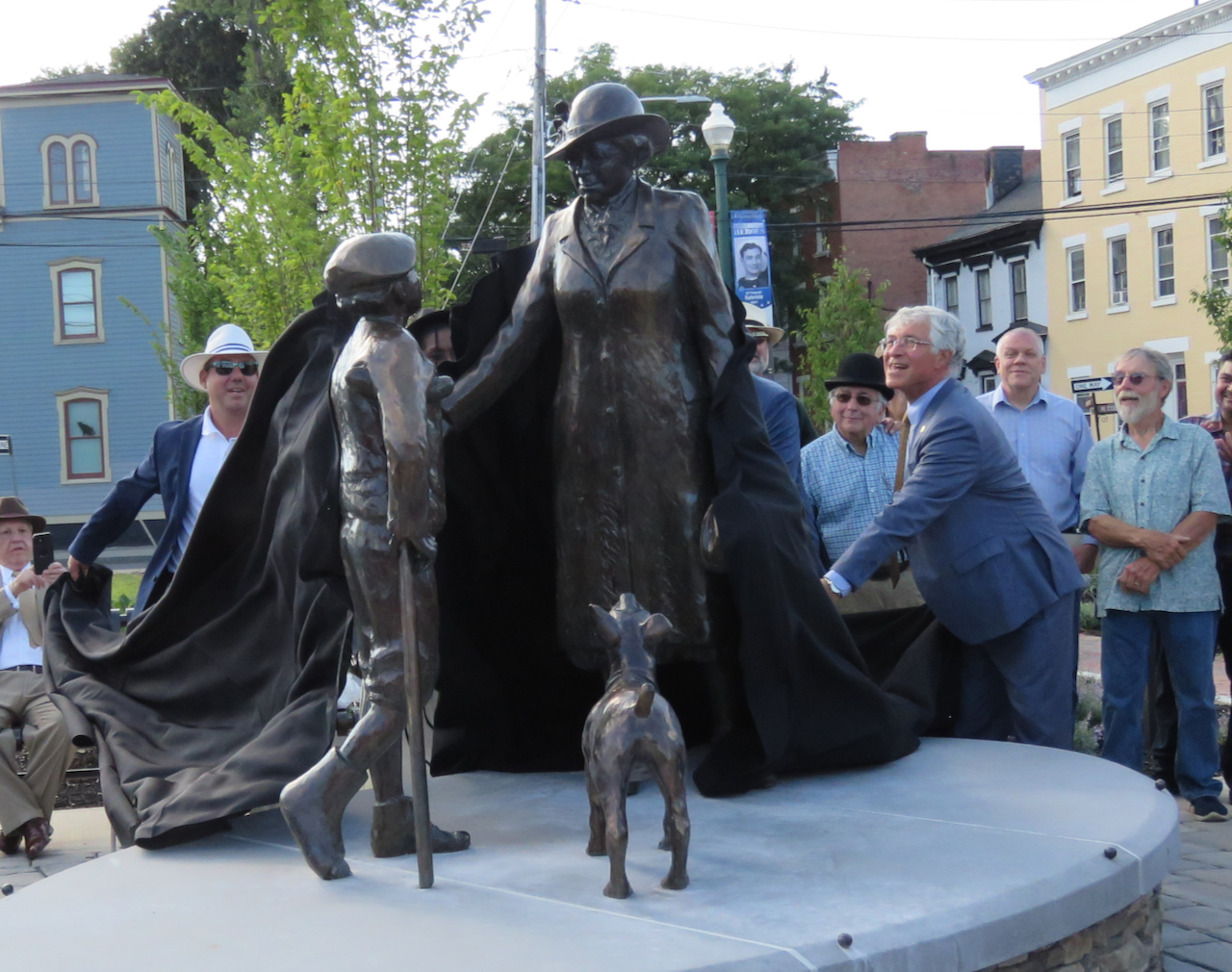
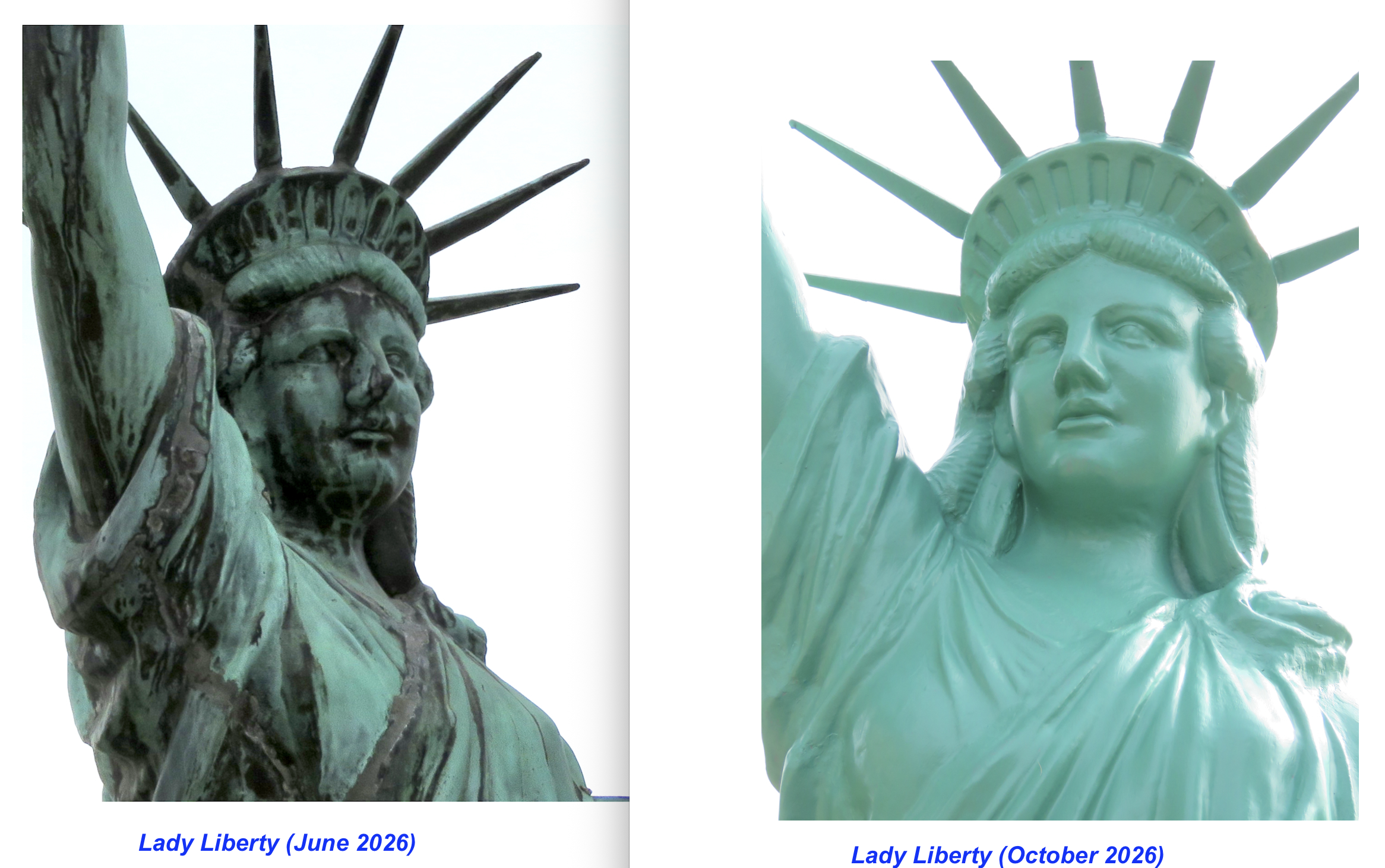
Calls for the statue to be refurbished and given appropriate signage were been ignored for more than two years. Thankfully, requests from sculptor Dexter Benedict and avid sculpture advocate Brian Merriam on the day the statue of Dr. Elizabeth Gillette was dedicated finally moved the Mayor to approve work on the statue. Because it was too damaged to safely or adequately repair, it was instead prepped and painted a shade of green similar to aged copper.
.
.
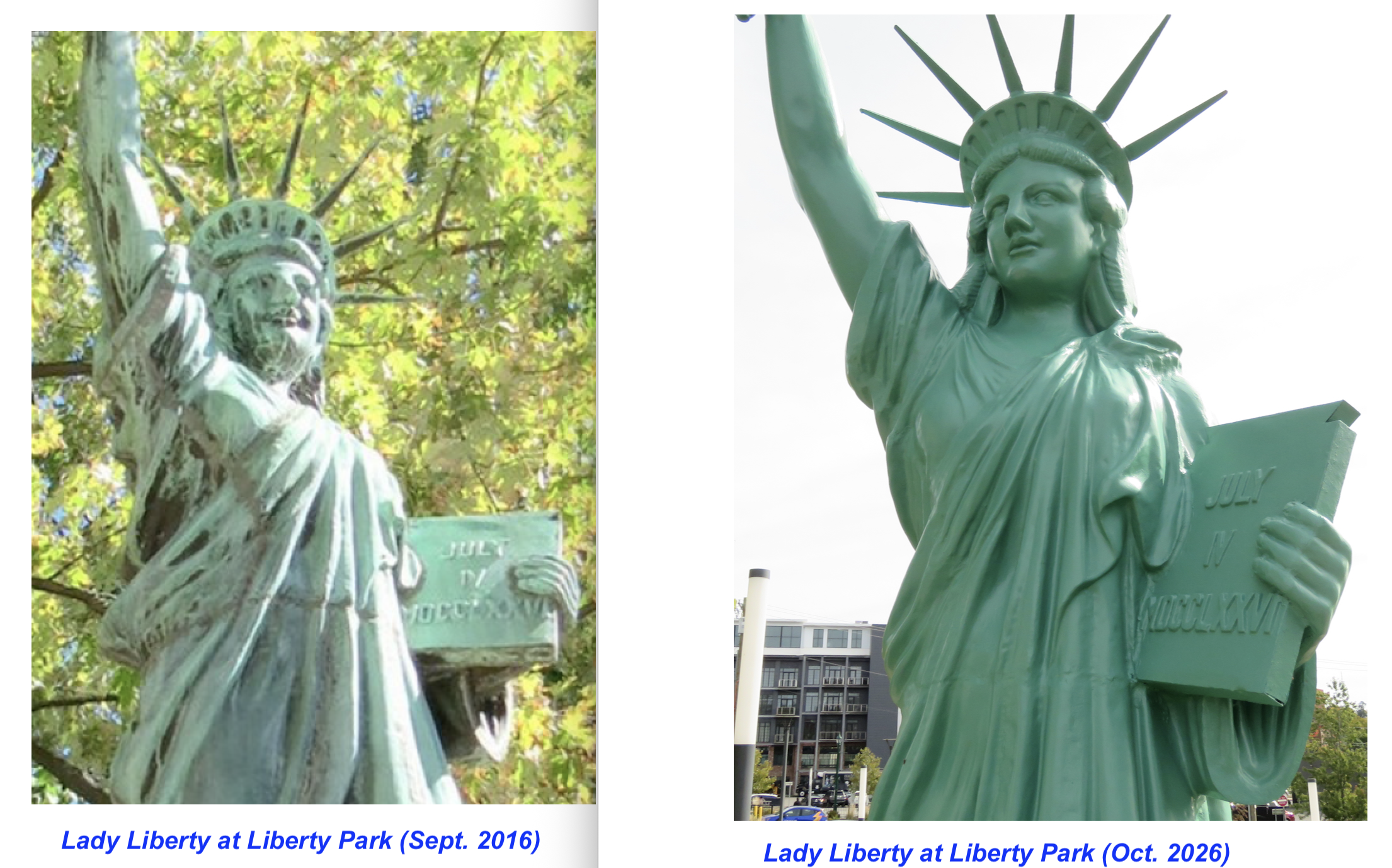
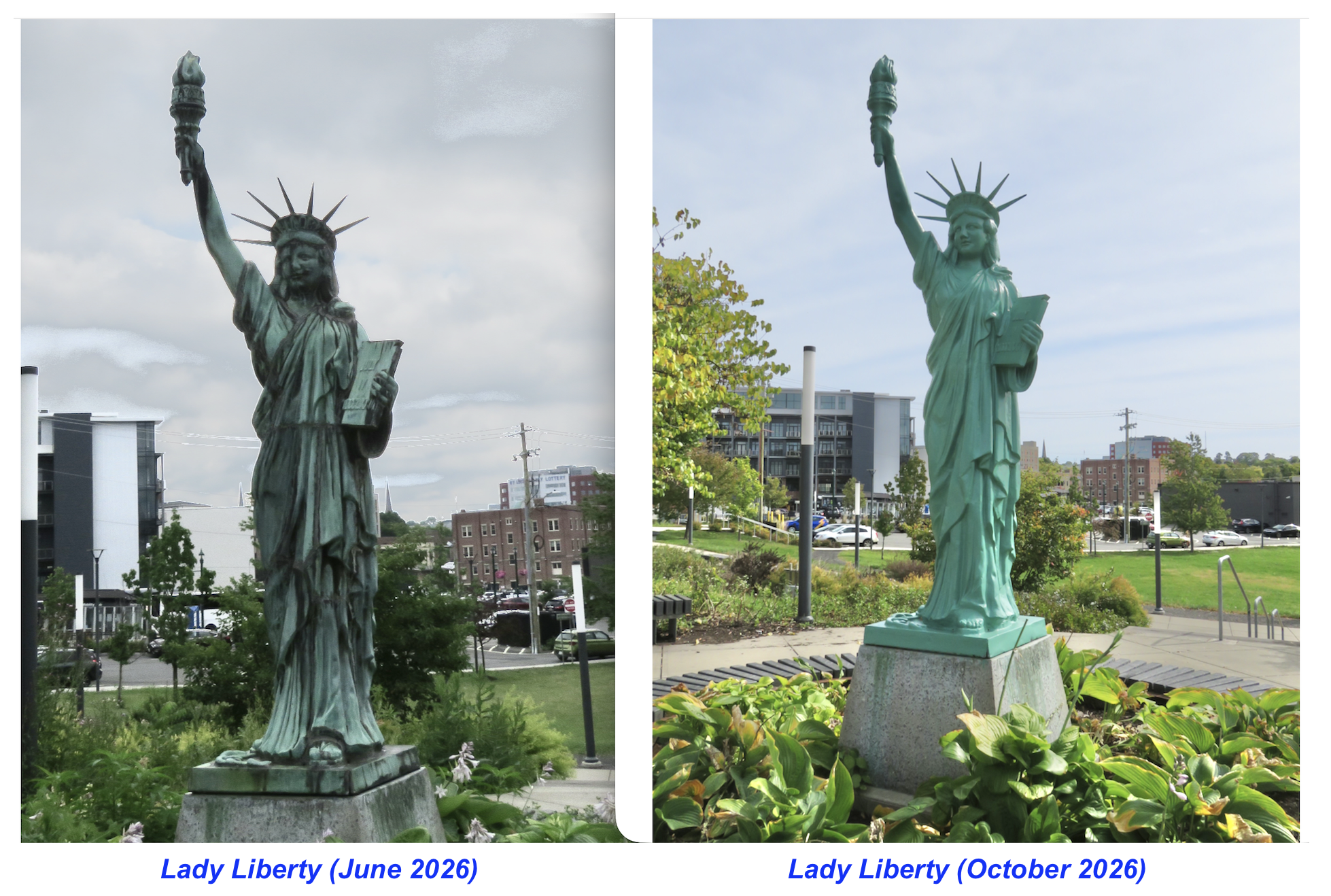
. . Lady Liberty at Liberty Park in Sept. 2016 (L) and Oct. 2026 . .
.
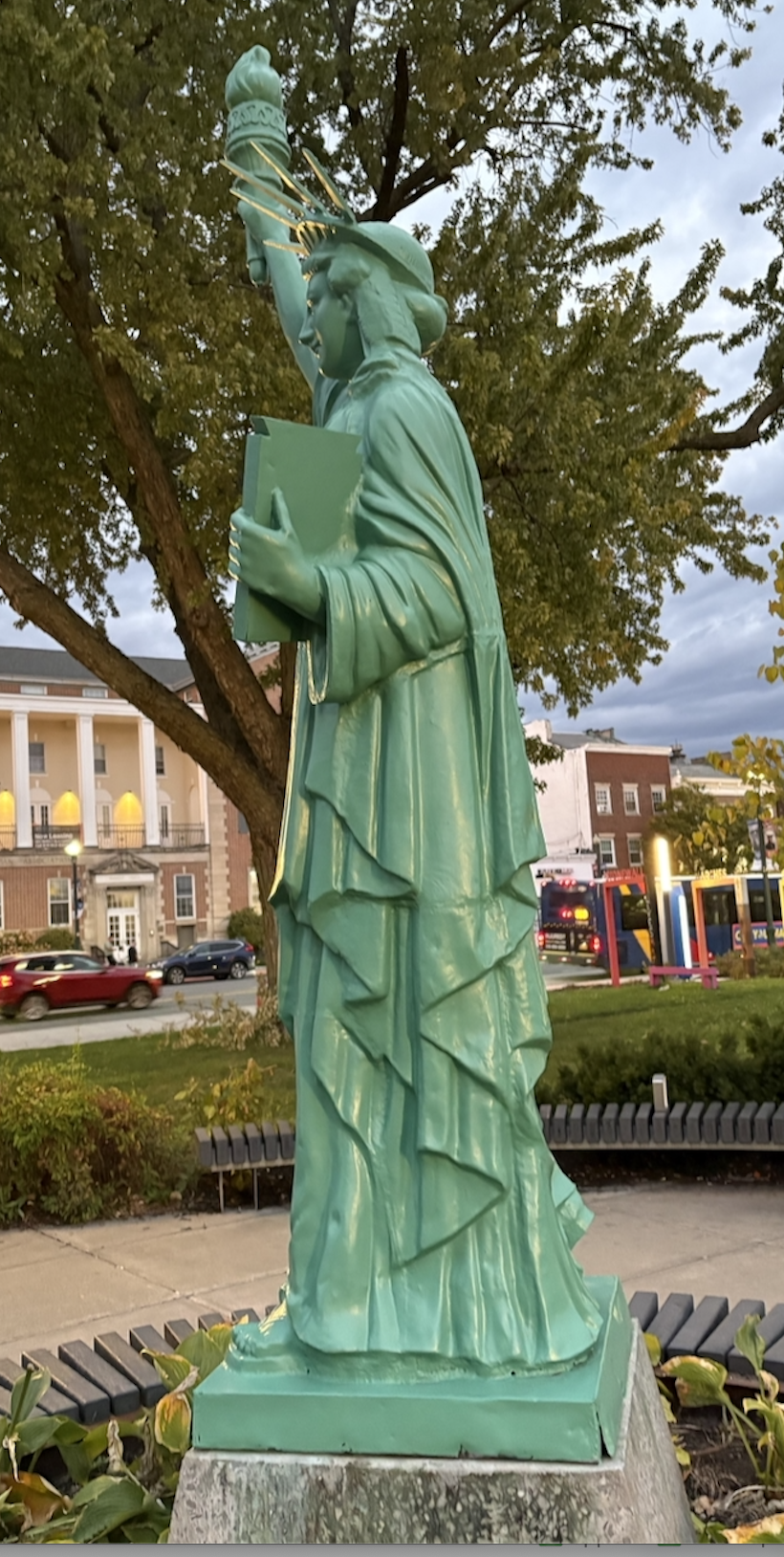 Photos here show the happy results, with comparisons to prior conditions. We now need to insist that some of the dollars received by the City for Downtown Signage be used to help direct visitors to Lady Liberty, and that a marker explaining its origin and significance be installed to recall the original plaque (image also attached) which was somehow “lost” while Liberty was in storage.
 .
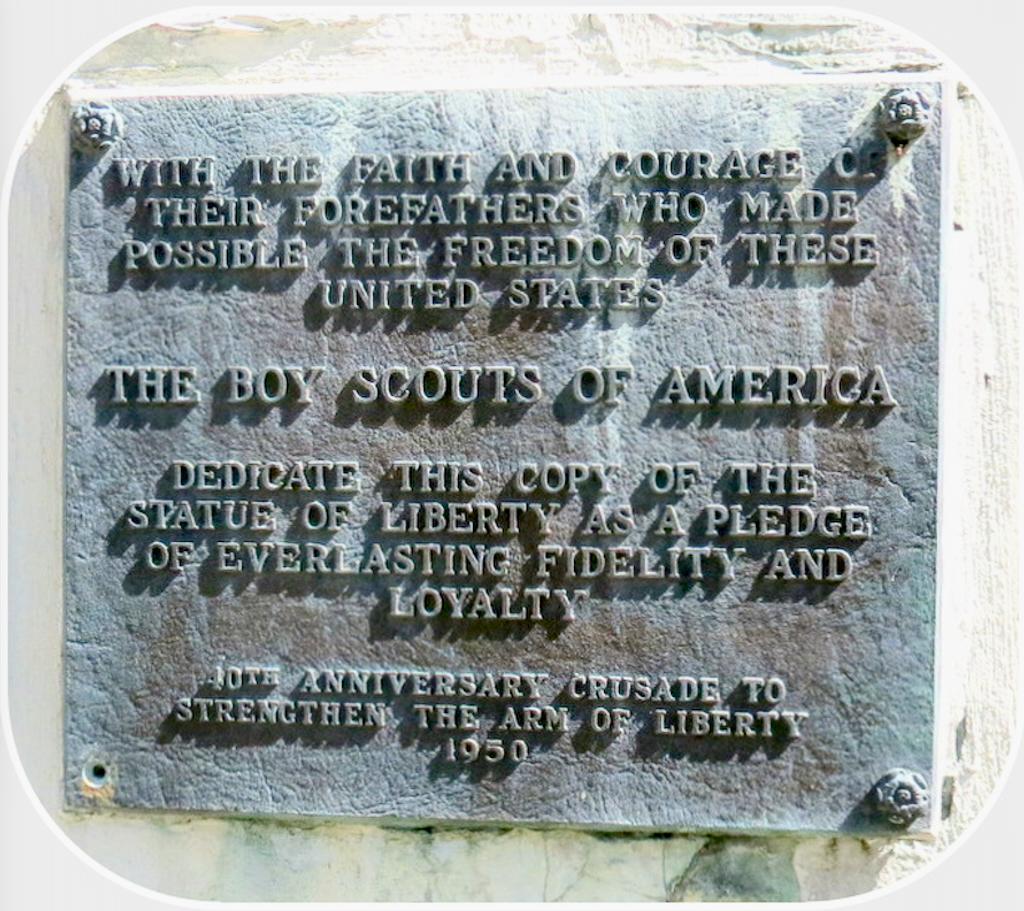
. . the plaque on Lady Liberty’s pedestal (1950). .
.
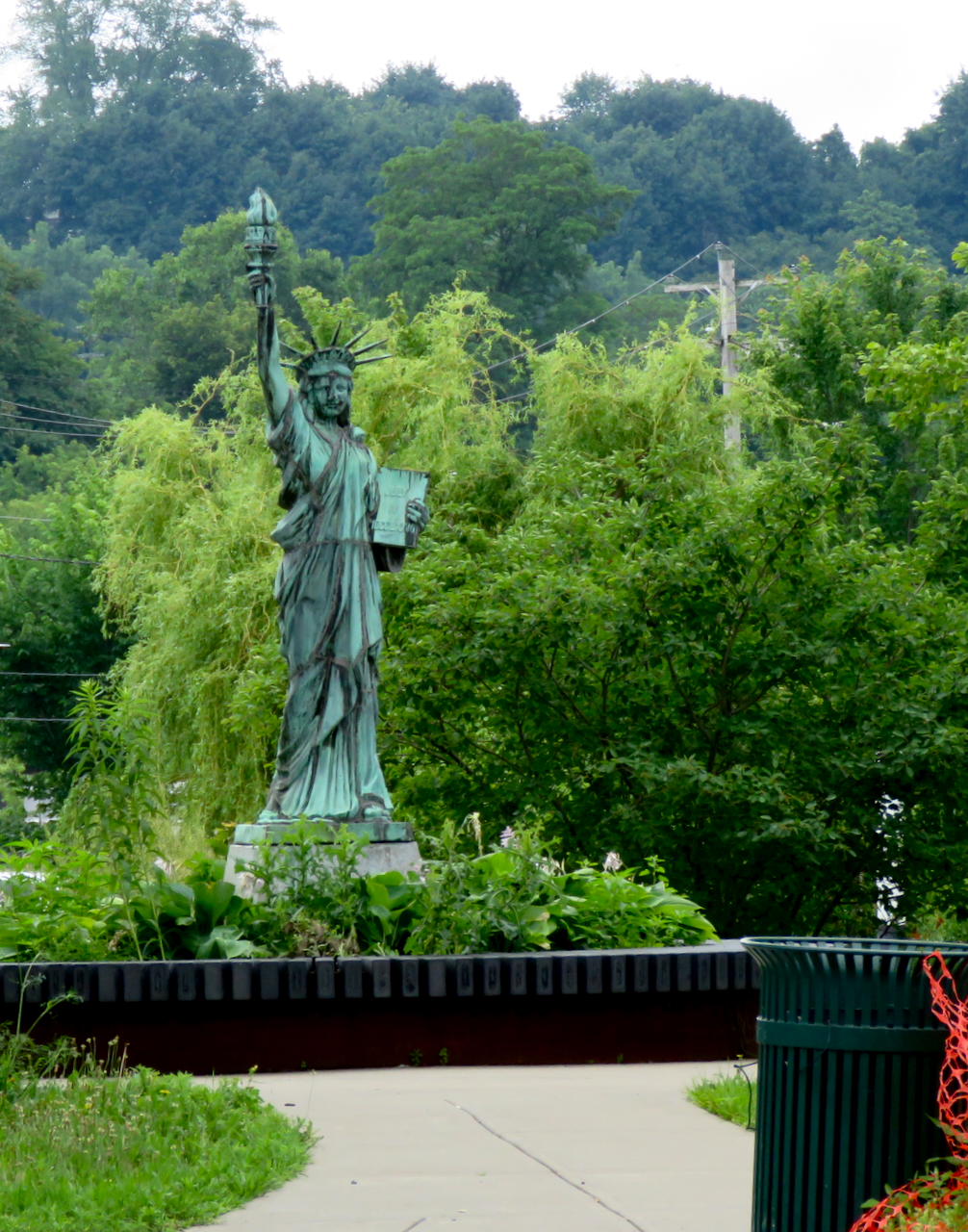 . .
. .
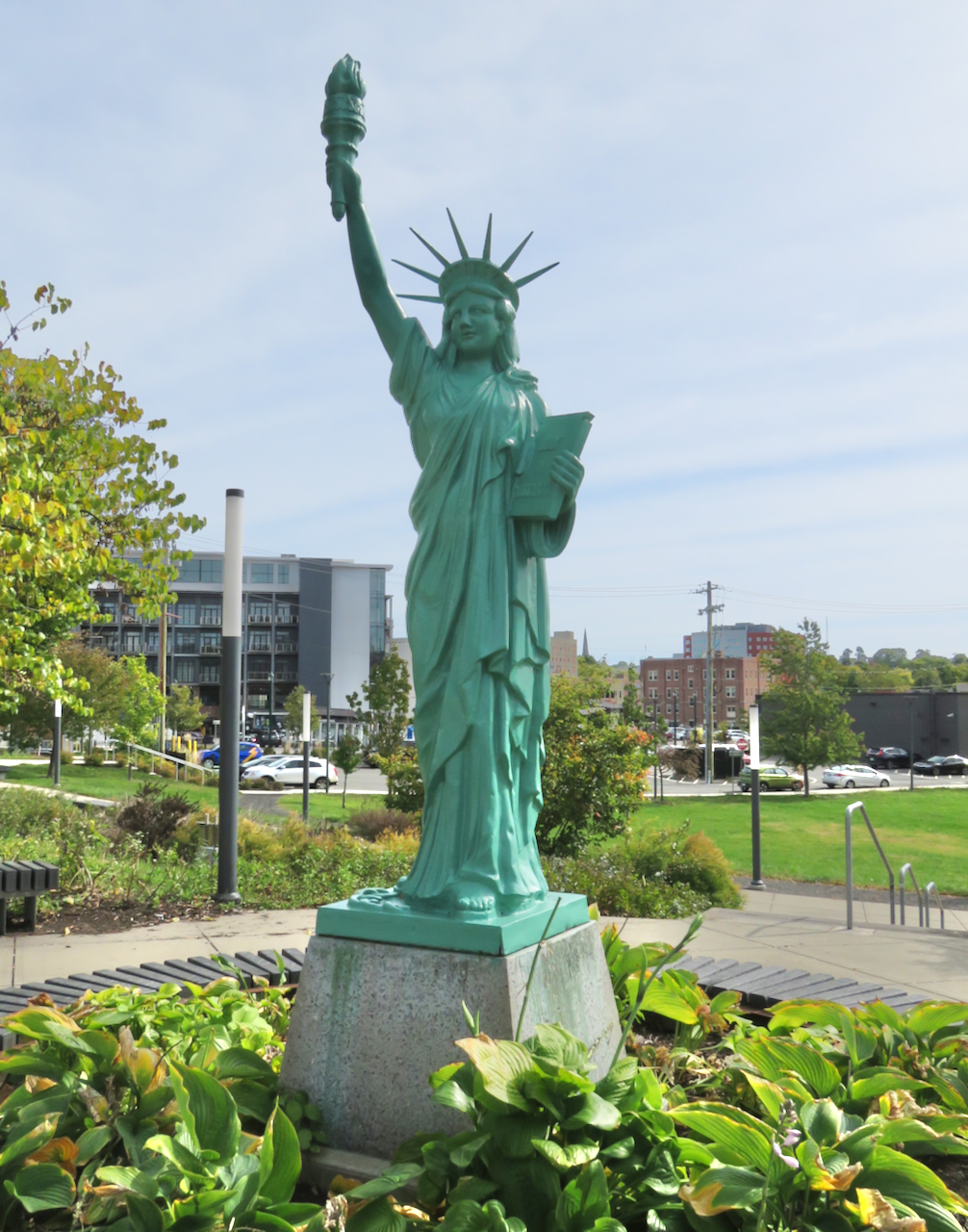
.. above: Schenectady’s Lady Liberty in June 2026 (L) and October 2026. .









 See, “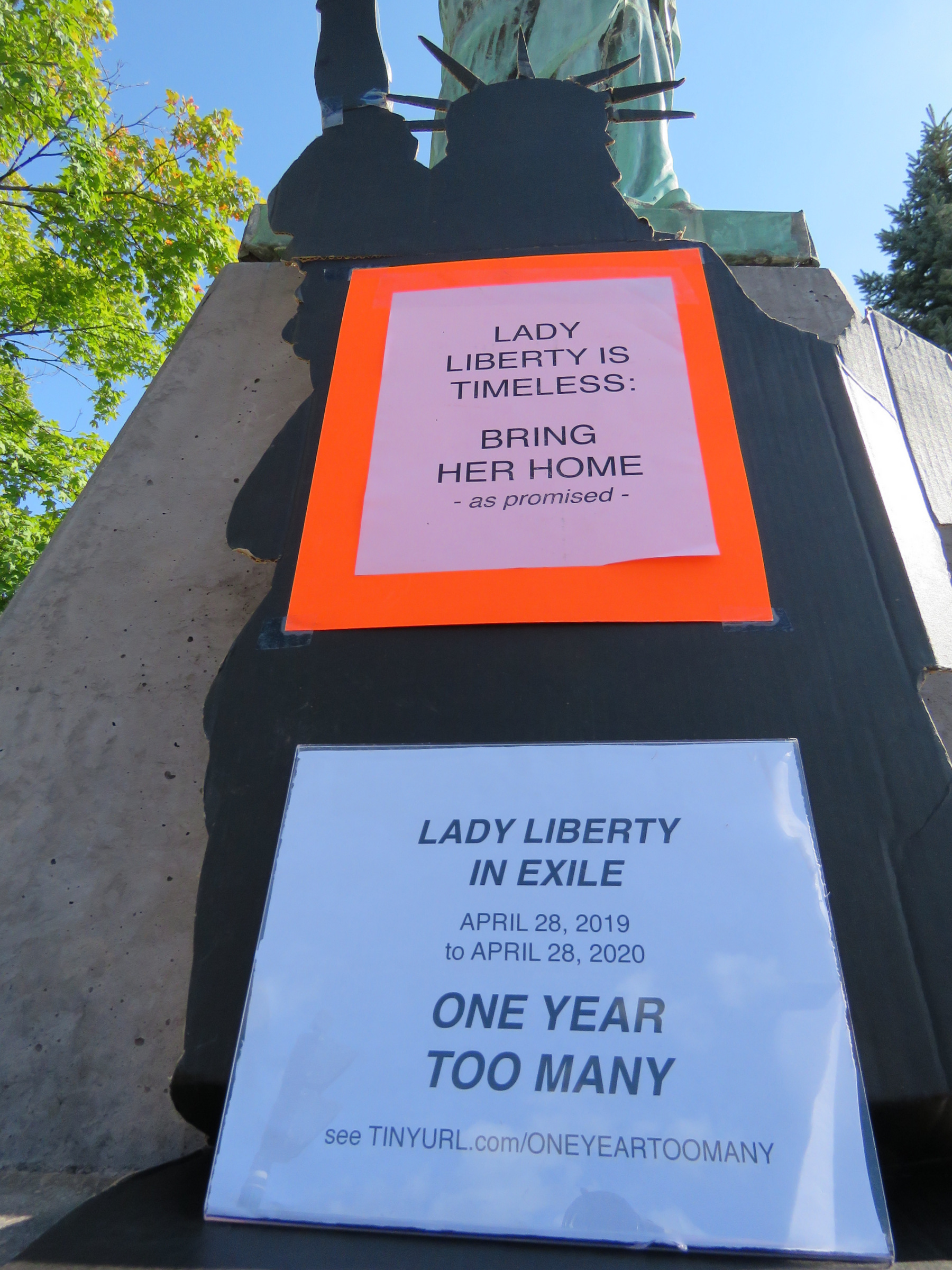








 Problem Gambling Prevention. The County and City are still not acting to help reduce the incidence of Problem Gambling through Education that prevents gambling disorders by helping to make gambling a safe, occasional leisure activity, not an obsession or addiction. If Rivers Casino and soon Sports Betting are here to stay, we must educate our youth, and help adults learn to recognize the signs of problem gambling in themselves, their friends and loved ones, their employees, and co-workers. [More information on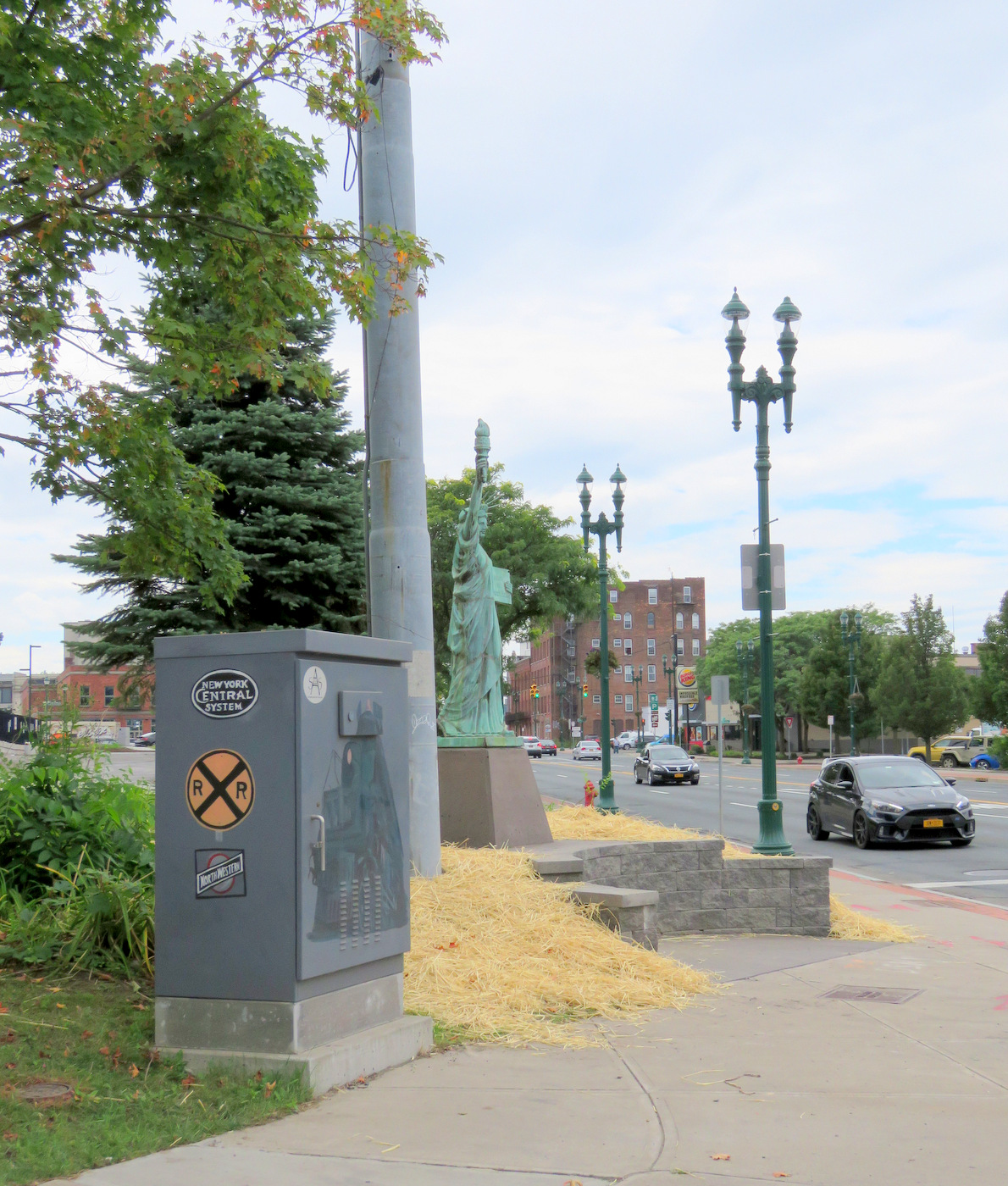

 Mary Wallinger, original designer of the Gateway Plaza Plan, who started this problem be deciding to send Her elsewhere, does not want to be blamed for shunning Lady Liberty at the Plaza, although she could surely convince the Mayor to follow the original Plan, and use her skills to design a suitable location for Lady Liberty at the expanded version of Liberty Park. Click the following link to see the many reasons Ms. Wallinger has given for exiling the Lady:


 In a
In a 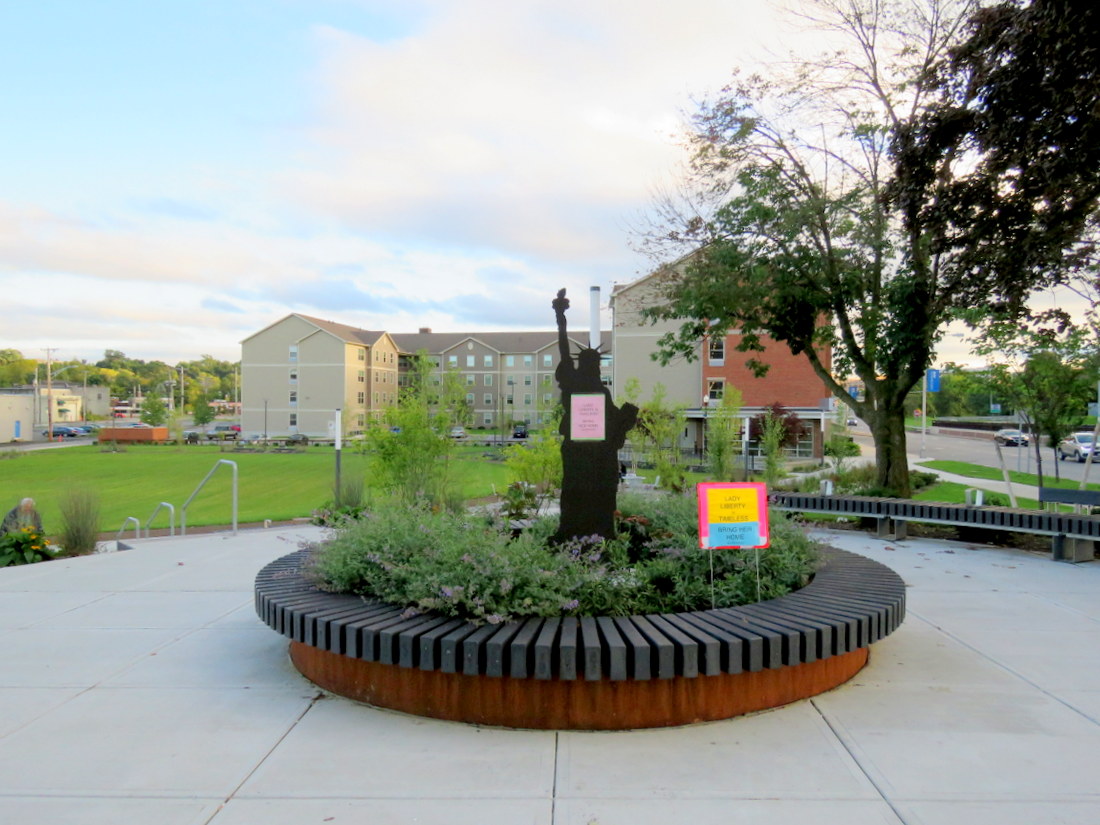


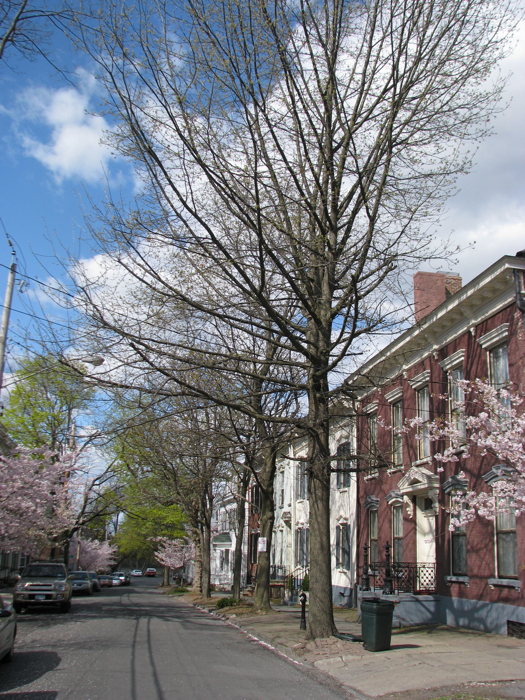 nue would be delayed until next year — for reasons not specified, but causing much speculation. Gloria Kishton (the Chair of the Schenectady Heritage Foundation and a member of the Stockade Association Board) has been acting as a liaison with the City of Schenectady concerning the repaving. Today, Gloria sent an email to Washington Avenue owners and residents, which stated in part: